Air Conditioner Is Frozen: Quick Troubleshooting Guide
Urgent troubleshooting for when your air conditioner is frozen. Learn common causes, safe at-home checks, a practical step-by-step flow, safety tips, and when to call a pro to restore cooling fast.


Most frozen air conditioners are caused by restricted airflow or ice on the evaporator coil. Start by turning the system off to thaw, then check the air filter and outdoor coil for blockages. Once thawed, restart on a low cooling setting and monitor. If the problem repeats, contact a pro.
What it means when the air conditioner is frozen
According to Air Conditioner Service, the phrase air conditioner is frozen typically describes ice forming on the evaporator coil inside the indoor unit. This ice build-up restricts airflow and reduces cooling performance. The situation is not just uncomfortable; it can stress the compressor and waste energy. Common early signs include whisper-quiet operation but little airflow, frost at the vents, and a chilly or humid room despite the thermostat being set low. If you see ice on the outdoor unit as well, this often indicates a broader airflow or drainage issue. The goal is to thaw the system safely, identify the blockage, and restore normal airflow so the evaporator coil can defrost without rapid re-freezing.
Common causes of a frozen AC
A frozen system usually stems from airflow problems, ice formation, or refrigerant-related issues. Key culprits include a dirty air filter, blocked return air ducts, dirty evaporator coils, or a malfunctioning blower. In some cases, thermostat settings, oversized equipment for the space, or low outdoor temperatures can contribute to icing. While each case is unique, the majority of freezes are linked to restricted airflow and coil ice. Air Conditioner Service analysis shows that addressing airflow problems prevents most recurrences and protects the compressor.
- Dirty air filter or blocked vents that choke airflow
- Blocked return air path or closed doors limiting airflow to the indoor coil
- Dirty evaporator coil that can't shed heat efficiently
- Low refrigerant charge or a leak (less common but serious)
- Faulty blower motor or bad fan settings
- Cooling cycles running too long at very low temperatures
How to diagnose frozen conditions at home
Begin with the simplest checks before you dismantle anything. Look for visible ice on the indoor coil and the air handler. Verify that the air filter is clean and not overly dirty; a clogged filter is the most frequent cause of icing. Check the outdoor unit for leaves, dirt, or debris that block airflow. Listen for a running fan on the outdoor unit; if the fan is stalled or slow, airflow is reduced. Test the thermostat by lowering the setpoint gradually and observing whether the system starts a normal cycle. If you notice persistent ice after thawing or hear unusual noises, stop and plan professional service. Remember: safety first—power down the unit before inspection to avoid electric shock.
Step-by-step fixes for the most common causes
The following steps walk you through practical, safe actions that cover the majority of frozen AC scenarios. Always start with the simplest fix and proceed only if you can do so safely. If any step feels uncertain, stop and seek professional help. The goal is to restore airflow and defrost the evaporator without damaging components or voiding warranties. If you observe refrigerant signs (hissing noises, oily residue, or frost all the way to the suction line), do not attempt a DIY repair—this requires a licensed technician.
Safety, prevention, and when to call a pro
Never attempt to thaw or operate the unit with exposed wiring or damaged power cords. Always switch off at the breaker before inspecting or cleaning components. Regular maintenance, including changing the filter every 1–3 months (depending on usage and indoor air quality) and scheduling annual professional checkups, dramatically reduces the risk of freezing. If freezing recurs after performing the basic checks, or if you suspect a refrigerant leak, contact a licensed HVAC technician promptly. Preventive action is the best defense against future ice formation and costly repairs.
Steps
Estimated time: 30-60 minutes
- 1
Power down and thaw
Turn off the system at the thermostat and at the breaker. Allow the indoor evaporator to thaw completely before inspecting. Do not try to chip away ice aggressively, which can damage coils. Once thawed, verify if airflow improves when the unit restarts.
Tip: Give the system time to thaw fully; rushing can re-freeze moisture on cold surfaces. - 2
Check and replace the air filter
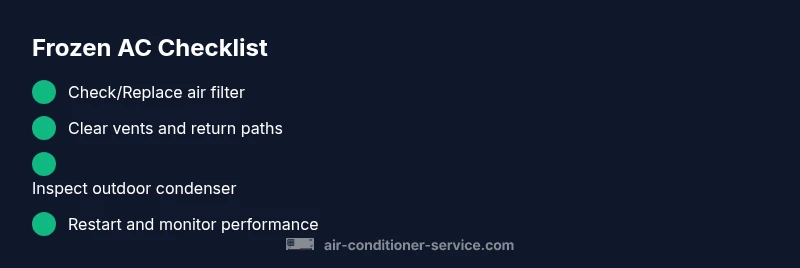
Remove the filter and inspect for dust and debris. If dirty, replace with the correct size and type. A clean filter restores airflow and reduces icing risk. Reinstall securely to prevent bypass leaks.
Tip: If you have pets or a long-haired household, consider a higher-capacity filter or more frequent changes. - 3
Inspect the indoor coil and vents
Look for obvious ice on the evaporator coil and ensure the coil door is properly sealed. Clear any lint or debris near the return air grille. Ensure the blower is pulling air through the coil effectively by listening for a steady hum and quick airflow when doors are opened.
Tip: Avoid touching refrigerant lines; keep hands away from sharp edges around panels. - 4
Clear the outdoor unit
Remove leaves, grass, or debris from the outdoor condenser. Ensure the area around the unit has several feet of clearance for proper airflow. If the outdoor fan doesn’t spin freely, have it serviced before restarting the system.
Tip: Wet or dirty condenser fins can be damaged by pressure; use a gentle nozzle or brush—no sharp tools. - 5
Test the thermostat and cycling
Set the thermostat to a moderate cooling setting and monitor the cycle. If icing recurs, the problem may be more than airflow—consider a pro diagnosis of refrigerant charge and coil condition. If airflow improves and ice does not reappear, the issue may be resolved.
Tip: Avoid setting the temperature too low; extreme settings can trigger improper cycles. - 6
Restart and observe
Restart the system after thawing and check for normal operation: cooling performance, no ice forming, and adequate airflow. If freezing returns within a short period, stop using the unit and call a licensed HVAC tech for a refrigerant and system inspection.
Tip: Document symptoms (time of day, settings, noises) to help the technician diagnose faster.
Diagnosis: Indoor ice on evaporator coil and reduced airflow; the outdoor unit may be warm with ice nearby
Possible Causes
- highAirflow restriction due to dirty filter or closed vents
- highIce on evaporator coil from dirty coils or blocked return air path
- mediumLow refrigerant charge or leak
- lowThermostat or blower issues causing improper cycling
Fixes
- easyReplace or clean the air filter; ensure all vents and returns are open
- easyRemove debris and clean the outdoor coil and ensure proper blower operation
- hardIf ice persists after thaw or if you suspect a refrigerant issue, contact a professional for refrigerant charge inspection
Common Questions
What causes an air conditioner to freeze?
Most freezes are caused by airflow restrictions or ice on the evaporator coil. Dirty filters, blocked ducts, and dirty coils are common culprits. Refrigerant-related issues are less common but serious when present.
Most freezes are from airflow problems or ice on the evaporator. Check filters first, then ducts and coils, and call a pro if it might be refrigerant-related.
Can a dirty filter cause freezing?
Yes. A dirty filter reduces airflow, causing the evaporator coil to ice up. Replacing or cleaning the filter typically resolves the issue.
Yes, a dirty filter can cause freezing by restricting airflow. Replace the filter and monitor.
Is a frozen AC dangerous?
Not usually dangerous, but it can damage the compressor or refrigerant system if ignored. Shut off the unit and assess, then call a pro if it recurs.
It's not typically dangerous, but persistent freezing can damage components; turn it off and get professional help if it keeps happening.
What should I do first when I find ice on the evaporator?
Turn off the unit to thaw, then inspect the air filter and outdoor coil for blockages. Once thawed, restart slowly and observe.
First, turn it off to thaw and check the filter and coil.
How long does it take for an AC to thaw?
Thaw time varies, but it can take several hours. Do not rush the process; ensure all ice has melted before testing again.
Thawing can take a few hours; give it time before testing.
When should I call a professional?
If icing recurs after basic fixes, or if you suspect a refrigerant leak or electrical issue, contact a licensed HVAC technician promptly.
Call a pro if freezing returns or you suspect refrigerant or electrical problems.
Watch Video
The Essentials
- Identify ice and restricted airflow early to prevent damage
- Prioritize simple fixes: filter + airflow before calling a pro
- Thaw safely and monitor for re-freeze; seek help if persists
- Maintain yearly maintenance to minimize future freezes