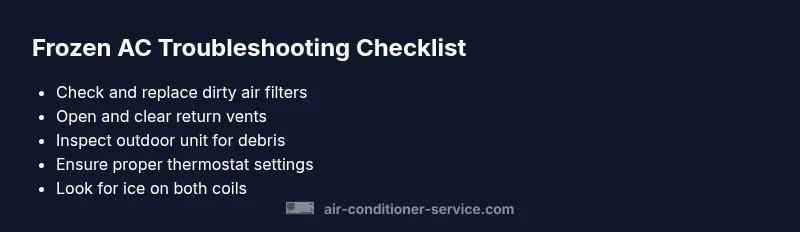
When Your Air Conditioner Freezes Up: What to Do
Practical steps to diagnose and fix a frozen AC, including safe thawing, airflow checks, and when to call an HVAC pro. Air Conditioner Service guides homeowners through clear, actionable troubleshooting.


Most often the culprit is restricted airflow from a dirty filter or blocked vents. First, turn off the system and check the air filter, return grilles, and outdoor unit clearance. If the ice persists, thaw, clean, and call a pro for refrigerant or compressor issues.
Why a Frozen AC Happens
When air conditioner freezes up what to do? The short answer is that ice forms when the system can't move enough warm air over the evaporator coil, or when the refrigerant flow is imbalanced. Most often this happens because of restricted airflow: a dirty air filter, clogged return vents, or closed-off registers reduce air reaching the evaporator coil. If the coil is starved of air, the moisture on its surface freezes, creating a layer of ice that further reduces airflow and worsens the condition. Other common triggers include low outdoor temperatures that cause defrost cycles to misbehave, a faulty blower motor that's not circulating air, or a refrigerant issue that alters pressure and temperature. In many homes, routine maintenance gaps (changing filters, cleaning grills, checking ductwork) allow dust and debris to accumulate, aggravating freezing. Understanding these factors helps you act quickly and safely to restore comfort and efficiency.
typeHint_1_0_0_0-1-0-0_0_0_0_0_0_0_0_0_0_0_0_0_0_0_0_0_0_0_0_0_0_0_0_0_0_0_0_0_0_0_0_0_0_0_0_0_0_0_0_0_0_0_0_0_0_0_0_0_0_0_0_0_0_0_0_0_0_0_0_0_0_0_0_0_0_0_0_0_0_0_0
Steps
Estimated time: 60-90 minutes
- 1
Power down the system and assess safety
Begin by turning off the AC at the thermostat and cutting power at the main breaker. This prevents further ice buildup and protects the compressor. Do not Attempt to run the unit while ice is present, as it can cause damage.
Tip: Always verify the breaker is off before touching electrical components. - 2
Inspect and replace the air filter
Remove the current filter and check its condition. If it’s dirty or clogged, replace it with a filter of the correct size and rating. A clean filter restores airflow and helps the evaporator coil thaw.
Tip: Keep a simple replacement schedule—every 1-3 months depending on usage. - 3
Clear obstructions and thaw ice
If there’s visible ice, let it thaw naturally for 30-90 minutes in a well-ventilated space. Do not chip ice with tools; aggressive scraping can damage coils and fins.
Tip: Patience is key—forcing thaw can damage components. - 4
Check indoor and outdoor airflow
Ensure all vents and registers are open and unobstructed, and inspect the outdoor unit for leaves, snow, or debris within a 3 ft radius. Proper airflow is essential once the ice melts.
Tip: Keep outdoor area clean and free of clutter year-round. - 5
Test system function and monitor
After thawing, reconnect power and run the unit for a short cycle. Listen for abnormal noises and watch for continued icing. If ice reappears, it’s likely a refrigerant or control issue.
Tip: Document outcomes to share with a technician. - 6
Assess need for professional service
If multiple checks fail to resolve icing, or you notice refrigerant odors, leaks, or electrical concerns, contact a licensed HVAC tech for a refrigerant charge, leak repair, and component testing.
Tip: Refrigerant work requires certification in most regions.
Diagnosis: AC is frost-covered on evaporator coil and/or outdoor coil; ice may form when system runs in Cool mode
Possible Causes
- highDirty air filter restricting airflow
- mediumLow refrigerant due to a leak or improper charging
- mediumBlocked outdoor unit or restricted condenser airflow
- lowFaulty blower motor or circulation issues
- lowThermostat/calibration or defrost control faults
Fixes
- easyTurn off the system and thaw ice completely before inspecting further
- easyReplace dirty air filter and ensure all returns and supply vents are open
- easyClear debris around outdoor unit and restore proper clearance
- mediumIf ice recurs after thaw or you suspect refrigerant issues, schedule professional service
Common Questions
Why is my AC freezing up, and is it dangerous to keep using it?
Freezing is usually due to restricted airflow or refrigerant issues. Running the unit in this state can damage the compressor, so power it off and seek a safe fix.
Freezing usually comes from blocked airflow or refrigerant problems, so turn it off and check basics before calling a pro.
Can I thaw the ice quickly and continue cooling?
Avoid rapid thawing with heat or tools; gentle thawing is safer. After thawing, test airflow and check for ongoing issues.
Don’t rush the thaw—gentle thawing is safer and helps prevent damage.
Is a frozen AC always due to a refrigerant leak?
Not always. Ice can form from airflow issues, dirty filters, or blocked ducts. Refrigerant leaks require a professional.
Ice isn’t always a refrigerant leak; many times it’s airflow or filter related, but leaks require a pro.
What maintenance prevents freezing?
Regular filter changes, cleaning returns and grilles, ensuring outdoor airflow, and annual professional tune-ups reduce freezing risk.
Keep filters clean and get annual maintenance to minimize freezes.
What if ice keeps returning after thawing?
Recurring icing suggests a refrigerant, control, or duct issue that needs professional diagnosis and possibly a refrigerant recharge or duct sealing.
If icing returns, a professional diagnosis is recommended.
Do I need to replace my thermostat or defrost control?
If the thermostat readings are off or defrost controls malfunction, replacing or recalibrating the control can help prevent icing.
A faulty thermostat or defrost control can cause icing; consider testing or replacement by a pro.
The Essentials
- Turn off power and thaw ice safely.
- Replace dirty filters to restore airflow.
- Clear outdoor unit debris for proper condenser function.
- Call a professional for refrigerant or electrical concerns.
- Maintain routine maintenance to prevent future freezes.