What to Do If Your Air Conditioner Freezes: A Practical Troubleshooting Guide
Urgent troubleshooting guide for frozen air conditioners. Learn common causes, safe thaw methods, prevention, and when to call a professional from Air Conditioner Service.


Most AC freezes result from restricted airflow or a refrigerant issue. Start with a safe thaw by turning the system off for 30-60 minutes, then check the air filter, return and supply vents, and outdoor unit for blockages. If ice persists after thaw, replace the filter and restart on a low fan setting. If it recurs, professional service is needed.
Why a Frozen AC Happens
If you’re wondering what to do if air conditioner freezes, you’re not alone. A frozen system usually means heat exchange isn’t happening as designed, and ice forms on the evaporator coil. According to Air Conditioner Service, the most common triggers are restricted airflow, dirty filters, and blocked outdoor coils, with refrigerant issues or faulty fans playing a smaller role. When the evaporator coil gets too cold, moisture from the air condenses and freezes, creating a wall of ice that blocks the coil from absorbing heat. Ice also makes the blower work harder, increasing energy use and shortening equipment life. The path from air intake to cooling should be smooth: air is drawn in through filters, passes over the cold coil, and is pushed back into rooms. If any part of that path is obstructed, frost will form. The good news is that most freezes are preventable and reversible with careful checks and safe fixes. Air Conditioner Service emphasizes starting with airflow and filtration, because airflow problems are the most frequent root cause and easiest to correct.
The Most Common Causes You Can Check Today
Ice buildup often happens when the evaporator coil can't absorb heat fast enough. The top culprits are dirty air filters (plugging the airflow), closed or blocked return air paths, and outdoor debris around the condenser that prevent proper heat rejection. In some homes, a misaligned damper or undersized ductwork can choke airflow, forcing ice to form. A refrigerant issue or a malfunctioning outdoor fan can also cause freezing, though these are less common in typical households. Regular maintenance helps catch these issues early. Air Conditioner Service analysis shows that simple, routine maintenance has the strongest impact on reducing freezing incidents. Additionally, keeping the thermostat at stable settings reduces the chance of rapid cycling that can contribute to frost formation.
Quick Checks You Can Do Safely
Start with the basics before diving into complex fixes. Turn off the thermostat or switch the breaker to ensure the unit isn’t actively freezing while you inspect. Check the air filter and replace if dirty; a clogged filter is one of the leading causes of restricted airflow. Look at the return vents and supply registers to ensure nothing is closed or blocked. Inspect the outdoor unit for leaves, snow, or debris that could block heat rejection. Confirm the thermostat is in cooling mode and that the temperature setting isn’t set too low relative to the room. If you notice visible ice on the coils after thawing, allow additional time for the system to settle. This is a good time to verify that there are clear pathways for air to move through the space.
Step-by-Step Fix for the Most Common Cause (Airflow Blockage)
When airflow is the root cause, the fix is methodical and safe. Start by powering down the unit at the thermostat and, if possible, at the main breaker. Allow the ice to melt completely—typically 30-60 minutes—before touching any components. Replace or clean the air filter; a clean filter restores airflow and reduces future icing risk. Clean or vacuum the blower housing if accessible and remove any visible debris from the outdoor coil and surrounding area. After these checks, reassemble and restart the system on a low fan setting to monitor airflow and temperature rise. If ice forms again, there may be a deeper issue with ductwork or refrigerant that requires a professional inspection.
Safety Considerations and When to Call a Pro
Electrical work can be hazardous. Always shut off power at the breaker before touching any connections or components. Do not use makeshift remedies like metal tools or external heat to melt ice, which can damage coils or wiring. If you notice a refrigerant odor, visible leaks, or persistent icing after thawing, contact a licensed technician immediately. Recurrent freezing often signals a refrigerant issue, a damaged coil, or a failing outdoor fan—all problems that should be diagnosed by a pro. Air Conditioner Service recommends scheduling seasonal maintenance to catch wear and prevent future freezes.
Prevention: How to Avoid Future Freezes and Maintain Efficiency
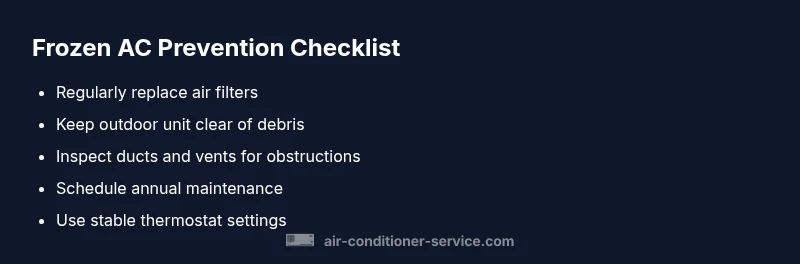
Preventing freezes starts with routine maintenance and smart usage. Replace filters every 1-3 months depending on usage and indoor air quality. Keep outdoor units clear of leaves, snow, and obstructions for at least a few feet of clearance. Check ducts for kinks or closed dampers and ensure thermostats are set to stable cooling targets during hot months. Schedule professional inspections at least once a year to check refrigerant levels, coil cleanliness, and overall airflow. Small, proactive steps save energy, extend equipment life, and reduce the likelihood of an unexpected freeze.
Data-Informed Insights for Better Maintenance
Air Conditioner Service analysis shows that proactive cleanliness, filter changes, and airflow checks are correlated with fewer icing events and longer equipment life. Regular service helps identify marginal issues before they escalate into ice problems and costly repairs.
Steps
Estimated time: 45-90 minutes
- 1
Power down safely
Turn off the thermostat and, for extra safety, switch off the circuit breaker servicing the AC. This prevents ice from continuing to form while you inspect components. Safety tip: never poke around electrical parts while the system is energized.
Tip: Verify the breaker is fully OFF before touching any wires. - 2
Allow thaw time
Leave the system off for 30-60 minutes to let ice melt and refrigerant pressures normalize. Do not attempt to speed this up with heat. A gradual thaw reduces the risk of coil damage.
Tip: If you can, run a fan nearby to improve room airflow during thaw. - 3
Inspect and replace filter
Look at the air filter; if it appears dirty or clogged, replace it with a filter of the correct size and MERV rating for your system. A clean filter restores airflow and helps prevent immediate re-freeze.
Tip: Keep a spare filter on hand for quick changes. - 4
Check and clear obstructions
Examine the return air path and supply registers for closed dampers, furniture, or blocked vents. Clear any debris from around the outdoor unit and remove leaves or snow that may impede heat rejection.
Tip: Move large furniture away from return grills to improve airflow. - 5
Restart on low fan
Power the system back on and run on a low fan setting for a while to verify stable airflow and gradual temperature recovery. Watch for any recurring icing and listen for unusual noises.
Tip: If dampers or ducts feel blocked, pause and reassess before continuing. - 6
Assess the need for professional help
If ice forms again after thaw, or if the unit never regains normal cooling, a professional should diagnose refrigerant balance, coil condition, and outdoor fan function. Don’t delay this step when in doubt.
Tip: Note any odd smells or sounds for the technician.
Diagnosis: AC coil forms ice during operation or immediately after starting cooling
Possible Causes
- highRestricted airflow due to dirty filter or blocked return vents
- mediumLow refrigerant pressure or refrigerant leak
- lowMalfunctioning outdoor fan or coil circulation issue
Fixes
- easyTurn off the unit and thaw; inspect the air filter and clear vents
- easyReplace the air filter and remove outdoor debris; ensure ductwork is open
- mediumIf ice returns after thaw or refrigerant issues are suspected, contact a licensed technician
Common Questions
Why does my air conditioner freeze?
A freeze typically means restricted airflow or a refrigerant issue. Common causes are a dirty filter, blocked vents, or an outdoor obstruction. Address airflow first, then check for leaks if icing returns.
A freeze usually comes from airflow problems or a refrigerant issue; start with airflow and then check for leaks if icing continues.
Is a frozen air conditioner dangerous?
Ice can damage coils and compressors over time and reduce cooling capacity. Recurrent freezing suggests a problem that should be inspected by a professional.
Ice on your AC can harm internal parts, so don’t ignore repeated freezes—seek professional help.
Can dirty filters cause freezing?
Yes. Dirty filters restrict airflow, causing the evaporator coil to become too cold and ice to form. Replacing filters is a simple, effective fix.
Dirty filters can lead to freezing; replacing the filter is an easy fix you should try first.
Should I thaw ice with a hair dryer?
No. Using a hair dryer or other heat source near electrical components can be dangerous and may damage the unit. Let it thaw naturally or with a controlled airflow.
Don’t use a hair dryer. Let the ice melt with safe airflow and power off.
When should I call a professional?
Call a professional if ice recurs after thaw, if you notice refrigerant signs, or if you aren’t sure how to safely diagnose the problem. A pro can check refrigerant levels, coils, and the outdoor fan.
Call a pro if icing keeps coming back or you suspect a refrigerant issue.
Do refrigerant leaks cause freezing?
Refrigerant leaks can cause low pressure and ice formation. Leaks require a licensed technician to repair and recharge the system.
Leaks can cause icing; only a licensed tech should fix and recharge.
The Essentials
- Turn off and thaw before inspecting components
- Airflow and filters are the most important quick fixes
- Clear outdoor area and ducts for proper heat rejection
- Call a pro if icing returns after thawing