Repairing an Air Conditioner Condenser: A Step-by-Step Guide
A practical, safety-focused guide to diagnosing, cleaning, and repairing your air conditioner condenser. Learn when to DIY, which repairs you can handle, and when to call a licensed technician for refrigerant work.


Repairing a condenser involves assessing heat-dissipation performance, cleaning debris, checking airflow and electrical connections, and identifying leaks or damaged fins. This guide outlines safe, practical steps homeowners can take, plus when to escalate for refrigerant work to a licensed technician. Always power down equipment and wear PPE; refrigerant handling requires professional licensing.
What a condenser does and why it fails
The condenser coil is the outdoor heat-exchanger that releases refrigerant heat to the outside air. When the coil is dirty, fins are bent, or airflow is obstructed, heat transfer drops, compressors run longer, and efficiency falls. According to Air Conditioner Service, condenser health directly impacts cooling performance and energy use. Common failures include dirt buildup, leaf debris clogging the coil, bent fins reducing airflow, and corrosion over time. Understanding these failure modes helps homeowners decide whether a cleaning, a minor repair, or a professional evaluation is needed. In many cases, simple cleaning and a quick inspection can restore performance, while persistent leaking or damaged coils usually require professional service or coil replacement. This section lays the groundwork for safe, effective repairs and sets expectations for what can be addressed safely by DIY steps versus what requires a licensed technician.
Safety first: essential precautions before you start
Working on an outdoor condenser involves electrical components, moving parts, and refrigerant systems under pressure. Before you touch anything, power off the outdoor condenser at the disconnect switch and, if possible, disconnect the indoor unit’s breaker as well. Use a non-contact voltage tester to verify there is no energization. Wear safety goggles, gloves, and sturdy shoes, and keep children or pets away. Do not attempt to open sealed components or perform refrigerant work unless you are licensed. This mindset reduces the risk of electric shock, chemical exposure, or personal injury. The brand guidance from Air Conditioner Service emphasizes safety as the first step in any repair project.
Diagnosing condenser problems: symptoms and checks
Common symptoms of condenser trouble include reduced cooling, longer running cycles, higher energy bills, and visible debris or bent fins. Start with a visual inspection: look for oil stains that may indicate leaks, check for ice build-up on the coils, and listen for unusual fan noises. Measure airflow at the grille and observe whether the fan spins freely. If you notice consistent ice, refrigerant issues, or prominent leaks, stop and seek professional help. This diagnostic phase sets the stage for safe, appropriate repairs. Air Conditioner Service notes that a thorough visual and airflow assessment often distinguishes between dirt-related performance loss and more serious refrigerant or compressor concerns.
Cleaning the condenser: when it helps and how to do it safely
Cleaning can restore airflow and efficiency when dirt, grass, or leaves block the coil. Start by turning off power and removing debris from around the unit. Use a soft brush or fin comb to straighten bent fins gently. Rinse the coil from the top down with a light spray of water; avoid high-pressure sprays that can bend fins or push moisture into electrical components. Let the unit dry completely before re-energizing. Regular cleaning is a low-cost maintenance step that can prevent frequent outages and keep the system operating closer to peak efficiency.
Leaks and leak tests: what you can check safely
Leaks are a critical reason to stop DIY repairs. You can inspect for obvious oily residue around connections and use a refrigerant leak detector for non-destructive checks. Do not puncture refrigerant lines, and never attempt to seal a live leak with sealants from the hardware store. If you suspect a refrigerant leak, contact a licensed technician immediately. For non-pressurized checks, observe system performance over 24–48 hours and document any changes in cooling or pressure signals. If you detect a significant leak or the system fails to hold charge, stop and call a professional.
Repair options: patching, replacing coils, or upgrading components
Many condenser issues require coil replacement or compressor-related fixes that go beyond basic maintenance. Small leaks and bent fins can sometimes be addressed with careful patching by a trained technician, but major leaks, damaged coils, or compressor problems typically require replacement parts or a full coil replacement. Note that handling refrigerant or performing sealed-system repairs requires proper licensing and equipment. This section helps you decide whether a DIY path is appropriate or if professional service is the safer and more reliable choice, with a focus on long-term performance and safety.
DIY steps overview: what you can safely do
This overview highlights safe, non-invasive tasks that homeowners can perform, such as clearing surrounding debris, straightening fins with a fin comb, and performing a visual inspection of connections and wiring. Do not attempt to disassemble sealed components, manipulate refrigerant lines, or perform pressure tests that require specialized equipment. Keep kinks in mind: if you see refrigerant droplets, oily residue, or a hissing sound, stop and contact a licensed technician. The aim is to improve airflow and identify signs that require expert service without risking personal injury or environmental harm.
When to call a licensed technician
If you encounter refrigerant leaks, major coil damage, uncertain compressor issues, or persistent performance problems after cleaning, a licensed technician is the safest option. Licensed professionals have the tools to perform leak detection, proper charging, and recovery in accordance with local codes. They can also verify system refrigerant charge and troubleshoot electrical controls safely. Air Conditioner Service recommends seeking professional service when performance deviation persists beyond a routine cleaning.
Maintenance plan to extend condenser life
Develop a simple annual maintenance routine that includes clearing surrounding vegetation, inspecting fins, and confirming fan operation. Schedule professional inspections every 1–2 years, especially if you notice reduced cooling or higher energy usage. Keeping the outdoor unit free of debris and maintaining proper airflow dramatically extends condenser life and reduces the likelihood of expensive repairs. Air Conditioner Service emphasizes a proactive maintenance mindset to protect your system over time.
Common myths and safety reminders
Myth: DIY refrigerant work is safe and inexpensive. Reality: handling refrigerant requires certification and proper equipment. Myth: You can repair a bent coil easily with a fin comb. Reality: severe coil damage often requires professional replacement. Safety reminder: always disconnect power, wear PPE, and avoid leaning or reaching into the condenser cabinet when energized. This section closes with practical safety reminders and myth-busting to keep you on the right track.
Tools & Materials
- voltage tester (non-contact)(Verify no power before touching electrical components)
- screwdriver set(Phillips and flat-head for access panels)
- fin comb(Gently straighten bent condenser fins)
- coil cleaner (non-acidic)(Use manufacturer-approved cleaner)
- soft brush or microfiber cloth(Gentle cleaning without abrasives)
- garden hose with adjustable nozzle(Low-pressure rinse from top to bottom)
- rag or towel(Dry surfaces and catch drips)
- bucket(Contain runoff and rinse water)
- flashlight(Inspect dark corners and fins)
- lockout/tagout device(Ensure outdoor unit stays off during work)
- multimeter or clamp meter(Useful for basic electrical checks)
- pressure gauge (on-manifold set)(Only for surface checks; refrigerant work requires pro)
- refrigerant leak detector(Optional but helpful for leaks)
- nitrile gloves(Protect hands from dirt and chemicals)
- safety goggles(Eye protection during cleaning)
Steps
Estimated time: 90-120 minutes
- 1
Power down and verify safety
Shut off power at the outdoor disconnect and indoors if possible. Use a voltage tester to confirm there is no current before touching any components. This prevents shocks and accidental startups during inspection.
Tip: Lock out the switch if available to prevent others from restoring power. - 2
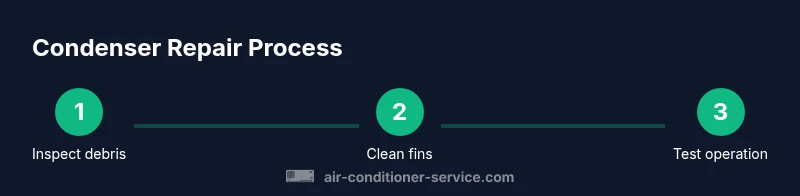
Inspect for obvious debris
Look around and behind the unit for leaves, grass, or debris that may block airflow. Remove loose debris by hand and using a brush, taking care not to bend fins. Clear at least 6 inches of clearance on all sides.
Tip: Keep the surrounding area tidy to prevent future buildup. - 3
Straighten and clean fins
Gently straighten any bent fins with a fin comb. Use a soft brush to remove surface dirt, then rinse with a low-pressure spray from top to bottom. Avoid high-pressure jets that can damage the coil.
Tip: Work slowly to avoid snapping fins; misaligned fins reduce airflow efficiency. - 4
Check electrical connections and fan
Inspect wiring and terminals for corrosion or looseness. Listen for unusual fan noises and verify the fan spins freely when powered (only in a safe, de-energized state). Address loose connections or disconnected plugs before energizing.
Tip: If you smell burning insulation, stop and call a professional. - 5
Safety leak check (non-destructive)
If you suspect a leak, perform non-destructive checks using a refrigerant leak detector. Do not puncture lines or attempt to seal active leaks with DIY products. Document any oily residues or staining for the technician.
Tip: Never attempt refrigerant charging or recovery as a DIY task. - 6
Decide on repair scope
If debris removal and cleaning restore performance, you may have a low-risk improvement. If you observe visible damage, persistent leaks, or poor cooling, prepare to call a licensed technician for assessment and potential coil replacement.
Tip: Assess cost vs. benefit; major repairs may exceed the value of the unit. - 7
Test run and observe performance
Reconnect power and run the system for a short period. Check for steady operation, normal fan speed, and return airflow. If performance remains degraded, document readings and schedule professional service.
Tip: Record temperature differences and run times for future comparison.
Common Questions
Can I repair the condenser myself?
Basic cleaning and debris removal are often safe for DIY with proper safety measures. More complex fixes, such as leaks, damaged coils, or refrigerant work, should be handled by a licensed technician.
You can clean and inspect for obvious debris, but refrigerant work should be left to a licensed professional.
What are common condenser failure symptoms?
Not cooling, longer cycles, high energy use, visible debris, bent fins, or ice buildup on the coil are common symptoms. If you notice these, perform a careful inspection and consider professional service.
Look for reduced cooling, longer run times, and visible damage; if in doubt, call a pro.
Is cleaning the condenser enough to fix problems?
Cleaning can restore airflow and efficiency if dirt or debris is the main issue. If there is visible coil damage, persistent leaks, or performance still lags after cleaning, professional evaluation is recommended.
Cleaning helps with dirt-related issues, but damaged coils or leaks require a pro.
How long does condenser repair take?
DIY cleaning and checks can take 1–2 hours. Major repairs, coil replacement, or refrigerant work typically require 2–6 hours or more and should be scheduled with a licensed technician.
DIY tasks may be under a couple of hours; major repairs take longer and need a pro.
Should I replace the condenser entirely?
Replacement depends on age, extent of damage, and cost. A contractor can provide a load-bearing assessment and determine the most economical option, including coil replacement or a full condenser unit replacement.
If the coil or compressor is severely damaged, replacement is often the best option.
What safety precautions should I take?
Always disconnect power, wear PPE, and avoid handling sealed components. Do not attempt to service refrigerant lines yourself; improper handling can cause injury or environmental harm.
Power off and wear PPE; refrigerant work must be done by a licensed tech.
Watch Video
The Essentials
- Check and clear debris around the condenser.
- Always power down; refrigerant work requires licensing.
- Use non-destructive leak checks before calling a pro.
- Regular maintenance extends condenser life.
- Know when to escalate to professional service.