How to Learn Air Conditioner Repair: A Practical Guide
A comprehensive, safe, and structured path to learning air conditioner repair for homeowners and renters. Learn foundational concepts, build your toolkit, follow a repeatable diagnostic workflow, and know when to call a pro.


Learn how to learn air conditioner repair with a structured, hands-on approach. This guide covers essential safety basics, a practical tool kit, and step-by-step procedures to diagnose common cooling problems. You’ll build confidence through controlled practice and progressive challenges, whether you’re a homeowner or renter, and you’ll know when to call a professional.
How to learn air conditioner repair: a practical path
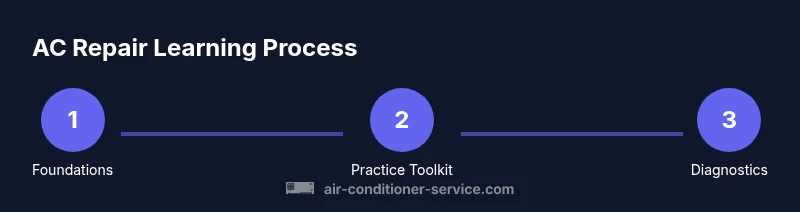
Learning to fix and maintain air conditioners is an obtainable goal for homeowners and renters who commit to a structured plan. If you’re asking how to learn air conditioner repair, start with safety, foundational concepts, and a clear progression path. According to Air Conditioner Service, the fastest way to build competence is to pair short theory sessions with hands-on practice on non-live units or decommissioned equipment. This approach helps you understand systems without risking personal safety or restrictive refrigerant handling. The phrase 'how to learn air conditioner repair' is not just about memorizing parts; it’s about building a repeatable workflow that you can apply to different makes and models. In this guide, you’ll see a learning path that combines theory, observation, guided practice, and careful documentation.
Your goal is not to become a licensed technician overnight, but to gain practical skills to diagnose and perform basic maintenance safely. Start by outlining your goals: identify common failure modes (not cooling, improper airflow, unusual noises), learn the safe way to observe and test, and learn when to escalate to a pro. As you proceed, you’ll get to know essential safety terms, such as lockout/tagout practices, proper electrical precautions, and refrigerant awareness. The process is iterative: each cycle you perform should increase your confidence, reduce your errors, and create a reusable checklist you can apply to real-world situations. By focusing on concrete tasks you can repeat, you’ll build measurable progress and a foundation for more advanced topics, such as diagnosing cooling efficiency issues or replacing small components. The overall aim is steady, safe progress that aligns with your home maintenance goals.
Tools & Materials
- Safety glasses(ANSI Z87.1 or higher for impact protection)
- Insulated gloves(Protect hands and provide basic electrical insulation)
- Non-contact voltage tester(Verify there is no live voltage before touching components)
- Digital multimeter(Check voltage, resistance, and continuity safely)
- Screwdrivers (Phillips & flat-head)(Assorted sizes (3-8 inch handles))
- Needle-nose pliers(Grip small parts and wires securely)
- Adjustable wrench(Loosen/tighten panels and fittings)
- Flashlight or headlamp(Illuminates tight or dark work areas)
- Notebook and pen(Document observations and test results)
- Torque screwdriver (optional)(Useful for precise fastener settings)
Steps
Estimated time: Total time: 6-12 hours
- 1
Set up a safe learning space
Prepare a dedicated, well-lit workspace away from live equipment. Disconnect power to any unit you’ll touch and verify with a non-contact tester. Establish a simple safety plan and a learning log to record what you do and observe.
Tip: Start a safety checklist you can reuse for every practice session. - 2
Define learning goals and baseline knowledge
Write down 3–4 core skills you want to master (e.g., basic electrical checks, airflow assessment, filter maintenance). Assess your current understanding of the basics so you can track progress over time.
Tip: Set SMART goals (Specific, Measurable, Achievable, Relevant, Time-bound). - 3
Assemble your beginner toolkit
Gather essential tools from the toolsMaterials list and organize them in a labeled, portable container. Practice using each tool on safe, non-live components to build familiarity.
Tip: Label tools clearly and keep frequently used items within arm’s reach. - 4
Study foundational concepts
Review core topics like the refrigeration cycle, electrical basics, and different system types. Use short modules or videos to reinforce concepts before hands-on work.
Tip: Take brief notes and create a one-page concept map for quick review. - 5
Practice on non-live equipment
Use a decommissioned unit or training kit to practice testing, disassembly, and reassembly without refrigerant handling. Focus on safe procedures and repeatability.
Tip: Document each practice session with photos or diagrams for later reference. - 6
Apply a repeatable diagnostic workflow
Follow a simple, repeatable steps-based checklist when diagnosing issues. Verify safety first, observe symptoms, inspect components, test signals, and record results.
Tip: Review results against a baseline and identify whether the issue is mechanical, electrical, or control-related.
Common Questions
What is the best way to start learning air conditioner repair?
Begin with safety basics, define clear learning goals, and practice on non-live equipment to build confidence before touching live systems.
Start with safety, set learning goals, and practice on safe equipment to build confidence.
Do I need a license to repair my own AC?
In many places homeowners can perform basic maintenance, but refrigerant handling and major repairs usually require a licensed technician. Check local regulations.
Check your local laws—basic maintenance is often allowed, but refrigerant work usually requires a license.
What tools are essential for a beginner?
A basic safety-focused toolkit plus a multimeter, non-contact tester, screwdrivers, pliers, and a notebook will cover common learning tasks.
A safety kit, a multimeter, and common hand tools are essential for beginners.
How long does it take to learn air conditioner repair?
Learning timelines vary, but a steady schedule of study and practice over weeks to months builds practical competence.
With regular practice, you can build basic skills in a few weeks, with mastery over months.
What are common mistakes beginners make?
Underestimating safety, skipping documentation, and assuming refrigerant handling is safe without training are frequent errors.
Ignoring safety or skipping logs can lead to repeated mistakes.
When should I call a professional?
If refrigerant is involved, if you suspect electrical hazards, or if the unit is under warranty or highly complex, hire a pro.
Call a licensed pro if refrigerant work or high-voltage issues are involved.
Watch Video
The Essentials
- Define a safe, structured learning plan before touching equipment
- Build a basic toolkit and a clean, organized workspace
- Follow a repeatable diagnostic workflow for consistency
- Document findings to track progress and prevent repeated mistakes
- Air Conditioner Service's verdict: structured, safe learning yields the best long-term results