Troubleshooting a problem air conditioner: practical guide
Urgent, practical troubleshooting for a problem air conditioner. Start with power and thermostat checks, follow a diagnostic flow, and learn when to call a pro for safe, effective repairs.


The most likely causes of a problem air conditioner are a power issue (tripped breaker or blown fuse) or a thermostat misread. First, verify the outlet is live and the thermostat is set to cool, then reset the breaker if needed. If it still won’t start, follow the diagnostic flow and proceed to the step-by-step fixes or call a licensed technician for a safe, professional check.
Why the problem air conditioner happens
A problem air conditioner can disrupt your home's comfort quickly, but most failures have straightforward root causes. According to Air Conditioner Service, homeowners often blame the unit for a forgotten switch, a tripped breaker, or a misread thermostat long before a component wears out. In practice, the most common culprits are electrical power issues, thermostat problems, and restricted airflow. Outdoor debris, a dirty condenser, or a blocked indoor return can create symptoms that feel like the unit is failing, when in fact it is simply being starved of power or airflow. Recognizing these patterns helps you triage safely and effectively, reducing unnecessary service calls and giving you confidence to handle small fixes yourself.
Even if the weather has been mild, a problem air conditioner may surface due to aging components, loose connections, or a missed maintenance window. The good news is that most issues respond to methodical checks rather than expensive replacements. In this section you’ll learn a practical triage approach: verify power and control signals, inspect airflow, and confirm there are no obvious blockages; then decide whether to DIY further or call a pro.
Immediate checks you can perform safely
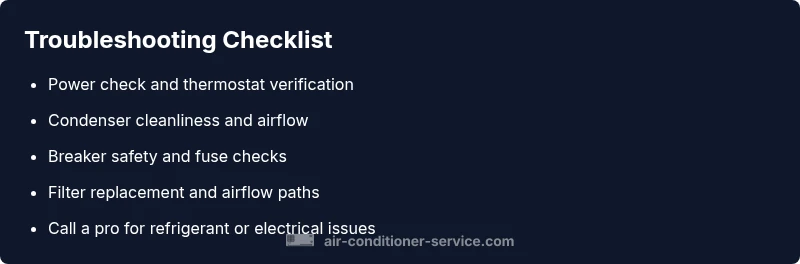
Before you dive deeper, ensure your safety and the unit’s safety. Power off at the breaker or unplug the indoor unit before touching electrical components. Then verify basic control signals: set the thermostat to cool, ensure the fan is on auto, and confirm the temperature setpoint is reasonable for your climate. Inspect the outdoor condenser for obvious obstructions (leaves, grass, or debris) and ensure there is adequate clearance around the unit. Replace or clean the air filter if it’s clogged, as poor airflow can mimic a cooling failure. If any step shows a visible problem, address it first and re-test.
When reviewing a problem air conditioner, always start with simple, tangible checks before moving to more complex diagnostics.
Common electrical issues and what to look for
Electrical problems are the most frequent reasons a problem air conditioner won’t operate as expected. Look for a tripped circuit breaker, a blown fuse, or a loose power connection at the outdoor unit. If the outdoor fan doesn’t spin or you hear buzzing, the capacitor or contactor could be failing. Check for signs of wear on wiring and connections, and listen for unusual sounds when you power the unit. If you suspect an electrical fault, do not continue testing beyond basic checks—power safety is the top priority.
Diagnostic flow: symptom to diagnosis
Use a simple, repeatable flow to identify the most likely cause. Start with the symptom: unit not turning on, it runs but doesn’t cool, or it short-cycles. For not turning on, verify power and safety switches, then test the thermostat and override settings. If it runs but doesn’t cool, check airflow, air filter, outdoor condenser cleanliness, and refrigerant charge with a pro tool if needed. If it short-cycles, inspect thermostat wiring and outdoor airflow. Each symptom points to a likely cause and directs the next fixes, helping you avoid unnecessary parts replacement.
Step-by-step: fix for the most common cause
The most common fix usually centers on power and control signals. Step 1: switch off the main power and verify the unit is de-energized. Step 2: reset the breaker and any safety switches, then restore power and test. Step 3: verify the thermostat is in cooling mode and set to a reasonable temperature; replace battery if applicable and recalibrate. Step 4: re-check any visible fuses or disconnects at the outdoor unit. Step 5: re-test operation and listen for cycling and fan sound. Tip: if the unit still refuses to start, the issue may be a failed relay or capacitor, which should be handled by a pro.
Safety tips and common mistakes
- Always power down the system at the main breaker before touching any components to prevent shock. - Do not run the unit with a damaged power cord or exposed wiring. - Keep hands, pets, and children away from the outdoor unit while testing. - Avoid over-cleaning or using water near electrical connections; moisture can cause shorts. - Common mistakes include skipping the safety shutoff, ignoring a burning smell, and assuming refrigerant issues without proper testing.
Prevention and maintenance to avoid recurrence
Regular maintenance is the best defense against a recurrent problem air conditioner. Schedule seasonal checks to clean the condenser coils, replace or clean filters every 1–3 months depending on usage, and inspect the condensate drain for clogs. Keep the outdoor unit clear, trim nearby vegetation, and ensure proper airflow through returns and supply vents. A simple thermostat calibration and battery replacement can prevent many not-turning-on issues. Finally, track performance: note room temperatures, run times, and any unusual noises to catch trouble early.
When to call a pro and what to expect
If simple checks don’t restore performance, it’s time to contact a licensed HVAC technician. A pro can safely measure refrigerant charge, diagnose electrical faults, and test capacitor and compressor health with professional tools. Expect a diagnostic visit to include a visual inspection, testing of electrical components, pressure testing, and potentially a refrigerant recharge if leaks are found. Pro guidance is essential for complex issues or when dangerous conditions exist, such as burning smells or buzzing noises near power sources.
Quick post-checks and notes
After any fix, re-test under typical conditions and monitor for normal temperature drop and steady run times. If performance improves but then declines again, re-check airflow paths and consider a professional inspection of refrigerant lines. Document issues and the steps you took so you have a baseline for future maintenance. Regular cleaning and filter changes are the cheapest insurance against a repeat of a problem air conditioner.
Steps
Estimated time: 60-90 minutes
- 1
Power down and verify source
Shut off power at the main breaker and confirm the unit is de-energized. This protects you while inspecting electrical components.
Tip: Always test for voltage with a tester before touching wiring. - 2
Reset breakers and safety switches
Flip the breaker off, wait 10 seconds, then back on. Check any outdoor disconnects and ensure they’re snug and intact.
Tip: If the breaker trips again, stop and seek professional help. - 3
Check thermostat operation
Set the thermostat to cool, fan auto, and a temperature within 5-8 degrees of indoor temperature. If available, replace the thermostat battery or recalibrate.
Tip: A digital thermostat often provides clearer fault indicators. - 4
Inspect electrical connections
Look for loose wires or signs of wear at the outdoor unit and inside the air handler. Re-seat connections if you’re confident there’s no damage.
Tip: Do not force connections; damaged wires require replacement. - 5
Evaluate airflow and filters
Check indoor and outdoor air paths for obstructions. Replace dirty filters and remove debris from the condenser coils.
Tip: Restrictive airflow masks refrigerant issues and can cause short cycling. - 6
Test re-energization
Restore power and observe the unit for normal start, run, and cooling cycles. Listen for unusual noises.
Tip: If it still won’t start, document symptoms and proceed to professional help.
Diagnosis: AC won't start or run
Possible Causes
- highPower issue (tripped breaker or blown fuse)
- mediumThermostat misread or settings incorrect
- highSafety switch or disconnect tripped
- lowBlocked airflow or dirty condenser
Fixes
- easyCheck outlet/power and reset the main breaker; ensure the unit is energized
- easyVerify thermostat mode and setpoint; replace thermostat battery if applicable
- easyInspect outdoor disconnects and safety switches; re-seat or replace fuses if needed
- easyClear debris from condenser and ensure adequate airflow; replace filters
Common Questions
What is the first thing I should check when my air conditioner won't start?
Begin with power and thermostat checks. Confirm the unit is energized and the thermostat is set correctly before exploring deeper diagnostics.
Start by checking power and the thermostat to see if the unit is being signaled to run.
Can a dirty air filter cause a problem air conditioner not cooling?
Yes. A clogged filter reduces airflow and can make the system struggle to cool. Replace or clean the filter and re-test.
A dirty filter can starve the system of air; replace it and try again.
Is low refrigerant a common reason for not cooling, and can I fix it myself?
Low refrigerant is a refrigerant-leak issue that requires professional service. Do not attempt to recharge refrigerant yourself.
Low refrigerant means a leak, which needs a pro to fix and recharge safely.
Should I repair or replace a faulty capacitor?
Capacitors can fail and cause startup or short-cycling issues. This is another task for a trained technician due to high voltage.
Capacitors can be dangerous; call a pro for replacement.
When is it safer to call a professional instead of DIY?
If you encounter refrigerant concerns, electrical faults, unusual noises, or burning smells, stop and contact a licensed HVAC technician.
If in doubt about wiring or refrigerant, call a pro.
Do window units require different troubleshooting steps?
Some principles are the same (power, thermostat, airflow), but window units have unique components and safety concerns. Refer to the manufacturer manual.
Window units share basics, but follow their specific manual for safety.
Watch Video
The Essentials
- Start with power and thermostat checks.
- Use a clear diagnostic flow before replacing parts.
- Keep airflow paths clean and unobstructed.
- Call a pro for electrical, refrigerant, or compressor issues.