Portable Air Conditioner Repair: A Step-by-Step Guide
Learn practical, safe techniques to diagnose and fix common portable air conditioner issues. This step-by-step guide covers cleaning, venting, drainage, noises, and when to call a professional for repairs.


Quick answer: You can diagnose and fix common portable air conditioner problems with a safe, hands-on approach. This guide covers not-cooling symptoms, leaks, strange noises, and drainage issues, plus step-by-step checks you can perform before calling a pro. Start with safety, unplug the unit, and inspect filters, venting, and condensate drainage for quick wins.
Why portable AC repair matters
According to Air Conditioner Service, portable air conditioners are compact, affordable comfort devices for many homes, but they rely on a few simple components that can drift out of spec with heavy use. Regular repair and maintenance isn't about heroic fixes; it's about predictable, safe steps that keep cooling performance high and energy bills reasonable. When a portable unit cools poorly, leaks, or makes unusual noises, it usually signals a simple cause that you can address with basic tools and habits. In practice, keeping the filter clean, ensuring correct venting, and managing condensate drainage can recover most lost efficiency without expensive service calls. A small investment of time now translates into fewer repair bills later and less environmental impact from running a unit that’s working harder than necessary. The goal isn't perfection but reliability; a well-maintained portable AC stays cooler, quieter, and safer for you and your family.
Safety first: electricity, water, and refrigerants
Working on any appliance involves electrical hazards, and portable AC units bring water into close contact with electrical components. Before you touch anything, unplug the unit and, if possible, switch off the circuit that powers it. Do not operate the device with wet hands or standing water nearby. If your unit uses a condensate bucket, empty it only when the unit is unplugged. Refrigerants are not user-serviceable; any leak or suspected refrigerant issue must be handled by a licensed technician. Wear eye protection and use a flashlight to inspect behind access panels. Keep children and pets away while you troubleshoot. If you hear hissing or smell chemical odors, stop immediately and seek professional help. Following these safety steps protects you and extends the life of the device.
Diagnosing common symptoms and root causes
Not cooling well? Common culprits include a dirty filter, blocked exhaust hose, or insufficient venting. In cold months, frost on the evaporator coil can reduce efficiency. Leaks usually stem from a clogged drain line or cracked drainage pan. Unusual noises often indicate loose panels, a dirty fan, or a failing motor. Before assuming the worst, perform quick checks: examine the air intake and output grilles for obstructions, verify the exhaust hose is fully extended and not kinked, and touch the exterior of the cabinet to see if parts are loose. If the unit turns on but fails to cool, you can often isolate whether the problem is airflow (filter/vents) or refrigeration (compressor, condenser coil).
Visual checks you can do safely
A straightforward visual inspection helps identify many issues without opening critical systems. Start with the air filter; remove and inspect for dust or mold. A clogged filter reduces airflow and can cause frost on coils. If the filter is dirty, replace it or clean a washable filter according to manufacturer instructions. Next, check the exhaust vent hose for kinks, bends, or obstructions; a blocked hose forces hot air back into the room and reduces cooling efficiency. Inspect the cabinet for loose screws or rattles that may indicate a loose fan blade or cracked mounting. Look at the condensate tray or bucket; a full tray may trigger a safety shutoff; ensure you disconnect power before emptying. Finally, inspect the condenser coils on the back or side of the unit; dust buildup inhibits heat rejection. If you can, carefully wipe the coils with a soft brush or cloth. These steps can restore airflow and cooling without opening sealed components.
Tool kit and parts you’ll need
To safely perform these checks, assemble a simple kit before you start. You’ll need a screwdriver set (Phillips and flat-head), a replacement air filter, a soft brush or microfiber cloth, a vacuum with a brush attachment, a bucket or tray for condensate, and a multimeter for basic electrical checks. Keep a flashlight handy to inspect tight spaces, and wear gloves to protect your hands. A small amount of mild detergent or coil cleaner is useful for stubborn grime on coils. This kit covers most common DIY fixes and helps you avoid unnecessary trips to a repair shop.
Step-by-step diagnostic workflow (overview)
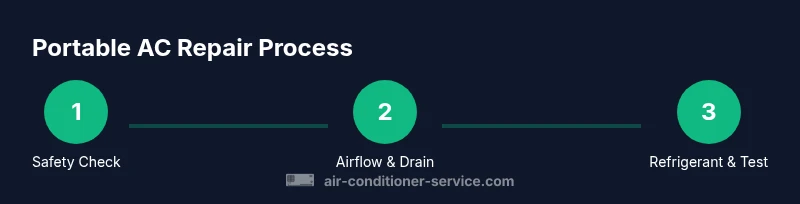
The repair workflow follows a simple logic: verify safety, assess airflow, evaluate drainage, inspect for signs of refrigerant/refrigerator issues, and test core cooling function. Start with the air intake and exhaust to ensure unobstructed airflow. If airflow is good but cooling is weak, move to condensate and drainage checks, followed by simple electrical checks. If you encounter frost on coils or a warm cabinet, address airflow first, then coil condition. End with a functional test in cooling mode and verify that the device responds to thermostat settings. This approach minimizes risk while maximizing the chance of a successful DIY fix. Air Conditioner Service emphasizes documenting each step so you can retrace actions if needed.
Cleaning, drainage, and filter maintenance
Regular maintenance reduces the likelihood of sudden failures. Begin by cleaning or replacing the air filter monthly during peak use. Clean the exterior housing and wipe down coils with a soft brush; note any signs of corrosion or damage. Inspect and clear the condensate drain, ensuring no blockages, and verify that the drainage pan is intact. Check the drain hose for kinks and ensure it exits to a proper drain location. Keep the unit level so condensate drains correctly. Finally, schedule a quick operational test after maintenance to confirm cooling performance and alarm indicators.
When to service refrigerant or compressor concerns
If airflow and drainage checks don’t restore cooling, you may be facing issues inside sealed refrigerant circuits or the compressor. Refrigerant leaks or low refrigerant require licensed technicians and specialized equipment. Similarly, compressor failures or severe electrical faults are not safe to repair at home. If you hear continuous unusual noises, detect persistent ice buildup on the evaporator, or notice a steady drop in cooling performance after all DIY steps, stop and contact a professional. Prevention remains the best approach; routine inspections can catch problems before they become expensive failures.
Preventive maintenance schedule for portable ACs
Create a simple calendar for monthly, quarterly, and annual tasks. Monthly tasks include filter cleaning/replacement and vent hose inspection. Quarterly tasks involve deep cleaning of coils and a thorough visual inspection of seals and gaskets. Annually, have a certified tech inspect refrigerant lines and ensure electrical connections remain tight and safe. Keeping a maintenance log helps you track issues and predict upcoming service needs. A proactive approach reduces downtime and extends the life of portable units.
Common mistakes to avoid
Common missteps include running the AC with a dirty filter, neglecting vent hoses, or attempting to recharge refrigerant without proper equipment. Don’t ignore frost on the coils or unusual hums—these can indicate impending failures. Avoid disassembling sealed components or touching wiring without power shutoff. Finally, don’t rush to apply fixes without verifying root causes; addressing only symptoms often leads to recurring problems.
Tools & Materials
- Screwdriver set (Phillips and flat-head)(Phillips #1-2, flat-head 3/16 inch)
- Replacement air filter(Check manufacturer compatibility)
- Soft brush or microfiber cloth(For dust and coil cleaning)
- Vacuum with brush attachment(Helpful for deep-cleaning dust in tight spaces)
- Bucket or tray for condensate(Have a place to drain water safely)
- Multimeter(Basic voltage and continuity checks)
- Mild detergent or coil cleaner(Use only as recommended by manufacturer)
- Gloves and flashlight(Personal safety and visibility)
Steps
Estimated time: 30-60 minutes
- 1
Power down and unplug
Ensure the unit is disconnected from power before touching any components. This is the single most important safety step to avoid electrical shock.
Tip: If the unit is hard-wired or difficult to unplug, switch off the circuit at the breaker first and wait a full minute before proceeding. - 2
Inspect and clean the air filter
Remove the filter and assess its condition. Clean washable filters with soap and water or replace a disposable filter. Dry completely before reinstalling.
Tip: A clean filter restores airflow and cooling efficiency immediately. - 3
Check exhaust hose and venting
Inspect the hose for kinks, bends, or obstructions. Ensure the hose is fully extended and vents outdoors without leaks.
Tip: Even a small bend can dramatically reduce cooling performance. - 4
Inspect condensate drainage
Locate the condensate tray or bucket and check for blockages. Empty if full after unplugging the unit, then verify the drain path is clear.
Tip: Never operate with a clogged drain; water buildup can trigger safety shutoffs. - 5
Check coils and cabinet for frost
If you notice frost on the coils or reduced airflow, the issue may be airflow-related rather than refrigerant. Allow coils to thaw if needed.
Tip: Avoid using metal tools on coils; use a soft brush to remove dust gently. - 6
Electrical checks and panel inspection
With power still off, inspect visible wiring and connections for looseness or damage. Use a multimeter to verify continuity if you’re comfortable.
Tip: If you spot damaged wiring, stop and seek professional help. - 7
Test in cooling mode and confirm results
Plug in, set to cooling mode, and monitor temperature drop and fan operation. Listen for unusual noises and watch for leaks.
Tip: Document any changes and how quickly cooling returns after adjustments.
Common Questions
Why isn't my portable AC cooling properly?
Most cooling problems stem from airflow issues (dirty filter, blocked vent) or drainage problems. If airflow is adequate but cooling remains weak, check coils and electrical components. If unresolved, consider professional service.
Not cooling is usually due to airflow or drainage problems. Start with the filter and vents, then coils and electrical checks, and contact a pro if unresolved.
Can I repair refrigerant leaks myself?
No. Refrigerant handling requires licensed technicians and proper equipment. A suspected leak should be addressed by a professional to prevent environmental harm and ensure safety.
Refrigerant leaks require professionals and cannot be repaired safely at home.
How often should I clean the filter?
Most portable ACs benefit from cleaning or replacement monthly during heavy use. Check the manufacturer’s instructions for your model.
Clean or replace the filter roughly every month when you’re using it a lot.
Is it safe to use a portable AC outdoors?
Portable ACs are designed for indoor use. Outdoor operation can void warranties and pose safety risks due to moisture and electrical exposure.
Use the unit indoors unless the manufacturer specifies outdoor use.
What tools do I need to troubleshoot?
A basic toolkit (screwdrivers, multimeter, cloth) covers most checks. Do not open sealed refrigerant components and follow safety warnings.
A simple toolkit plus safety guidelines will handle most DIY checks.
When should I replace rather than repair a portable AC?
If repairs are frequent or costs approach a new unit, or the model is old (typically 5-7+ years), replacement is often the wiser choice.
Consider replacement when repairs cost more than a new unit or the unit is aging.
Watch Video
The Essentials
- Unplug before any inspection or repair
- Prioritize airflow and drainage before refrigerant checks
- Regular maintenance reduces downtime and cost
- Reserve refrigerant work for licensed professionals
- Document steps to simplify future service