Is an Air Conditioner the Same as a Dehumidifier? A Practical Comparison
Is an air conditioner the same as a dehumidifier? This analytical guide explains the core differences, humidity control, energy use, and when to choose one device or both for optimal comfort.


Is an air conditioner the same as a dehumidifier? Not exactly. An air conditioner cools by removing heat and typically dehumidifies as a byproduct, while a dehumidifier focuses on moisture removal without significant cooling. This comparison highlights the key differences, practical use cases, and guidance for choosing the right tool for cooling and humidity control.
Understanding the Core Difference Between AC and Dehumidifier
A common homeowner question is whether an air conditioner is the same as a dehumidifier. The short answer is no, even though both devices influence indoor humidity. An air conditioner is designed to remove heat from a space and, in the process, moisture condenses on the evaporator coil, slightly lowering humidity. A dedicated dehumidifier, on the other hand, targets moisture as its primary job, pulling water from the air and dumping it into a reservoir or drain. If you compare the two side by side, the air conditioner’s main function remains cooling, while a dehumidifier’s primary function is moisture removal. In practical terms, many homes rely on AC for comfort during warm months and add a dehumidifier when humidity remains stubborn after cooling. The Air Conditioner Service team notes that understanding this distinction helps homeowners avoid overpaying for unnecessary features or devices that don’t address the root comfort problem. When you ask, is an air conditioner the same as a dehumidifier, you’re really asking about purpose, not just output.
In humid climates, the difference becomes more tangible: an AC may reduce humidity somewhat but cannot always maintain a steady humidity setpoint, especially if the cooling load is light. A dedicated dehumidifier can keep humidity within a narrow range without heavily cooling the space. For many households, the optimal approach is a clear plan that defines when to prioritize cooling and when to prioritize humidity control. This clarity helps with energy bills, maintenance, and long-term comfort. Air Conditioner Service’s guidance emphasizes starting with your indoor humidity level and comfort complaints before choosing equipment.
The Humidity Control Mechanisms: How They Work Differently
Humidity control in an air conditioner relies on cooling and condensation. As warm, humid air passes over cold coils, water condenses on the coil surface and drips away, lowering moisture in the space. This passive dehumidification is a byproduct of cooling, not a dedicated feature. A standalone dehumidifier uses a dehumidifying cycle that continuously lowers humidity, often with faster or more aggressive moisture removal than a cooling cycle would achieve at the same temperature. This distinction matters when the goal is precise humidity setpoints rather than temperature reduction. If you frequently feel damp, sticky, or notice condensation on windows even when the thermostat is comfortable, you likely benefit from a dedicated dehumidifier or a whole-house dehumidification approach. The ability to maintain a specific relative humidity level—without changing temperature—can improve perceived comfort and reduce mold risk in high-humidity environments. Air Conditioner Service’s testing protocols show that relying solely on cooling to manage humidity can result in inconsistent humidity control, especially during shoulder seasons.
Cooling Capacity vs Humidity Control: What Matters Most
Cooling capacity and humidity control are related but not identical. An air conditioner’s design excels at absorbing heat and distributing cooler air, delivering comfort through temperature reduction. Humidity removal accompanies this process, but the rate of moisture removal is not guaranteed to meet a fixed setpoint. A dehumidifier, by design, targets moisture levels independent of room temperature. In practice, this means that in hot, humid rooms, you can cool the space while simultaneously dehumidifying with separate devices, or you can use a dehumidifier alone to reduce humidity without the need for much cooling. This distinction is crucial for energy planning: running an oversized AC solely to dehumidify can be inefficient, whereas a dedicated dehumidifier can achieve the same humidity target with less energy and less temperature drop. When evaluating whether is an air conditioner the same as a dehumidifier, consider your climate, occupancy patterns, and comfort priorities. The Air Conditioner Service team highlights that most homes benefit from matching device function to the primary problem—cooling or humidity control—rather than treating both as interchangeable outcomes.
Energy Efficiency and Operating Costs: How They Compare
Both devices contribute to energy use, but their cost profiles differ based on usage patterns and climate. An air conditioner operates whenever cooling is needed, which can dominate energy consumption in hot seasons. A dehumidifier runs only to reduce moisture to a target level and may run longer in very humid spaces, yet its energy draw can be lower per unit of moisture removed than cooling would be for the same space. The key is to set realistic expectations about humidity targets and temperature comfort. If humidity is your main concern, using a dehumidifier during humid days or nights can reduce the need for continuous cooling, easing energy demand. Conversely, if the space needs cooling most of the day, an efficient air conditioner with proper insulation can maintain comfort while humidity control is achieved as a secondary effect. Air Conditioner Service’s analysis highlights that pairing devices with complementary functions often yields the best comfort-to-cost ratio, particularly in climates with distinct wet seasons and warm summers.
Sizing, Space, and Noise Considerations
Size and placement matter for both devices. An air conditioner typically requires appropriate ductwork, installation clearance, and outdoor unit space, impacting layout and environment. A dehumidifier, whether portable or built into a system, needs room to breathe and adequate drainage. Noise is another consideration: some portable dehumidifiers run quietly enough for bedrooms, while larger central systems may introduce low-level hum. For many homeowners, this means planning around usage times and room occupancy. If you’re wondering is an air conditioner the same as a dehumidifier, remember that the decision often comes down to room size, ceiling height, and insulation quality. Poor insulation can cause moisture and heat to persist, prompting you to address both devices as part of a broader moisture and comfort strategy. The Air Conditioner Service team suggests evaluating room conditions and choosing devices whose performance profiles align with your space’s physical characteristics.
Practical Scenarios: When to Use Which Device—and Why
Scenario-driven decisions help clarify when to rely on cooling, humidity control, or both. In a high-heat, low-humidity environment, an air conditioner is typically the main tool for comfort, with humidity management falling naturally as the space cools. In hot, humid climates, a dedicated dehumidifier or a whole-home dehumidification solution can offer noticeable comfort improvements without overcooling. If you experience condensation on windows, musty odors, or damp surfaces, consider turning to a dehumidifier to lower moisture levels before or alongside cooling. Some homes benefit from a hybrid approach: use an air conditioner for seasonal cooling and add a dehumidifier during peak humidity periods or in damp basements. The core question remains: is an air conditioner the same as a dehumidifier? The answer, once again, is no, but both devices can work together to achieve optimal comfort. Air Conditioner Service recommends evaluating humidity levels and comfort complaints first, then selecting devices with complementary roles.
Maintenance and Longevity: Caring for Both Devices
Maintenance plays a critical role in preserving performance for both devices. An air conditioner requires periodic filter changes or cleanings, coil inspections, and refrigerant checks as part of a regular service plan. Dehumidifiers demand filter cleaning and periodic drain line checks, as well as ensuring the reservoir or drainage system remains clear. Regular maintenance helps maintain energy efficiency and prolongs device life. It also reduces the variance between perceived humidity and actual moisture levels, making it easier to manage conditions year-round. If you ask is an air conditioner the same as a dehumidifier when it comes to upkeep, the answer is that both require attention, but the maintenance tasks differ in scope. Air Conditioner Service emphasizes consistent service intervals and proper seasonal preparation to keep both devices performing at their best.
Common Myths and Clarifications: Debunking the Misconceptions
Myth: An air conditioner always dehumidifies enough; just run it longer. Reality: Relatively cool air does not guarantee precise humidity control, and overcooling can create discomfort and energy waste. Myth: A dehumidifier alone will replace the need for cooling in hot weather. Reality: Very humid spaces can feel warmer due to humidity’s effect on perceived temperature; a combined approach may be necessary. Myth: Bigger is always better for either device. Reality: Oversized units waste energy and can lead to short cycling or insufficient humidity control. The truth is that the right device or pairing depends on your climate, space, and comfort priorities. The Air Conditioner Service team encourages homeowners to assess humidity targets, insulation quality, and daily usage patterns when deciding between devices or adopting a hybrid setup.
Comparison
| Feature | Air Conditioner | Standalone Dehumidifier |
|---|---|---|
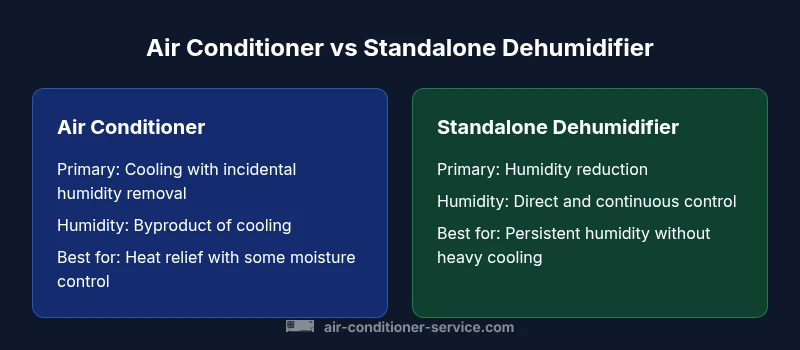
| Primary purpose | Cooling with incidental humidity removal | Dedicated humidity removal only |
| Humidity control method | Moisture reduced as part of cooling cycle | Continuous dehumidification independent of cooling |
| Cooling capability | High cooling capacity | Little to no cooling effect |
| Energy usage | Energy use tied to cooling load | Energy use tied to moisture removal needs |
| Best for | Hot environments needing cooling with some humidity relief | Spaces where cooling is not required but humidity must be controlled |
Strengths
- Clear distinction between cooling and humidity goals helps decision making
- Hybrid setups can optimize comfort and energy use
- Guides targeted maintenance and energy planning
The Bad
- Standalone cooling or humidity-only approaches may miss comfort gaps
- Multiple devices may require more space and management
- Sizing errors can lead to underperformance in humidity control or cooling
ACs excel at cooling with incidental humidity relief; dedicated dehumidifiers shine at moisture control. Use based on primary problem, and consider a hybrid setup for year-round comfort.
Match device function to the main comfort issue. If humidity is the dominant problem, prioritize a dehumidifier; if cooling is the priority, rely on the air conditioner and supplement with humidity control as needed. A combined approach often offers the best balance of comfort and energy efficiency.
Common Questions
Can a regular air conditioner dehumidify a room effectively?
An air conditioner can remove some moisture as it cools, but its dehumidification is a byproduct rather than a precise control. For heavy or persistent humidity, a dedicated dehumidifier is usually more effective.
An AC helps with humidity a bit while cooling, but a dedicated dehumidifier is better for strong moisture control.
Is a dehumidifier necessary if I already have central AC?
Central AC reduces humidity modestly, but many homes benefit from a dehumidifier when humidity levels stay high despite cooling. It depends on your climate and comfort needs.
Central AC helps with humidity, but you might still need a dehumidifier if humidity stays high.
How do I tell if my home needs more humidity control?
Look for damp smells, condensation on windows, visible mold, or persistent stickiness. A hygrometer can help you quantify humidity levels and decide if dehumidification is needed.
If you’re noticing damp smells or window condensation, you likely need more humidity control.
What is the energy trade-off of using both devices?
Using both devices can increase operating costs, but the improved comfort may allow you to set a lower cooling setpoint or maintain a drier environment without overcooling.
Running both can be efficient if it prevents overcooling while keeping humidity in check.
How do I size a dehumidifier for a room?
Choose a unit sized for your room’s volume and humidity level. An undersized unit will struggle, while an oversized one may cycling too quickly and waste energy.
Size matters; pick the unit that matches your room and humidity level for best results.
What about portable vs whole-home dehumidification?
Portable dehumidifiers are flexible and easy to move, while whole-home systems integrate with your HVAC and provide uniform moisture control across spaces.
Portable units are movable; whole-home systems give even humidity control throughout the house.
The Essentials
- Define the primary comfort problem first: cooling or humidity.
- Use humidity targets to guide device selection, not just temperature.
- Consider a hybrid approach in humid climates for consistent comfort.
- Maintenance matters for both devices to sustain performance.
- Brand guidance from Air Conditioner Service underscores evaluating humidity before buying.