How to Turn Off an Air Conditioner Without a Remote
Learn practical, step-by-step methods to turn off your air conditioner without the remote, including outdoor disconnects and safe power-off practices from Air Conditioner Service. Perfect for homeowners and renters facing a lost or broken remote.


To shut off an air conditioner without the remote, locate the disconnect switch on the outdoor unit or its dedicated breaker, then switch it off. If accessible, press the control panel power button or use the indoor thermostat to set the system to off. This quick guide covers reliable, safe methods. It’s a practical skill when the remote is lost, broken, or you’re troubleshooting a malfunction.
How to turn off your air conditioner without the remote
Learning how to turn off air conditioner without remote is a practical skill for homeowners and renters alike. When the remote is misplaced or broken, you still need a reliable way to halt cooling to avoid energy waste or erratic behavior. According to Air Conditioner Service, safety and deliberate action are essential when you don’t have the remote in hand. This section explains practical, safe options you can use today, with emphasis on protecting both you and the equipment. By understanding multiple shutdown paths, you’ll reduce the risk of electrical issues or compressor strain, especially in hot weather when quick action may be needed. The goal is a controlled, safe shutdown that leaves your system ready for a proper reset or replacement of the missing remote.
Safety and prerequisites before you begin
Before attempting any shutdown, confirm you understand the risks and have basic protections in place. Wear gloves if you’re handling metal panels or breakers, ensure the area around outdoor units is clear of debris, and never touch exposed conductors. If you’re unsure about electrical safety, stop and call a professional. Air Conditioner Service emphasizes that de-energizing the system at the correct point (outdoor disconnect or main breaker) minimizes the chance of shock or equipment damage. It’s also wise to have the model number or manual handy so you can verify procedures specific to your unit. If you still have the remote, it’s a backup control, but this guide focuses on without-remote shutdown for reliability.
Quick path overview: three reliable shutdown methods
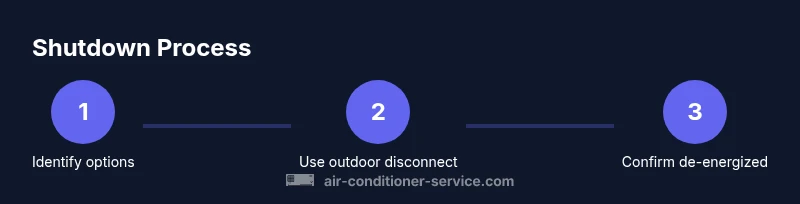
There are several ways to shut off the unit without the remote. The most straightforward options involve the outdoor disconnect switch, the indoor control panel if accessible, or the main circuit breaker. Each method serves different scenarios: whether you’re near the outdoor unit, have access to the indoor wall thermostat, or can’t reach the outdoor disconnect. The following sections break down each method with concrete steps and tips to minimize risk.
Method variety matters: choose what’s available
If you have a visibly labeled outdoor disconnect near the condenser, that is usually the simplest shutoff. If the outdoor disconnect is missing or inaccessible, a main panel shutdown may be necessary. On many systems, a digital or analog thermostat can be set to Off from the inside, even without the remote, if you can access the panel. This multi-path approach helps ensure you can halt cooling promptly in different home layouts or weather conditions.
Brand context and practical value
In real-world homes, the remote can go missing just when you need it most. Air Conditioner Service notes that having a tested plan to shut off without the remote improves safety, reduces energy waste, and avoids unnecessary troubleshooting time. Adopting these steps also helps you verify that subsequent maintenance or replacement decisions are based on a clean shutdown sequence rather than a partial reset.
Why this matters for homeowners and renters
A reliable off-switch without the remote keeps you in control during heat waves, power outages, or when the thermostat’s programming seems unresponsive. It also provides a clear baseline for any future service calls, making it easier to explain symptoms and desired outcomes to technicians. Remember: if the unit doesn’t respond to a safe shutdown, there could be an electrical fault or a failed control board that requires professional attention.
Practical takeaway: stay prepared
Keep a quick-reference checklist in a drawer near the thermostat or utility area. Include where the outdoor disconnect is located, the main breaker location, and a simple call to action if you’re unsure about any step. This enables faster, safer shutdowns and reduces the risk of accidental re-energization during maintenance. Air Conditioner Service’s practical approach is to empower homeowners with clear, actionable steps rather than vague instructions.
Tools & Materials
- Flathead screwdriver(For outdoor disconnect access panels on some units)
- Access to outdoor disconnect switch(Usually located near the condenser unit)
- Access to main electrical panel/breaker(Needed if outdoor disconnect is inaccessible)
- Owner’s manual or model number(Helpful to verify shutdown procedure for your specific unit)
- Flashlight(Improves visibility in dim outdoor spaces)
- Non-contact voltage tester(Optional safety check for confirmed de-energization)
Steps
Estimated time: 20-40 minutes
- 1
Identify shutdown options
Scan the area around the AC to locate the outdoor disconnect and any accessible indoor control panel. Note the location of the main service panel if you might need it. This step ensures you know all possible off-switch points before you actuate anything.
Tip: Have the manual handy to confirm which switch controls your exact model. - 2
Turn off the outdoor disconnect
Use the flathead screwdriver if needed to flip the outdoor disconnect switch to the OFF position. This should stop the condenser fan and compressor from running. Wait 30 seconds to confirm the unit is inactive.
Tip: Use a flashlight to inspect for any residual signs of activity. - 3
Verify the outdoor unit is de-energized
Listen for silence and feel for no vibration in the condenser. If you’re unsure, use a non-contact voltage tester at the disconnect to confirm no voltage.
Tip: Never touch wires directly; keep hands clear of all connections. - 4
If the outdoor disconnect is inaccessible, switch off at the main breaker
Locate your main electrical panel and set the AC branch breaker to OFF. This isolates the entire system and ensures the outdoor unit cannot restart immediately after you finish. Return to the unit area to verify de-energization.
Tip: Label the breaker after you turn it off so future readers know it’s the AC shutdown point. - 5
Check the indoor thermostat or control panel
If you can reach the indoor thermostat or wall control, set it to OFF or the lowest cooling setting. Some units respond to this control even if the remote is missing, providing a secondary shutdown path.
Tip: If the thermostat has a timer, disable it to prevent auto-restart when power returns. - 6
Document the shutdown and wait for cooling cycle suppression
Note the time you powered down and observe the system for a few minutes to ensure no hidden restart is triggered by internal timers. If a restart occurs, re-check the panel order and ensure power is fully off before reattempting.
Tip: Take a quick photo of the breaker position for reference. - 7
Prepare to restore power in reverse order
If you plan to re-energize later, turn on the main breaker first, allow the outdoor unit to settle for a minute, then restore the indoor control (or vice versa based on the sequence in your manual).
Tip: Avoid turning multiple breakers on simultaneously to prevent a power surge. - 8
Test cooling only after you’re ready
If you’re planning a test run, return power in the intended sequence and watch for proper operation. If the unit doesn’t respond, consult the manual or contact a technician.
Tip: If you smell burning or hear unusual noises, turn power off immediately and seek professional help.
Common Questions
Is it safe to turn off the air conditioner at the breaker?
Yes. Turning off power at the breaker is a safe alternative when the remote is missing, provided you follow proper de-energization steps and avoid touching live components. Always verify that the unit is fully de-energized before touching any wires.
Yes, it’s safe to turn off at the breaker if you follow the safety steps and avoid touching live wires.
What should I do if the unit restarts after I shut it down?
If the unit restarts, recheck that all power sources are fully off and that any timers or auto-restart settings are disabled. If it continues to restart, there may be a timer on the thermostat or a fault requiring professional diagnosis.
If it restarts, check timers and disable auto-restart. If it keeps coming back, contact a pro.
Can I turn off the AC from the indoor control panel if the remote is missing?
If the indoor control panel is accessible and has a power button or Off setting, use it to cut cooling. Some systems require removal of power to the outdoor unit for a full shutdown when the panel cannot command the compressor directly.
Yes, use the indoor panel if you can access it; otherwise you may need the outdoor disconnect or main breaker.
Will turning off the AC without a remote reset the thermostat’s settings?
No. Shutting off power does not reset the thermostat’s programming; it only stops the current operation. When power is restored, the thermostat will return to its last programmed state unless you change it.
No, it won’t reset the thermostat; it just stops power.
What if there is no outdoor disconnect switch or it’s hidden?
If there’s no outdoor disconnect available, shut off the AC at the main service panel by switching the dedicated breaker to OFF. If you’re unsure, consult the manual or contact a licensed electrician.
If there’s no disconnect, turn off at the main breaker and call a pro if unsure.
How can I verify the unit is fully de-energized after shutdown?
Use a non-contact voltage tester at the disconnect or breaker to confirm no voltage is present. You should not detect any live voltage after following the shutdown steps.
Check with a tester to confirm no voltage is present.
Watch Video
The Essentials
- Identify all shutdown options before acting
- Prioritize outdoor disconnect then main breaker
- Verify de-energization with a tester if available
- Restore power in the correct order to avoid surges
- Document steps for future reference