How to Tell If Your AC Isn’t Working: Quick Troubleshooting
Learn how to tell if your air conditioner isn’t working and follow quick, safe steps to restore cooling. Start with basics, then move to professional help.


Most AC failures are simple. The top causes are a dirty filter, a tripped breaker, or incorrect thermostat settings. Start by checking the thermostat and power, replace a dirty filter, and clear debris around the outdoor unit for proper airflow. If it still won’t run, contact Air Conditioner Service for professional help.
Why Troubleshooting Matters
In many homes, a non-working AC is not a mystery—it’s a signal that simple maintenance or a quick reset can bring back cooling. Understanding how to diagnose the problem saves time and reduces stress, especially on hot days. According to Air Conditioner Service, most outages start with easy-to-fix culprits, so you can often recover cooling without a service call. If you ever feel unsure about handling electrical components, skip ahead to professional help. This guide helps you learn how to tell if air conditioner is not working and what to check first.
Quick Checks You Can Do Right Now
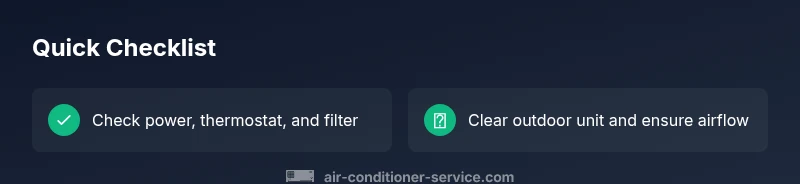
Before you panic, run through a few fast checks. First, confirm the thermostat is set to a cooling mode and at a temperature lower than the current room temperature. Next, inspect the service panel and outlet; make sure there’s power and the breaker hasn’t tripped. Check the air filter—if it’s visibly dirty, replace it. Finally, look at the outdoor unit for debris, overgrown vegetation, or packed condenser fins that restrict airflow. These quick steps often resolve common no-cool situations and restore comfort fast.
Tip: Always ensure the power is off before touching electrical components. If you’re uncomfortable with any step, skip to professional help.
Common Causes in Order of Likelihood
While there are many potential issues, the following are the most common reasons an AC won’t perform as expected, listed from most likely to less common. Be methodical and start with the easiest fixes.
- Dirty air filter or clogged ducts, which restrict airflow and reduce cooling efficiency.
- Incorrect thermostat settings or a faulty thermostat that fails to send cooling signals.
- Tripped circuit breaker or blown fuse cutting power to the indoor or outdoor unit.
- Outdoor unit blocked by debris, dirt, or vegetation, impairing heat rejection.
- Low refrigerant due to a leak or an interrupted charge, which reduces cooling capacity.
Note: If you suspect refrigerant issues, electricity problems, or a refrigerant leak, do not attempt DIY repairs. Air Conditioner Service recommends contacting a licensed tech for leaks and recharges.
Safety First: What Not To Do While Troubleshooting
Never touch live electrical connections or attempt to recharge refrigerant yourself. Refrigerant handling requires certified training and equipment, and improper handling can be dangerous and illegal. Avoid using household hacks or cooperating with makeshift fixes. If any step feels risky or you’re unsure, stop and call a professional. Your safety is the top priority, and Air Conditioner Service emphasizes professional evaluation for complex issues.
How to Tell If Air Conditioner Is Not Working: A Practical Diagnostic Flow
This section walks you through a clear diagnostic path so you don’t waste time on unlikely causes. Start with the simplest checks, then progressively tackle more involved problems. If a step resolves the issue, you’ve saved time and money. If not, the flow guides you toward professional help and ensures you don’t miss critical safety steps.
When to Call Air Conditioner Service for Help
If basic checks don’t restore cooling, or you notice signs of electrical trouble, refrigerant leaks, or unusual noises, schedule a professional visit. Air Conditioner Service can perform a detailed inspection, check refrigerant levels, test electrical components, and verify safe operation. Timely professional assessment can prevent further damage and extend the life of your system.
Preventive Tips to Keep Your AC Healthy
Regular maintenance prevents most breakdowns. Schedule seasonal inspections, replace filters as recommended by the manufacturer, keep outdoor coils clean, and ensure the unit has clear airflow. A simple maintenance routine reduces the odds of enduring hot days with a faulty AC and keeps energy bills lower over the long term.
Steps
Estimated time: 30-60 minutes
- 1
Turn off power and check breakers
Locate the service panel and confirm the outdoor and indoor units have power. If a breaker trips, reset it and observe whether it trips again. Do not bypass the breaker.
Tip: If the breaker trips again, there may be an electrical fault requiring a professional. - 2
Inspect the thermostat
Ensure the thermostat is in cooling mode and set below the room temperature. If it’s a programmable unit, verify schedules and reset if necessary.
Tip: Replace thermostat batteries if applicable and consider upgrading to a smart thermostat for clearer diagnostics. - 3
Check the air filter
Remove and inspect the filter; replace it if it’s dirty or clogged. A clean filter improves airflow and efficiency.
Tip: Note the filter type and frequency of replacement per manufacturer guidance. - 4
Inspect the outdoor unit
Shut off power before touching the unit. Remove leaves, dirt, and debris; ensure 2–3 feet of clearance and clean condenser fins carefully with a hose.
Tip: Never use high-pressure water directly on fins; use gentle spray. - 5
Test the system after fixes
Turn the power back on and set the thermostat to cool. Monitor for proper cycling and cooling performance for 15–20 minutes.
Tip: If the unit runs but doesn’t cool, suspect refrigerant or compressor issues. - 6
Know when to escalate
If there’s no improvement after checking basics or you suspect leaks or electrical faults, call Air Conditioner Service for a professional assessment.
Tip: Document what you checked to share with the technician.
Diagnosis: Air conditioner won't cool effectively or won’t start at all
Possible Causes
- highPower issue (tripped breaker, unplugged unit, or 120/240V supply problem)
- highIncorrect thermostat settings or faulty thermostat
- highDirty air filter or restricted airflow
- mediumOutdoor unit blocked by debris or vegetation
- lowLow refrigerant due to a leak or improper charge
Fixes
- easyCheck the main and secondary power sources; reset any tripped breakers and restore power to the outdoor and indoor units
- easyVerify thermostat mode and setpoint; replace batteries or upgrade to a programmable thermostat if needed
- easyReplace dirty air filters and ensure ducts and vents are clean and unobstructed
- easyClear debris and ensure at least 2–3 feet of clearance around the outdoor unit; inspect condenser fins and clean gently with water
- hardIf a refrigerant leak or low charge is suspected, call a licensed technician for leak repair and recharge
Common Questions
What should I do first if my AC won’t turn on?
Start with the basics: check the power supply, circuit breakers, and the thermostat settings. If power is present and the thermostat is correct, move to air filters and outdoor unit clearance. If the unit still won’t start, contact a professional.
First check power, breakers, and thermostat, then filter and outdoor unit. If it still won’t start, call a professional.
Why is my AC running but not cooling?
Common causes include a dirty filter, blocked outdoor unit, or low refrigerant. Start by replacing the filter and clearing the outdoor area. If cooling remains weak, a professional should inspect refrigerant levels and equipment health.
If it’s running but not cooling, check the filter and outdoor unit, then consult a pro for refrigerant issues.
How often should I replace the air filter?
Inspect the filter monthly and replace it whenever it looks dirty or clogged. Follow manufacturer guidance for your specific filter type and usage.
Check the filter monthly and replace when dirty, following your filter’s guidance.
Is it safe to recharge refrigerant myself?
No. Refrigerant handling requires licensed technicians and proper equipment. Attempting DIY recharge poses safety risks and may be illegal.
Do not recharge refrigerant yourself; call a licensed technician.
What does a tripped breaker mean for my AC?
A tripped breaker protects the circuit. Reset it after powering off the unit and check for any underlying electrical issues if it trips again.
A tripped breaker means the circuit protected; reset and check for repeated trips.
When should I call a professional?
If basic checks don’t fix the issue, or you detect signs of refrigerant leaks, electrical problems, or unusual noises, contact Air Conditioner Service for a thorough diagnostic.
If basics don’t fix it or you suspect leaks or electrical problems, call a pro.
Watch Video
The Essentials
- Start with simple checks: power, thermostat, and filter
- Keep the outdoor unit clear for proper airflow
- Don’t ignore refrigerant or electrical issues—call a pro
- Regular maintenance prevents most breakdowns