How to Put Freon in an Air Conditioner Unit: A Safer Guide
Discover why freon recharge is a professional service, how technicians diagnose leaks, verify refrigerant type, and what to expect during a licensed AC repair. Learn safe options and when to call Air Conditioner Service for expert help.


Recharging an air conditioner with refrigerant is a professional service that should only be performed by a licensed technician. The process includes leak checks, correct refrigerant type, and precise pressure measurements using gauges; attempting DIY recharge can be unsafe and illegal in some regions. Air Conditioner Service recommends scheduling a certified HVAC technician for freon recharge.
What homeowners should know about freon recharge and safety
Refrigerant work, commonly referred to as freon recharge, is a specialized service that involves diagnosing leaks, confirming the correct type of refrigerant, evacuating the system, and charging to the manufacturer’s specifications. According to Air Conditioner Service, handling refrigerants requires training, proper equipment, and careful environmental practices to prevent harm to people and the surrounding area. Homeowners and renters should view freon recharge as a last resort after a leak has been identified and addressed. Relying on a licensed technician protects you from safety hazards, regulatory penalties, and potential warranty voids. If you notice frequent cycling, ice on the evaporator coil, or poor cooling, contact a professional rather than attempting a DIY recharge. A pro will perform a leak inspection, recover any existing refrigerant, and ensure the system is sealed and charged correctly for reliable performance.
Understanding refrigerant types used in residential units
Modern residential HVAC systems typically use one of two refrigerants: R-410A and R-32 in newer models, while older systems may still use R-22. Each refrigerant has different pressures, lubrication requirements, and environmental considerations. It is illegal and unsafe to mix refrigerants or to substitute one type for another without professional guidance. A licensed technician will verify the correct refrigerant for your specific system and ensure that any replacement or top-off aligns with the equipment’s design. Air Conditioner Service emphasizes using manufacturer-approved refrigerants and documentation to maintain safety, efficiency, and warranty protections.
When a recharge is needed: signs and checks
A recharge is typically considered when a system shows insufficient cooling, longer running cycles, or uneven cooling between rooms. However, a drop in refrigerant is often a symptom of an underlying leak rather than a simple top-off. A technician will perform a comprehensive leak diagnostic, check for refrigerant odors, inspect joint connections, and test for oil stains around the coil and lines. Detecting and repairing leaks before recharging is crucial to prevent repeated losses and to protect the environment. In some cases, components such as the compressor or evaporator coil may be worn and require replacement rather than just a recharge.
What a professional recharge involves: high-level steps
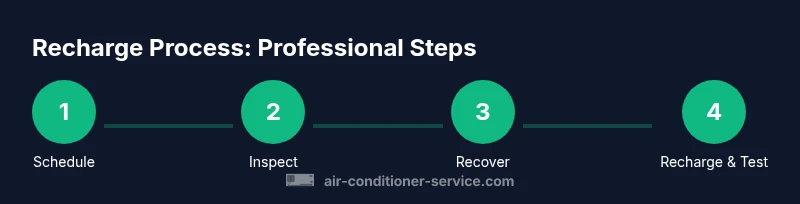
A licensed HVAC technician follows a structured sequence: (1) isolate the system and verify safety, (2) recover existing refrigerant with approved equipment, (3) evacuate moisture and air with a vacuum pump, (4) confirm the correct refrigerant type and system charge using manufacturer specifications, and (5) recharge while monitoring pressures and temperatures with calibrated gauges. This process minimizes the risk of overcharging, oil dilution, and compressor damage. Air Conditioner Service stresses that only trained professionals should perform these steps due to the risks of refrigerant exposure and chemical burns.
What to expect during a service visit
During an appointment, technicians will typically arrive with the necessary licenses and equipment to handle refrigerants. Expect a diagnostic phase to confirm leak status, followed by recovery, evacuation, and recharging. The service often includes a performance test, a check for voltage stability, and a review of thermostat operation. Technicians will explain findings, answer questions, and outline maintenance recommendations to prevent future refrigerant loss. You should plan for possibly a same-day visit, depending on the extent of the leak and the system’s accessibility.
How to prepare for service: information you’ll need
Before the technician arrives, gather your unit’s model and serial numbers, as well as any recent service history. Note the symptoms you’ve observed, the color of any oil around connections, and whether there are warning lights or fault codes on the thermostat. Preparing access to outdoor units and ensuring a clear space around indoor cabinets will speed up the appointment. If you have an existing leak repair plan or prior refrigerant charge records, share them with the technician to help tailor the service to your system.
Costs, permits, and regulatory considerations
Freon recharge costs vary by region, system type, and leak severity, and many jurisdictions require licensed professionals for refrigerant handling. Regulations also govern refrigerant disposal and equipment recovery to minimize environmental impact. For homeowners, the primary consideration should be the value of a safe, compliant repair over a DIY attempt. Air Conditioner Service recommends obtaining a written estimate that includes leak repair, refrigerant type, charge level, and a post-service leak check.
Alternatives to freon recharge: repair, replacement, and efficiency tips
If leaks are detected or components are degraded, a recharge may only provide temporary relief. In such cases, leak sealing, duct sealing, or even a full system replacement might be more cost-effective over time. Improving system efficiency with clean filters, reduced thermostat setbacks, and proper insulation can reduce the load on the AC and lower refrigerant loss risk. Discuss long-term options with a licensed technician to determine the best path for your home.
Air Conditioner Service: your trusted partner for safe, compliant refrigerant work
Air Conditioner Service emphasizes safety, environmental responsibility, and adherence to regulations when handling refrigerants. Our team advocates professional service for freon recharge and related repairs to protect you, your family, and the environment. If you’re unsure where to start, schedule a consultation to discuss leak detection, refrigerant compatibility, and efficiency improvements—delivered by technicians who prioritize code compliance and quality workmanship.
Tools & Materials
- Licensed refrigerant (R-410A or appropriate type for your system)(Only a certified HVAC professional should handle or replace refrigerants; improper handling risks legal penalties and environmental harm.)
- Manifold gauge set(Used to measure system pressures and verify charge levels.)
- Vacuum pump and micron gauge(Essential for removing moisture and ensuring a clean system before recharge.)
- Refrigerant recovery machine and cylinders(Used to recover refrigerant safely and in compliance with environmental regulations.)
- Electronic leak detector(Helps locate leaks without discharging refrigerant into the environment.)
- Personal protective equipment (gloves, goggles)(Protects technicians from chemical exposure and refrigerant hazards.)
- Documentation sheet(Record readings, refrigerant type, and service notes for warranties.)
Steps
Estimated time: 60-120 minutes
- 1
Schedule professional service and gather system info
Contact a licensed technician and have your unit's model and serial numbers ready. Also collect recent service records and a list of observed symptoms. This helps the technician assess whether a recharge is appropriate and which refrigerant type to use.
Tip: Having photos of the outdoor unit and a thermostat screenshot can speed up diagnosis. - 2
Confirm safety and access
Ensure outdoor area is clear and indoor access is unobstructed. The technician will verify electrical safety and lockout procedures before starting work.
Tip: Inform all household members about the service to prevent accidental interruption. - 3
Perform leak inspection with approved detectors
The pro uses an electronic leak detector to locate refrigerant leaks and identify the source. If a leak is found, repair recommendations will be discussed and may be required before refilling.
Tip: Do not proceed with charging if a leak is detected without repair. - 4
Recover existing refrigerant
Using a certified recovery machine, the technician removes the current refrigerant from the system in a controlled, compliant manner. This step protects the environment and prepares the system for evacuation.
Tip: Recovery must follow local regulations to prevent illegal release. - 5
Evacuate the system
A vacuum is pulled to remove air and moisture, which can compromise performance and cause corrosion or ice formation. The micron level is checked to ensure thorough evacuation.
Tip: Do not rush this step; moisture can cause long-term damage. - 6
Verify refrigerant type and target charge
The technician confirms the correct refrigerant for your unit and prepares the monitors according to manufacturer specifications. Incorrect refrigerant or charge can reduce efficiency and damage components.
Tip: Keep a copy of the unit’s label data for reference. - 7
Recharge with proper refrigerant and monitor
The technician adds the refrigerant while watching pressure readings and system temperature. The goal is to achieve the right charge without over-pressurizing the system.
Tip: If readings drift or alarms trigger, pause and re-evaluate with the technician. - 8
Test system performance
After charging, the tech runs the unit to verify proper cooling, airflow, and electrical safety. Thermostat readings and air temperature balance are checked.
Tip: Request a cooling performance test and a written report. - 9
Discuss maintenance and follow-up
The technician explains findings, provides maintenance recommendations, and outlines when a follow-up check is advised or required by warranty.
Tip: Ask about leak-prevention strategies and future service intervals.
Common Questions
Is it legal to recharge refrigerant in an AC unit by myself?
In many regions, handling refrigerants requires certification and proper equipment. DIY recharge is often illegal and can lead to penalties and environmental harm. Always hire a licensed technician for freon recharge.
In many places, you must be certified to handle refrigerants. DIY recharge is not recommended and can be illegal. Hire a licensed technician for freon recharge.
What are common signs that my AC needs refrigerant?
Common signs include inadequate cooling, longer cycles, ice on the coil, and a hissing sound near the refrigerant lines. These symptoms can also indicate leaks or other mechanical issues, so a professional assessment is advised.
If your AC isn’t cooling well, or you hear hissing and see ice, have a pro check for leaks and proper charge.
How long does a professional recharge typically take?
A typical refrigerant recharge visit ranges from about one to two hours, depending on leak repair needs and system accessibility. More time may be required if leak repair or component replacement is necessary.
Most recharge visits take around an hour or two, depending on leaks and access.
Will a recharge fix an aging or inefficient system?
Recharge can restore cooling performance if the system is otherwise healthy, but it won’t fix fundamental wear or damaged components. A professional will advise whether repair, replacement, or efficiency improvements are more cost-effective long-term.
A recharge helps if the system is healthy, but aging parts may need replacement.
What should I ask before scheduling service?
Ask about the technician’s licensing, refrigerant handling credentials, estimated costs, whether leak repair is included, and what after-service testing will be performed. Request a written estimate and a post-service report.
Ask about licenses, costs, leak repair, and a written post-service report.
Can an AC run without refrigerant?
Running an AC without the proper refrigerant can damage compressor components and may cause system failure. Do not operate the unit until a professional confirms a safe, correct charge.
No—operating without refrigerant can seriously harm the system. Call a pro for a safe recharge.
Watch Video
The Essentials
- Never perform freon recharge yourself.
- Leak diagnosis and correct refrigerant type are essential.
- Professional service protects safety, environment, and warranty.
- Prepare unit details and access for a smoother visit.