Recharge Your Home Air Conditioner: Step-by-Step Guide
Learn when and how to recharge your home air conditioner safely. This step-by-step guide covers safety, legal considerations, leak checks, and when to call a licensed technician for refrigerant recharge.


To recharge a home air conditioner safely, you’ll verify the system uses the correct refrigerant, check for leaks, and understand local laws about handling refrigerants. This guide outlines when recharge is appropriate, how to prepare, and why professional service is often required. Always prioritize safety and environmental rules before attempting any recharge.
Understanding When a Recharge Is Needed
If your goal is to recharge home air conditioner, you may be experiencing reduced cooling, longer run times, or frost on indoor coils. The refrigerant charge is a fixed quantity designed for optimal heat exchange; when leaks occur, pressure and temperatures deviate and efficiency drops. Before you suspect a leak, check the air filter, thermostat settings, and outdoor unit for obstructions. A professional can verify charge status by reading service ports with a manifold gauge and comparing observed superheat and subcooling values to the manufacturer’s specifications. Remember: many modern systems use sealed refrigerant circuits that are not intended to be recharged without locating and repairing leaks first. Air Conditioner Service emphasizes that proper charge restoration depends on leak repair and correct refrigerant type rather than simply adding more refrigerant.
Safety, Laws, and Environmental Considerations
Handling refrigerants is regulated by law; improper release can harm the environment and violates rules. Always check local regulations before any attempt to work on a cooling system. If you are not certified, do not buy or handle refrigerant or recovery equipment; instead contact a licensed technician. PPE should include eye protection, gloves, and hearing protection when testing pressure or using power tools. Recovered refrigerant must be captured and recycled; venting is illegal in many jurisdictions. Air Conditioner Service recommends documenting all service actions for compliance and warranty purposes.
Tools, Materials, and Preparations
For licensed technicians, essential tools include a refrigerant identifier to confirm the exact chemical, a manifold gauge set to read pressure, a calibrated recovery machine, a charging cylinder with a precise fill, a leak detector capable of sensing halogen refrigerants, and appropriate PPE. Each item supports safe handling and accurate charging. Always verify the refrigerant type on the system label and consult the manufacturer service manual before opening service ports. For homeowners, the recommended action is to schedule professional service rather than attempting a recharge.
Step-by-Step: Licensed Technician Workflow (Overview)
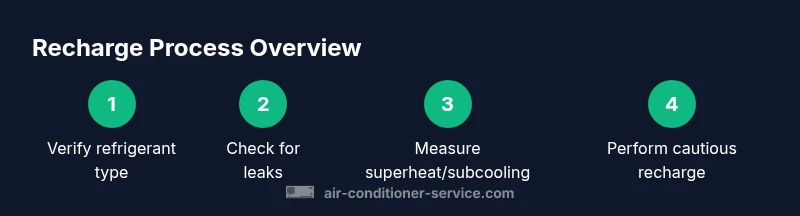
This workflow outlines the high-level steps technicians follow when recharging a home AC after leak repair. The sequence focuses on environmental safety, cargo and storage, and accurate charging according to equipment and manufacturer parameters. Each step is purpose-built to minimize refrigerant loss and ensure the system performs to spec. Note: this section is for professionals; do not attempt to perform these steps without proper certification and equipment.
The Right Refrigerant and Why the Type Matters
Your system's charge depends on the exact refrigerant type specified by the manufacturer and the equipment label. Common residential refrigerants include R-410A and older blends; using the wrong refrigerant can cause compressor damage, seal failures, and reduced efficiency. Always confirm the refrigerant type before a recharge and use equipment that is designed for that specific chemical. If in doubt, consult the service manual or contact a qualified technician. Environmentally conscious handling and proper recovery are essential.
Troubleshooting After Recharge
After recharge, run the unit through a full cycle to verify cooling performance and check for abnormal noises or frost formation on the evaporator. Measure superheat and subcooling values to ensure they fall within manufacturer specifications. Inspect for leaks using an electronic detector and seal any compromised connections. If problems persist, do not continue charging; instead, halt service and seek professional assistance.
Alternatives: Maintenance and Preventive Care
Instead of frequent recharges, focus on preventive maintenance: clean or replace filters regularly, ensure outdoor coils are clean, schedule annual professional inspections, and address minor leaks promptly. Regular service reduces refrigerant loss and extends system life. For homeowners, partnering with a licensed HVAC contractor provides ongoing assurance and reduces the risk of improper charging.
Authority Sources and References
- EPA. Section 608 Refrigerant Handling Requirements. https://www.epa.gov/section608
- U.S. DOE. Refrigerant Basics and Safety. https://www.energy.gov/eere/buildings/articles/refrigerant-basics
- NIST. Refrigerant Standards and Guidelines. https://www.nist.gov
Tools & Materials
- Refrigerant identifier(Confirms exact refrigerant type before charging (e.g., R-410A))
- Manifold gauge set(Reads system pressures and helps determine proper charge)
- Recovery machine(Necessary for safe removal of existing refrigerant before recharge)
- Charging cylinder(Precision-fill device to introduce refrigerant under control)
- Leak detector (halogen/IR)(Finds leaks before and after charging to prevent loss)
- Personal protective equipment (PPE)(Goggles, gloves, and clothing appropriate for handling refrigerants)
- Manufacturer service manual(Contains model-specific charge specifications and steps)
Steps
Estimated time: 60-150 minutes
- 1
Confirm regulatory eligibility
Check local laws and confirm you have the proper certification or authorization to handle refrigerants. Without certification, refrigerant handling and charging are not allowed in many areas. This step protects you legally and ensures you’re following best practices before touching the system.
Tip: If in doubt, contact your local HVAC professional to verify your status before any work begins. - 2
Shut off power and prepare workspace
Power down the outdoor condenser and indoor components, disconnect electrical supply, and clear the area of debris. This minimizes shock risk and reduces accidental startup during inspections.
Tip: Lockout-tagout practices help prevent accidental energization. - 3
Inspect for leaks and damages
Use a detector to scan for refrigerant leaks around fittings, coils, and service valves. Repair any leaks or damaged components before proceeding with charging.
Tip: Address leaks first; charging into a systemic leak simply wastes refrigerant and may cause future failures. - 4
Evacuate the system if required
Connect the recovery machine to remove refrigerant and moisture from the circuit according to the manufacturer’s procedure and EPA guidelines. Evacuation helps achieve a clean baseline before recharge.
Tip: Ensure the recovery cylinder is rated for the target refrigerant and is properly vented. - 5
Charge with correct refrigerant
Attach the charging setup and introduce refrigerant under supervision, monitoring pressures and subcooling to manufacturer specs. Do not exceed the recommended charge.
Tip: Double-check the label and service manual to confirm the exact charge and testing procedures. - 6
Test operation and document
Run a full cooling cycle, verify temperatures, pressures, and airflow, and log readings for warranty and future service. If anything seems off, reevaluate or pause charging and contact a professional.
Tip: Maintain a record of readings for future maintenance and potential warranty claims.
Common Questions
Is it legal to recharge a home air conditioner myself?
In many places, refrigerant handling requires certification. Regulations vary by state and country, so check local rules before attempting any recharge. If you are not certified, contact a licensed technician.
Refrigerant recharge typically requires certification; check your local laws and consult a professional if you’re unsure.
What are common signs that my AC needs a refrigerant recharge?
Weak cooling, longer run times, ice on the evaporator coil, or hissing sounds can indicate low refrigerant. However, leaks should be checked and repaired first.
If your AC isn’t cooling well or you hear a hiss, call a pro to check refrigerant levels and leaks.
Can I use any refrigerant I find for recharge?
No. Only the refrigerant specified on the unit’s label should be used. The wrong refrigerant can damage components and void warranties.
Use only the refrigerant type listed on the unit’s label, or consult a technician if unsure.
What if I suspect a leak after recharge?
If leak signs persist after recharge, stop and have a professional inspect the system. Leaks must be repaired before recharging again.
If you notice ongoing leaks after charging, don’t continue—call for professional service.
How long does a typical recharge take?
Time varies with access, leaks, and system size, but many recharge tasks with leaks addressed take between 1-3 hours.
Most recharge jobs with leak repair take about one to a few hours, depending on the system.
Watch Video
The Essentials
- Verify refrigerant type before charging
- Repair leaks first; recharge is ineffective without leak control
- Comply with EPA and local regulations for refrigerant handling
- Call a licensed tech for refrigerant recharge whenever possible