How to Put Air Conditioner Coolant in a Car
Learn why handling car refrigerant requires professional equipment and training, plus a clear, safety-first path to diagnosing leaks, evacuating the system, and charging properly with the correct refrigerant.


Properly recharging a car's A/C refrigerant requires specialized equipment, knowledge, and safety measures. Most vehicles should be diagnosed for leaks, evacuated with a recovery machine, and charged only with the correct refrigerant amount by a trained technician. This guide explains why DIY recharges are risky and when to seek professional help.
Why understanding refrigerant safety matters
If you're exploring how to put air conditioner coolant in a car, it's essential to recognize that refrigerant handling involves pressurized gas, flammable oils, and environmental regulations. The Air Conditioner Service team emphasizes that improper charging can overcook seals, damage the compressor, or vent refrigerant into the atmosphere. This section sets the stage for safe decision-making: know your vehicle, know the law, and know when to call a professional. By learning the basics, you can communicate clearly with a technician and understand the steps they take to protect you and your car.
What refrigerant is and how it works in your car
Automotive air conditioning relies on a sealed loop of refrigerant that absorbs heat from the cabin and releases it outside. In older vehicles, the common refrigerant is R-134a; newer models may use R-1234yf. Refrigerant is not the same as engine coolant (antifreeze), which circulates in the cooling system to regulate engine temperature. The lubricant carried with the refrigerant keeps the compressor functioning. A professional charging procedure ensures the right refrigerant type, correct oil balance, and proper pressure, which together deliver efficient cooling.
Signs your A/C refrigerant may be low
Common indicators include weak or warm airflow from the vents, air that cools only when the vehicle is idling, and a compressor that cycles on and off unusually. You may also notice a hissing sound or oil/oily residue around hose connections, which can signal a leak. Because leaks are the primary reason for low refrigerant, diagnosing the leak is a critical first step before charging. If you see any of these signs, plan a diagnostic visit to a qualified technician.
Safety and legal considerations you should know
Handling refrigerant involves environmental and personal safety concerns. Venting refrigerant to the atmosphere is illegal in many regions, and improper handling can cause frostbite from rapid expansion or eye irritation from chemical exposure. In the United States, technicians typically require EPA Section 608 certification to service refrigerant systems. Always use a sealed recovery system and never attempt a DIY recharge without appropriate training and equipment. The goal is a safe, compliant process that protects you, your vehicle, and the environment.
Tools and equipment professionals rely on
Technicians use a combination of recovery machines, manifold gauge sets, vacuum pumps, leak detectors, and calibrated charging cylinders. They review the vehicle’s label for the exact refrigerant type and the required charge amount, then evacuate the system to remove air and moisture. PPE such as gloves and goggles is standard. This toolbox ensures accurate charges, minimizes leaks, and helps confirm that the system operates within spec after charging.
How a professional recharge works (high-level)
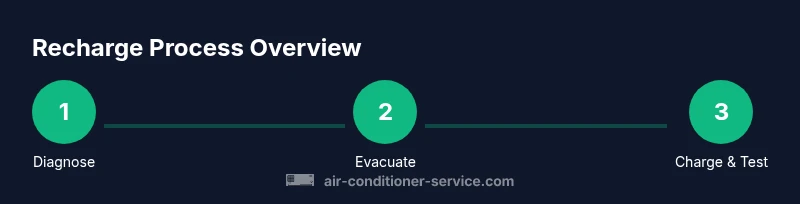
A professional workflow typically starts with safety checks and a diagnostic to confirm leaks. The system is connected to a recovery machine to evacuate old refrigerant and recover it for reuse or proper disposal. After verifying there are no dangerous leaks, the system is evacuated again to remove moisture. The technician then adds the precise amount of refrigerant and a small amount of oil, following the vehicle’s specification. Finally, the pressure and temperature are monitored, and the system is tested by running the A/C to ensure proper cooling.
The value of a leak-focused approach over a simple recharge
A recharge without locating and fixing a leak provides only temporary relief and can reintroduce the problem. If pressure readings are off or dye shows up in the system, the root cause—likely a seal or hose leak—must be repaired first. A technician will often perform a dye test or electronic leak detection to pinpoint the source. Addressing leaks saves money and prevents recurring failures.
Practical steps before you call a pro
Before booking service, gather your vehicle’s make, model, year, refrigerant type (R-134a or R-1234yf), and the location of any A/C service label under the hood. Note the symptoms and whether the problem occurs with the A/C on high or low. This information helps the technician diagnose faster and more accurately, especially when scheduling for a diagnostic and recharge.
Alternatives and interim options
If cooling is insufficient but a full recharge isn’t immediately possible, interim strategies include using the A/C on the coolest setting, ensuring the cabin air filter is clean, and checking for obvious leaks around hoses. However, these measures do not fix underlying refrigerant loss and should not replace a proper diagnostic and recharge by a qualified technician. In some cases, preventative maintenance may extend system life until service is performed.
Maintenance best practices to prevent future A/C problems
Regular inspections for leaks, listening for unusual noises, and keeping the system sealed can extend the life of your A/C. If you notice frequent recharging needs, ask your technician to perform a leak test and inspect components such as O-rings, seals, condenser fins, and the pressure switch. Adopting a preventive approach reduces the likelihood of costly repairs later.
Tools & Materials
- Recovery machine(EPA-compliant unit capable of recovering refrigerant)
- Manifold gauge set(To measure high/low side pressures)
- Vacuum pump(To evacuate moisture and air)
- Refrigerant identifier(Helpful to confirm refrigerant type)
- Leak detector (electronic or UV dye)(To locate leaks before charging)
- Recharge cylinder of correct refrigerant(R-134a or R-1234yf as required by vehicle)
- Oil for refrigerant (as specified)(Some systems require added lubricant)
- O-rings, seals(Spare components for minor repairs)
- Personal protective equipment (gloves, goggles)(Protect from refrigerant and oils)
Steps
Estimated time: 60-90 minutes
- 1
Verify safety and eligibility
Confirm the vehicle is in a safe environment, the engine is off, and you have EPA-compliant equipment. Verify the correct refrigerant type for the vehicle using the under-hood label or service manual. This ensures you avoid cross-contamination and incorrect charges.
Tip: Always wear PPE and never work near open flames or hot engine components. - 2
Connect recovery equipment and verify connections
Attach the hoses and gauges to the vehicle’s service ports following the manufacturer’s guidelines. Check that all connections are secure to prevent leaks during recovery or charging.
Tip: Double-check port orientation (high vs low) to prevent accidental cross-connection. - 3
Evacuate the system and recover refrigerant
Run the recovery machine to remove refrigerant from the system and capture it for proper disposal or reuse. This step removes air and moisture that can compromise the recharge.
Tip: Do not vent refrigerant to the atmosphere; comply with environmental regulations. - 4
Inspect for leaks and repair as needed
Use a leak detector or UV dye to identify leaks. If leaks are found, repair or replace faulty components before charging. A seal or hose leak is a common culprit for low refrigerant.
Tip: Even small leaks require repair; charging a leaky system is a temporary fix. - 5
Evacuate again to remove moisture
After repairs, evacuate the system once more to ensure all moisture is removed. Moisture can react with refrigerant and oil, causing performance issues and corrosion.
Tip: Keep the vacuum maintained and monitor for any leaks during a hold test. - 6
Charge the system with the correct refrigerant and oil
Add the exact refrigerant amount specified by the vehicle’s service label or manual, along with a measured amount of oil if required. Use the correct refrigerant type to prevent compressor damage.
Tip: Do not guess the charge; overcharging can damage seals and compressors. - 7
Test operating conditions and pressures
Run the A/C with the blower on high and record high/low side pressures. Compare readings to the manufacturer’s specifications and ensure there is a cold output within expected range.
Tip: If pressures are outside spec, stop and recheck for leaks or incorrect refrigerant type. - 8
Final inspection and documentation
Inspect for any signs of leaks after testing, recheck connections, and document the service details for future reference. Provide the owner with the charge amount and any recommended follow-up.
Tip: Keep a copy of the service label and your notes.
Common Questions
Is it safe to recharge car A/C refrigerant at home?
Generally no. Recharging requires special equipment (recovery machine, gauges) and knowledge of the exact refrigerant type and charge. DIY attempts can cause leaks, illegal venting, or compressor damage. It’s best to consult a trained technician.
Typically not safe to recharge at home. It requires special tools and knowledge; consult a trained technician for proper recovery and charging.
How do I know which refrigerant my car uses?
Check the under-hood service label, the owner’s manual, or consult a technician. Most older cars use R-134a, while newer models may use R-1234yf. Using the wrong refrigerant can damage the system.
Check the label under the hood or your manual to confirm whether your car uses R-134a or R-1234yf.
What happens if the system is overcharged?
Overcharging can increase pressure, strain the compressor, and reduce cooling performance. It may also cause liquid refrigerant to reach parts not designed for it, leading to damage.
Overcharging can stress the compressor and worsen performance. It’s important to charge only to the specified amount.
Do I need to repair leaks before charging?
Yes. A recharge without fixing leaks will result in repeated losses. Leaks should be located and repaired, ideally by a professional, before a recharge.
Leaks should be found and repaired prior to recharge for a lasting fix.
How long does a typical recharge take?
For a professional service, plan about 60-90 minutes, depending on leak checks, repairs, and system testing. The exact time can vary with vehicle and conditions.
A typical professional recharge takes about an hour to an hour and a half.
What are the signs of a successful recharge?
You should feel cold air from vents within minutes of turning on the A/C, and the pressures should align with the vehicle’s specifications. There should be no leaks or unusual noises.
Cool air should come from the vents and the system pressures should match spec after recharge.
What documentation should a shop provide after service?
The shop should provide the refrigerant type, total charge added, any dye results, test pressures, and leak repair notes. Keep this for future reference.
Ask for the charge amount, refrigerant type, and any test results or leak repair notes.
Watch Video
The Essentials
- Do not attempt DIY recharge without proper equipment and certification.
- Leak detection is essential before charging to prevent repeat failures.
- Always follow the vehicle’s refrigerant specification for type and charge amount.
- Environmental and safety regulations govern refrigerant handling.
- A professional recharge with leak repair offers the best long-term results.