Can You Fix a Freon Leak in Air Conditioner? A Practical Guide
Learn whether you can fix a freon leak, why professional service is typically required, signs to watch for, and how to work with a licensed technician. Practical steps, safety tips, and cost considerations explained.


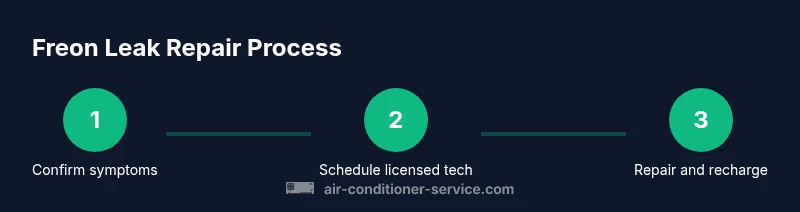
According to Air Conditioner Service, freon leaks in air conditioners can be serious and are not typically fixable by homeowners. A licensed HVAC technician must locate the leak, repair or replace the affected component, and properly recharge the refrigerant. If you suspect a leak, shut off the unit and contact a pro for a safe, compliant repair.
Understanding Freon Leaks in Air Conditioners
Can you fix a freon leak in air conditioner? In most cases, DIY attempts are not recommended or safe. Freon leaks involve refrigerants that require specialized equipment and licensing. The Air Conditioner Service team emphasizes that handling refrigerants improperly can harm you and the environment. If you notice reduced cooling, hissing sounds, or oily spots around the outdoor unit, treat these as warning signs and schedule a professional inspection promptly. This article will walk you through why leaks happen, how professionals diagnose them, and what to expect during repair and recharging while keeping safety and regulatory compliance in focus.
Safety, Legality, and Environmental Impact
Refrigerants used in modern air conditioners are tightly regulated due to environmental and health concerns. Only technicians with EPA credentials may evacuate, recover, or recharge refrigerants in many jurisdictions. Attempting to seal a leak or recharge with improvised agents can violate regulations and cause systemic damage. The Air Conditioner Service analysis highlights that the best course is to address the leak professionally to protect indoor air quality, prevent future failures, and minimize environmental harm. Always ensure proper containment of refrigerants and avoid skin contact with any leaking fluid.
How Leaks Start: Common Causes and Warning Signs
Leaks commonly arise from corroded copper lines, faulty fittings, loose connections, or damaged coil components. Over time, vibration and thermal cycling can create microfractures that worsen. Warning signs include refrigerant odor near the unit, icy evaporator coils, or unusually high energy usage with poor cooling. While some small leaks can be detected with dye and electronic detectors, locating the exact source requires specialized tools that only trained technicians should operate. The presence of a leak is a signal to schedule service rather than to attempt temporary fixes.
Diagnosis: What a Licensed Tech Will Do
A professional will perform a multi-step diagnostic to confirm a leak and locate its source. This typically includes evacuating any refrigerant safely, performing a pressure test with a manifold gauge set, and using electronic leak detectors or UV dye to pinpoint the leak. After locating the leak, a tech may repair the line, replace a faulty component, or perform coil repairs. Finally, the system is recovered, recharged with the correct refrigerant type, and tested for proper operation and leak integrity. This process ensures compliance with environmental regulations and warranty requirements.
Repair Options and When to Consider Replacement
Repair options depend on the leak location, refrigerant type, age of the equipment, and the extent of damage. Small, localized leaks from fittings or minor connectors may be repaired and recharged. More extensive coil or evaporator damage might necessitate component replacement or equipment upgrade. If the system is older or the leak is widespread, replacement could be the more economical choice in the long run. A transparent estimate from a licensed technician will help you compare repair vs. replacement scenarios.
Costs, Warranties, and What to Expect
Costs vary based on refrigerant type, repair complexity, and regional labor rates. Expect charges for diagnostic labor, repair parts, and refrigerant recharge, along with possible equipment replacement if needed. Reputable technicians will provide a written estimate and explain warranty implications for repaired components and refrigerant containment. You should also verify whether the unit’s current warranty covers refrigerant-related service, as some plans require certain service standards to remain valid.
How to Choose a Reputable Technician
Select a technician with EPA certification, proper licensing, and documented refrigerant handling procedures. Look for clear written estimates, upfront disclosure of potential costs, and references or reviews. Ask about their leak repair approach, preferred refrigerant type, and warranty on both parts and refrigerant. A trustworthy pro will explain required permits, safety measures, and any needed post-repair testing to ensure the system operates safely and efficiently.
Tools & Materials
- EPA-certified HVAC technician(Licensed to evacuate/recover refrigerants and perform leak repair and recharge.)
- Leak detection equipment(Electronic leak detector, UV dye kit, or infrared camera as appropriate.)
- Refrigerant recharge equipment(Must use the correct refrigerant type and follow environmental regulations.)
- Manifold gauge set(Used to measure system pressure during diagnosis.)
- Personal protective equipment (PPE)(Safety glasses, chemical-resistant gloves, and protective clothing.)
- Replacement refrigerant lines or coils (if needed)(Only if the leak source requires component replacement.)
Steps
Estimated time: Total time: 2-6 hours
- 1
Stop and assess safety
Turn off the air conditioner and avoid using it until a professional inspects the system. Do not try to seal the leak with home remedies, as this can worsen the problem and create safety hazards.
Tip: Keep children and pets away from the outdoor unit and refrigerant discharge area. - 2
Contact a licensed HVAC technician
Reach out to a qualified HVAC professional with EPA certification. Ask for a written estimate and confirmation of refrigerant type to be used for recharge.
Tip: Ask about warranty on both parts and refrigerant recharge. - 3
Prepare the area for service
Clear access to the outdoor condensing unit and indoor air handler if needed. Note any symptoms like ice on coils or unusual odors to share with the technician.
Tip: Document visible signs to help the technician pinpoint the issue. - 4
Permit the diagnostic process
Allow the technician to evacuate refrigerant safely, perform a leak inspection, and identify the exact source using approved tools.
Tip: Do not attempt to observe from a distance or interfere with test equipment. - 5
Repair or replace faulty components
The technician will repair fittings, replace damaged lines or coils, and prepare the system for recharging.
Tip: Ask for a detailed parts list and the expected life of repaired components. - 6
Recharge and test the system
After ensuring a leak is fixed, the technician will recharge with the correct refrigerant and test for proper operation and leak integrity.
Tip: Request a final pressure test and a run test to confirm cooling performance.
Common Questions
Can I fix a freon leak myself to save money?
No. Freon leaks require EPA-certification, leak detection tools, and proper handling of refrigerants. DIY attempts can be unsafe and illegal in many areas.
DIY refrigerant leaks aren’t safe or legal in many places; you need a licensed tech for detection and repair.
What refrigerants are involved in leaks today?
Most modern systems use refrigerants like R-410A. Older systems may contain other formulations. Only a trained technician should handle these substances.
Most modern units use R-410A; older systems may have different refrigerants that require careful handling.
How long does a leak repair typically take?
Repair duration varies with leak location and system complexity, but a typical diagnostic plus repair and recharge can take a few hours to a full workday.
It generally takes a few hours to a full day, depending on the leak and parts involved.
Will a leak affect cooling efficiency after repair?
Yes. A refrigerant leak reduces cooling efficiency. Repair and proper recharge should restore performance to designed levels.
A repaired and recharged system should perform as designed, restoring cooling efficiency.
Should I replace the entire AC unit if a leak is found?
Replacement is a consideration if the leak is extensive, the system is old, or repair costs approach or exceed replacement costs.
Sometimes replacing the unit makes more sense if the leak is severe or the system is aging.
How can I prevent future refrigerant leaks?
Regular maintenance, prompt addressing of minor issues, proper refrigerant handling, and professional inspections help prevent leaks.
Regular maintenance and timely service can help prevent leaks from reoccurring.
The Essentials
- Always rely on a licensed technician for leaks.
- Do not attempt sealing or recharging refrigerant yourself.
- Leak repair plus proper recharge is essential for safety and efficiency.