How to Clean an Air Conditioner Without Removing It
Learn how to safely clean your air conditioner without taking it apart. This practical guide covers power-down safety, cleaning accessible filters and coils, drainage checks, and testing performance to boost efficiency and extend unit life.


You will learn how to clean an air conditioner without removing major components. This guide covers safe power-down, accessible filter cleaning, coil and blower care, drainage checks, and post-clean testing. Following these steps helps improve efficiency and extend unit life. It assumes typical split-system or window units with accessible service panels and standard filtration.
How to Clean Air Conditioner Without Removing It
If you’re curious about how to clean air conditioner without removing major parts, this guide offers a practical, safe approach for homeowners and renters. You’ll learn to focus on accessible components and routine maintenance that keeps your cooling system efficient without disassembly. According to Air Conditioner Service, regular cleaning can improve efficiency and extend unit life. The goal is to empower you to perform safe, practical maintenance using common household tools and consumer-friendly cleaners. This article also highlights best practices for filtration, accessible coils, exterior housing, drainage checks, and testing performance after cleaning, so you can confidently care for your unit without removing it.
Safety first: power, unplug, and environment
Before you touch the unit, ensure it is completely powered down. Unplug the power cord from the wall outlet and, if applicable, switch off the circuit breaker for the dedicated HVAC outlet. Work in a dry area away from splashing water. Keep pets and children away, and wear protective gloves if you have sensitive skin. Air Conditioner Service Team notes that avoiding electricity near damp surfaces is essential to prevent shocks and equipment damage.
Accessing and cleaning the accessible filter area
Most units have a front panel or grille that snaps open to reveal the filter. Remove the interior filter (do not force screws that would remove the housing) and inspect it for dirt. Rinse a washable filter under lukewarm water, using a mild soap if needed, and let it dry completely before reinstalling. If the filter is disposable, replace it with the correct size. Use a microfiber cloth to wipe the filter housing nearby and remove surface dust.
Cleaning coils, fins, and the blower area with non-abrasive methods
Directly cleaning the evaporator coils is only feasible when you access the fins from the filter housing area. Use a soft brush or a microfiber cloth to remove loose dust from the coil fins, working gently to avoid bending the delicate louvers. A small amount of water with a gentle cleaner can be applied to lightly mist the coil surface; never soak or spray into electrical components. Vacuum the surrounding blower area to capture dust and debris.
Drainage and exterior housing care
Check the condensate drain pan and line for minor clogs or buildup. If you notice slow drainage, clear any blockages with a flexible brush or mild detergent solution. Wipe down the exterior housing with a damp cloth and a mild cleaner; avoid harsh chemicals that could harm seals. Keep the unit dry during the process to prevent moisture from reaching electrical components.
Drying, reassembly checks, and testing performance
Allow all cleaned components to dry completely before reassembling the front panel and turning the unit back on. Reinstall the filter firmly, ensuring a snug seal. Plug the unit back in and run a short cooling cycle to listen for unusual noises or vibrations. Check for proper airflow from the vents and monitor the condensation line for any leaks during the initial operation.
When to call a professional
If you notice persistent frost on coils, unusual sounds, leaking refrigerant smells, or persistent performance issues, it is time to call a licensed HVAC technician. These signs could indicate a problem beyond routine cleaning that could require specialized tools and training. Air Conditioner Service recommends seeking professional help when you feel uncomfortable performing any step or if the unit shows abnormal behavior.
Authority sources and further reading
For additional guidance on safe cleaning practices and energy efficiency, refer to established sources from government agencies and university extensions. This article aligns with general safety recommendations and best practices for basic maintenance. Always prioritize your safety and consult official guides when you are unsure.
Tools & Materials
- Microfiber cloths(at least 2 clean, lint-free cloths)
- Vacuum with brush attachment(to clean coils and blower area)
- Soft nylon brush(gentle scrubbing on fins)
- Spray bottle(distilled water or water with mild soap)
- Mild dish soap or non-ammonia cleaner(avoid ammonia near coils)
- Small bucket(optional for mixing solutions)
- Safety gloves(protect hands)
- Ladder or stool(use for high units)
Steps
Estimated time: 30-45 minutes
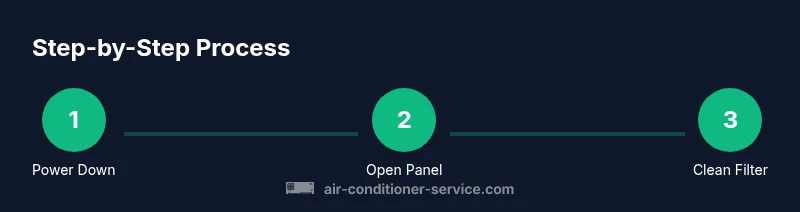
- 1
Power down and unplug
Turn off the unit at the control panel, unplug the power cord, and switch off the circuit breaker to prevent accidental startup while you work. This reduces risk of shock and equipment damage.
Tip: Verify power with a tester if you’re unsure. - 2
Open the front panel and access the filter
Gently release the front grille or service door to expose the filter housing. Do not force screws or remove the main housing. This step protects electrical components while giving access to the filter.
Tip: Take a photo of how the panel sits to help reassembly. - 3
Clean or replace the filter
If washable, rinse with lukewarm water and mild soap, rinse thoroughly, and air-dry completely before reinstalling. If disposable, replace with the correct size and discard used filters properly.
Tip: Avoid using hot water or heat that could shrink the filter. - 4
Dust the surrounding coil/blower area
Use a soft brush or microfiber cloth to remove loose dust from the coil exterior and the blower housing. Do not spray water directly on exposed electrical components; light mist is acceptable on non-electrical parts.
Tip: Keep a light touch to avoid bending coil fins. - 5
Tidy the drain line and exterior
Inspect the condensate drain line for any visible clogs. If needed, flush with a small amount of clean water and a mild cleaner. Wipe the exterior unit to remove dirt and moisture, ensuring the area around electrical connections stays dry.
Tip: Never pour dirty water into the drainage system. - 6
Dry, reassemble, and test
Let cleaned parts dry completely, reinsert the filter, reattach the front panel, plug in, and run a short cooling cycle. Listen for odd noises and verify that airflows is strong and consistent.
Tip: If airflow is weak, check the filter seating for gaps.
Common Questions
Can I clean an air conditioner without removing it?
Yes. You can safely clean accessible components such as the filter, exterior housing, and coil surfaces that are reachable without disassembly. Avoid touching electrical connections.
Yes. You can clean accessible parts like the filter and exterior housing without removing the unit, but avoid touching electrical components.
How often should I clean my AC using this method?
Clean when you notice reduced airflow, increased dust, or signs of dirt buildup. For many homes, seasonal checks or every few months during high-use periods are reasonable.
Clean when you notice reduced airflow or visible dirt, typically seasonally or during peak use.
What cleaners are safe for cleaning an AC without removal?
Use mild dish soap diluted in water or a dedicated non-ammonia cleaner. Avoid bleach, ammonia, and highly concentrated cleaners near coils and electronics.
Stick to mild soap and water or non-ammonia cleaners and avoid harsh chemicals near coils.
Is it dangerous to spray water near electrical parts?
Yes. Keep water away from the control panel, wiring, and electrical contacts. Use light mist only on non-electrical surfaces and ensure everything is dry before power-up.
Water near electrical parts can be dangerous; avoid soaking electrical components and ensure full dry time before powering on.
When should I call a professional?
If you detect frost, refrigerant smells, leaks, or persistent performance issues, seek a licensed HVAC technician. These signs could indicate a problem beyond routine cleaning that could require specialized tools and training.
Call a pro if you notice frost, leaks, or ongoing cooling issues that don’t improve after cleaning.
What signs indicate cleaning isn't enough and major service is needed?
If airflow remains weak after cleaning, the unit cycles excessively, or you hear unusual noises, these signals merit professional inspection.
Weak airflow after cleaning or unusual noises mean professional service may be needed.
Watch Video
The Essentials
- Unplug before handling any AC components.
- Clean or replace the filter regularly for airflow.
- Gently brush coils and avoid direct water on electrical parts.
- Check drainage and exterior housing for buildup.
- Call a pro if you observe frost, leaks, or off smells.