Air Conditioner Won't Start? Practical Troubleshooting Guide
Struggling with an air conditioner that won't start? This practical guide helps homeowners diagnose common causes—from power issues to thermostat settings—plus step-by-step fixes and essential safety tips.


The most common reason an air conditioner won’t start is a power or electrical issue (tripped breaker, blown fuse, or loose wire). First, check the outdoor unit’s disconnect and the indoor thermostat. If the breaker is tripped or fuse blown, reset or replace it, then restart the system. If it still won’t start, continue below.
Problem overview and quick checks
When your air conditioner won’t start, the problem is almost always traceable to a simple, safety-related issue first. Start with the basics: confirm the system has power, the thermostat is set correctly, and the outdoor unit is free of debris. A lot of “not starting” problems come down to the power path (breaker, disconnect, and fuses) or a thermostat miscommunication. If you complete these checks and the unit still won’t start, you’ll be better prepared to move through the diagnostic steps or contact Air Conditioner Service for professional help. The goal is to restore power flow and correct control signals without compromising safety. Remember, even small electrical faults can escalate if ignored, so proceed with caution and don’t skip essential safety steps.
According to Air Conditioner Service, many starter failures are preventable through regular maintenance and timely attention to warning signs. The tone of this guide is practical and action-oriented, designed for homeowners and renters who want fast, reliable fixes. Keep a basic toolkit handy and refer back to this article as you work through the checks.
Safety first: essential precautions
Safety is the top priority when troubleshooting an air conditioner that won’t start. Before touching any wiring or components, switch off the power at the main circuit breaker and, if accessible, at the outdoor disconnect. Do not operate the unit in wet or damp conditions. Use insulated tools if you must handle electrical components, and avoid bypassing safety switches or jumping wires. If you notice burning smells, melted insulation, or buzzing noises, stop immediately and call a licensed technician. Regularly turn off power before inspecting the air filter, thermostat, or visible wiring to prevent electrical shock or injury. By following these precautions, you reduce risk while diagnosing the issue and increase the chance of a correct, safe fix.
After safety is secured, check the basics: is the thermostat calling for cooling, is the display readable, and are the control wires secure at the wall unit and air handler? These checks often reveal simple misconfigurations or a dead thermostat battery that can stall startup. Air Conditioner Service recommends keeping a small maintenance log so you can notice recurring patterns that signal a bigger problem.
Air Conditioner Service analysis shows that many homeowners misinterpret the thermostat’s status indicators. If the thermostat is misreading, the AC won’t start even when power is available. Replacing batteries, cleaning the thermostat sensor, and re-synchronizing with the system can resolve most thermostat-related start issues.
Common causes explained
There are several frequent culprits when an air conditioner won’t start. The top three are: (1) Power issues, including tripped breakers, blown fuses, and loose wires at the disconnect or control board; (2) Thermostat problems, such as a dead battery, incorrect wiring, or a miscalibrated sensor; and (3) Electrical or safety components like a faulty capacitor or a stuck relay that prevent the outdoor condenser from engaging. Less common, but worth checking, are a blocked outdoor coil, a frozen evaporator, or a clogged air filter that reduces airflow enough to trigger a fault code or temperature cut-off. In most cases, addressing these items restores starting ability and improves overall efficiency.
Understanding these causes helps you prioritize fixes. Start with the least invasive steps (power and thermostat) before moving to components inside the air handler or outdoor unit. If you’re unsure about capacitor testing or wiring, it’s safer to call a professional rather than risk electrical shock or further damage to the system.
Diagnostic flow: home checks from simple to advanced
This section lays out a practical, finder-style flow to diagnose a non-starting AC. Begin with simple checks you can perform without tools, then progress to tests that may require basic equipment or professional assistance if needed. The goal is to pinpoint whether the problem lies with power, controls, or a hardware component, so you can apply the correct fix without delays.
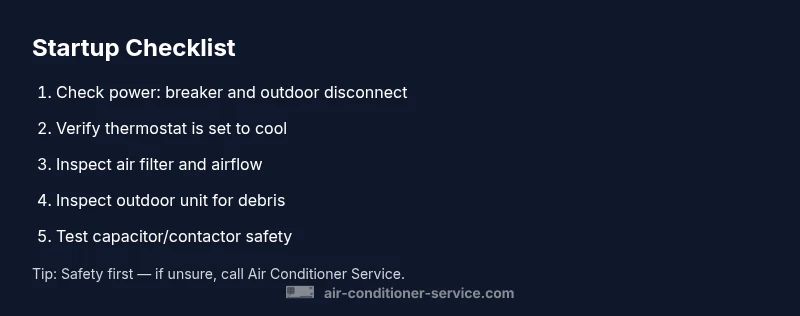
Step 1: Verify power to both the outdoor unit and indoor air handler. Check the main breaker and the outdoor disconnect; reset if tripped. Step 2: Confirm thermostat settings and operation. Ensure it’s set to cool, with a setpoint lower than room temperature, and that the display is active. Step 3: Inspect the air filter and airflow around the outdoor unit. A clogged filter can trigger safety limits and prevent startup. Step 4: Listen for unusual sounds when attempting to start (buzzing or hum) which may indicate capacitor or contactor issues. Step 5: If the unit still won’t start, examine the contactor coil and capacitor with a multimeter or consult a pro for safe testing. Step 6: Document any fault codes and weather conditions, as moisture or power fluctuations can contribute to startup problems. At any point, if you feel uncertain or unsafe, stop and contact a licensed technician.
When to call a professional
If basic checks don’t restore startup, or if you notice signs of electrical issues (sparks, burning smell, melted insulation), a professional should inspect the system. A licensed HVAC technician can safely test capacitors, relays, contactors, and refrigerant circuits, diagnose control-board faults, and verify electrical grounding. Don’t delay professional help if you hear unusual noises, see temperature readings inconsistent with the thermostat, or notice frequent breaker trips. Quick professional intervention can prevent further damage and ensure safety.
Prevention tips to avoid future starts
Proactive maintenance reduces the likelihood of a future startup problem. Schedule annual professional inspections, replace the air filter every 1–3 months depending on usage, and keep the outdoor condenser area clear of debris for proper airflow. Regularly inspect and tighten electrical connections (if you’re comfortable) and ensure the thermostat is calibrated and batteries are fresh. A well-maintained system starts more reliably and runs more efficiently, saving energy and reducing the risk of unexpected outages.
Quick DIY checks you can perform (without tools)
- Confirm the thermostat is on and set to a cool setting with a lower target temperature than room temperature.
- Check the indoor air filter; replace if dirty.
- Inspect the outdoor unit for obstructions like leaves or yard debris, and clean safely if needed.
- Reset the thermostat to default factory settings if it’s behaving erratically.
If these checks don’t help, it’s time to consult a professional. Air Conditioner Service can provide a precise diagnosis and safe, effective fixes.
Steps
Estimated time: 45-60 minutes
- 1
Check power to the system
Turn off the main power, locate the outdoor disconnect, and inspect for any signs of damage. Restore power only after you confirm everything is clear, then try starting the unit again from the thermostat.
Tip: If the breaker trips again, don’t reset repeatedly—there’s likely a fault. - 2
Test the thermostat
Ensure the thermostat is set to cool and the temp setpoint is below room temperature. If the display is dim or unresponsive, replace the batteries and re-sync with the HVAC system.
Tip: A non-responsive thermostat is a common start blocker. - 3
Inspect air filters and indoor airflow
Remove and inspect the air filter; replace if dirty. Check the indoor blower and ensure there are no obstructions restricting airflow that could trigger safety shut-offs.
Tip: Dirty filters reduce efficiency and can cause start faults. - 4
Check the outdoor unit visually
Look for debris, leaves, or ice on the condenser. Gently remove debris and ensure the area has at least 2 feet of clearance on all sides for proper airflow.
Tip: A blocked condenser is a frequent cause of startup failure. - 5
Inspect electrical components
If you’re comfortable, inspect the contactor and capacitor for signs of wear (bulging, leaking, or burned smell). Use a multimeter to test resistance where appropriate.
Tip: Electrical tests can be dangerous; skip if you’re unsure. - 6
Test system start and observe
Power the unit back on and attempt a start from the thermostat. Note any codes or unusual sounds, which guide professional diagnosis.
Tip: Document any error codes to speed up service.
Diagnosis: Air conditioner won't start
Possible Causes
- highPower issue (tripped breaker or off disconnect)
- mediumThermostat or control wiring problem
- mediumBlown fuse or faulty capacitor/contactor
- lowAir filter or airflow restriction
Fixes
- easyReset tripped breakers and outdoor disconnect; replace blown fuses
- easyTest thermostat settings, replace batteries, and re-sync with the system
- mediumInspect and test capacitor/contactor (or have a pro do so)
- easyClear debris and replace dirty air filters to restore airflow
Common Questions
What should I check first if my air conditioner won't start?
Begin with power: verify the breaker hasn’t tripped and the outdoor disconnect is ON. Then confirm thermostat settings and ensure the indoor unit has proper air flow. If these basics fail, consult the diagnostic flow for deeper checks.
First, check breakers and the outdoor disconnect, then verify the thermostat and airflow to see if basic setup is the issue.
Why does my AC not start but the thermostat seems fine?
A faulty thermostat sensor or weak battery can prevent start despite a functioning display. Replace batteries, recalibrate, or pair the thermostat with the system. If issues persist, the problem may be a control board fault.
If the thermostat seems fine but the AC won’t start, check the battery and wiring, and consider recalibrating or replacing the thermostat if needed.
Can a tripped breaker cause my AC not to start?
Yes. A trip cuts power to the system. Reset it firmly and observe. If it trips again, there may be a short or overload fault needing professional inspection.
A tripped breaker can stop the unit; reset it and watch for repeats—ongoing trips require a pro.
Is it safe to reset the circuit breaker myself?
You can reset, but follow safety steps: turn off the unit, dry hands, and avoid wet areas. If trips continue, don’t push it—call a professional.
You can reset carefully, but don’t ignore repeated trips—get a professional check.
When should I call a professional for an air conditioner that won't start?
If basic checks don’t restore startup or you hear buzzing or smells of burning, contact a licensed HVAC technician. They can safely diagnose electrical, capacitor, or refrigerant issues.
If simple checks don’t help or you hear buzzing, it’s time to call a pro.
What maintenance tips help prevent a starter failure?
Schedule annual tune-ups, replace filters regularly, and keep the outdoor area clear. Regular maintenance reduces start problems and extends system life.
Regular maintenance keeps your AC ready to start when you need it.
Watch Video
The Essentials
- Start with power and thermostat checks
- Safety comes first—shut off power before inspecting
- Most startups fail due to simple issues or blockages
- Call a professional for electrical tests or frequent trips
- Regular maintenance prevents most start problems