Air Conditioner Won't Kick On: Troubleshooting Guide
When your air conditioner won't kick on, this urgent troubleshooting guide helps homeowners safely diagnose power, thermostat, and startup issues, with a step-by-step flow to restore cooling quickly.


Most often, an air conditioner won’t kick on due to power issues, a tripped breaker, or a faulty thermostat signal. Start with these quick checks: confirm the outdoor unit and indoor blower are receiving power, reset the breaker, and verify the thermostat is calling for cooling with a comfortable temperature. If it still won’t start, proceed to diagnostics.
Quick Start: Check Power and Settings
According to Air Conditioner Service, most startup failures are rooted in simple power or control issues rather than complex mechanical faults. Begin with the basics: make sure the unit is plugged in and the indoor blower and outdoor condenser are receiving power. Look for a tripped circuit breaker or a blown fuse in the main panel and outdoor disconnect. If you reset the breaker and there’s still no response, turn off the power entirely for a minute and then restore it. This can reset minor electronic glitches. If you notice a burning smell or buzzing when you reset, stop and contact a professional technician. The goal is to restore clean power and get the control system to “call for cooling” reliably before moving on. Air Conditioner Service's guidance emphasizes safety and gradually escalating checks to avoid unnecessary service calls.
Verify The Thermostat Is Functioning
A thermostat that isn’t calling for cooling is one of the most common reasons an AC won’t start. Check that the thermostat is set to cool and not fan-only, and that the setpoint is sufficiently below the room temperature. If batteries are old, replace them and retest. Ensure wiring at the thermostat is secure and that there are no error codes on the display. In some setups, a smart thermostat can lose connectivity or misinterpret outdoor conditions; a quick reset or re-pair can resolve this. If the thermostat still isn’t communicating, you may need to temporarily bypass advanced features or consult a pro to verify sensor integrity.
Inspect The Outdoor Unit And Indoor Blower
Debris, dirt, or leaves around the outdoor condenser can block airflow and prevent startup. Clear a two-foot clearance around the unit and gently clean the condenser fins with a soft brush. Inside, verify the air handler’s blower is turning and that the air filter is clean and properly seated. A clogged filter can cause the system to struggle to start or to shut down due to restricted airflow. If the outdoor unit feels warm or shows signs of overheating, switch off the power and inspect for obstructions, and schedule service if overheating persists. Air Conditioner Service notes that clean airflow is essential for reliable startup and efficiency.
Look For Safety Switches And Tripped Breakers
Many startup shutdowns are triggered by safety features. Check the float switch or condensate pan switch that can shut off the system if the drain line is blocked. If a switch trips, reset it only after ensuring the condensate tube is clear. Also inspect door switches and panel safety interlocks, which can stop the system from starting if a panel is ajar. Never bypass safety devices to force a start. If a switch repeatedly trips, this indicates an underlying issue that requires professional diagnosis to prevent water damage or electrical hazards. Air Conditioner Service stresses not to ignore recurring safety trips.
Inspect Electrical Components Safely
Electrical components like capacitors and contactors are common failure points that can prevent startup without obvious external symptoms. Capacitors can fail gradually, causing slow starting or no response, while contactors may chatter or fail to pull in. If you’re comfortable, turn off power at the breaker and discharge capacitors safely with a reputable method or tester. If you’re unsure, skip to professional inspection. This is not a place to guess; improper handling can cause electric shock or equipment damage. If you see signs of overheating or corrosion, call a pro.
Common Misconceptions That Delay Startup
Homeowners often believe a simple reset fixes everything, or that the outdoor unit is always responsible for a no-start condition. In reality, root causes can be as mundane as a dirty filter or a loose thermostat wire. Do not assume wiring is intact without verifying it, and never bypass safety protections to test equipment. Air Conditioner Service reminds readers that cautious, methodical checks reduce unnecessary service calls and improve diagnostic accuracy.
Diagnostic Flow in Action: Symptom to Solution
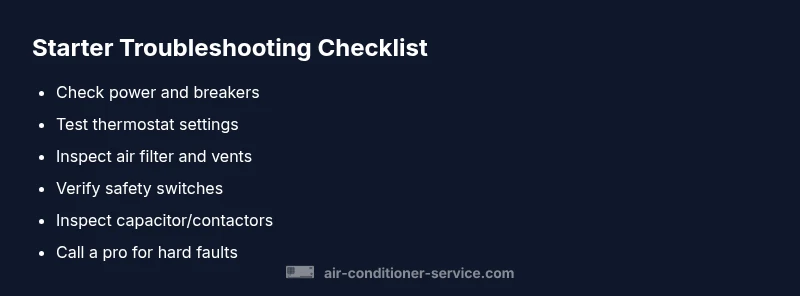
A structured approach is essential. Start with power, then thermostat, then safety switches, followed by major electrical components. If the symptom changes (e.g., the unit begins to start intermittently), document the pattern. This flow mirrors the diagnostic framework we provide below and is designed to help homeowners quickly identify a likely cause and a safe fix. If at any point you encounter strong odors, smoke, or buzzing, shut off power and call a professional immediately. Air Conditioner Service emphasizes safety first.
Steps
Estimated time: 20-60 minutes
- 1
Check power and reset breaker
Turn off the unit at the main breaker, wait 30 seconds, and flip the breaker back to ON. Confirm the outdoor unit and blower are receiving power. If the breaker trips again, there may be a short or overload requiring professional attention.
Tip: Use a non-contact voltage tester to verify power without touching live wires. - 2
Verify thermostat settings
Set the thermostat to cool and ensure the setpoint is clearly below room temperature. If you have a programmable or smart thermostat, check for error messages and ensure it’s communicating with the HVAC control board.
Tip: If batteries are installed, replace them and recalibrate after testing. - 3
Inspect airflow and filters
Check indoor filter and vents for obstruction; replace dirty filters. Blocked airflow can prevent the system from starting and trigger safety shutoffs. Ensure the indoor blower is turning when power is restored.
Tip: A clean filter improves efficiency and startup reliability. - 4
Check safety switches
Inspect condensate drain line for blockage and reset the float switch if needed. Ensure access panels are properly seated; safety interlocks should click when closed.
Tip: Never bypass safety switches; they protect against overflow and electrical hazards. - 5
Evaluate electrical components
If you’re comfortable, test the capacitor and contactor with a multimeter or have a pro verify them. Look for signs of swelling, leaking, or burning smell near electrical components.
Tip: Capacitors can retain charge after power is removed; discharge safely before touching. - 6
Decide on next steps
If the unit still won’t start after these steps, it’s time to call a licensed technician for advanced diagnostics and potential refrigerant or control-board service.
Tip: Document symptoms and any patterns to share with the technician.
Diagnosis: Air conditioner won't kick on
Possible Causes
- highPower supply issue (tripped breaker, blown fuse)
- highThermostat not calling for cooling
- mediumBlown capacitor or bad contactor
- lowSafety switch engaged (drain pan/float switch)
- lowFaulty control board or relay
Fixes
- easyCheck the main power and reset any tripped breakers or replace blown fuses; restore power to the unit
- easyVerify thermostat settings and wiring; replace batteries if needed and ensure cooling call is active
- mediumTest capacitor and contactor with a multimeter or request professional testing
- easyInspect float/drain pan switch and correct any blockages or misalignments
- hardIf power and thermostat are fine but it still won’t start, contact a licensed technician for control board or refrigerant-related diagnostics
Common Questions
Why won't my air conditioner kick on even when it’s hot outside?
Common causes include power issues, a thermostat not calling for cooling, or a blown safety switch. Start by checking the breaker, thermostat settings, and drain pan switches before testing electrical components.
Common causes are power, thermostat, or safety switches. Start with a breaker check and thermostat settings before testing electrical parts.
Is a blown fuse a likely culprit?
Yes, especially if the unit shares a circuit. A blown fuse or tripped breaker will prevent startup. Replace the fuse or reset the breaker and test the unit again.
A blown fuse or tripped breaker often stops startup. Replace or reset and test.
Can a thermostat reset fix it?
Sometimes. Resetting or recalibrating the thermostat can restore proper cooling calls. If programmed, re-check schedules and ensure it communicates with the control board.
Resetting the thermostat can help; verify it’s communicating with the system.
When should I call a professional?
Call a pro if you’ve checked power, thermostat, safety switches, and basic electrical components without success, or if you suspect capacitor, contactor, refrigerant, or control-board issues.
If the basics don’t fix it, or you think it’s a capacitor or refrigerant issue, call a pro.
What maintenance helps prevent this problem?
Regular filter changes, coil cleaning, and annual professional checkups reduce startup problems. Keeping the condensate drain clear also prevents safety shutdowns.
Keep filters clean and have yearly checkups to prevent startups.
Is it safe to touch electrical components myself?
Only perform basic checks with power off and avoid touching live conductors. If unsure, leave electrical diagnostics to a licensed technician to avoid shock or injury.
Don’t work on live electrical parts; consult a professional if unsure.
Watch Video
The Essentials
- Start with power and thermostat checks.
- Follow a clear diagnostic flow to isolate causes.
- Don’t bypass safety features; call a pro for hard faults.
- Maintain regular maintenance to prevent startup failures.