Air Conditioner Replacement Coil: Step-by-Step Guide
A comprehensive, practical guide to understanding, planning, and safely replacing an air conditioner replacement coil. Learn when to replace, what tools are needed, safety considerations, and steps for professional-grade installation.


This guide explains when to replace an air conditioner replacement coil, the required safety precautions, and a clear step-by-step process. Note that refrigerant handling and coil work often require licensed technicians. Use this as a practical framework to discuss options with your HVAC professional.
What is an air conditioner replacement coil? The air conditioner replacement coil, often called the evaporator coil in residential systems, is a crucial heat-exchange component that absorbs heat from indoor air. When this coil corrodes, leaks, or becomes blocked, the system loses efficiency and may fail to cool adequately. According to Air Conditioner Service, coil reliability directly impacts overall performance, energy use, and comfort. Understanding the coil's role helps homeowners recognize when replacement, rather than repair, is the most practical path. In many split-system setups, the coil is housed inside an air handler or furnace, working in tandem with the outdoor condenser coil. The right replacement coil must match coil type, dimensions, and refrigerant circuit to ensure proper airflow and heat transfer.
Why replacement might be necessary and signs to watch for The decision to replace a coil usually arises from persistent refrigerant leaks, reduced cooling capacity, frost on the indoor coil, or escalating energy bills. Leaks may develop due to corrosion, physical damage, or aging connections. If a coil is leaky or clogged beyond cleaning, refrigerant loss will degrade both cooling performance and system longevity. Homeowners may notice longer run times, insufficient cold air, or strange HVAC noises. Air Conditioner Service's analysis emphasizes that ignoring coil issues often leads to compressor stress and more extensive repairs later on. Timely coil replacement, when correlated with symptoms, can be cost-effective and less disruptive than multiple failed components over time.
Coil types and compatibility: evaporator vs condenser coils Coils come in several configurations, but the two most common in home systems are the evaporator coil (inside the air handler) and the condenser coil (outdoors). Evaporator coils are typically more accessible during service but can be tricky to replace due to tight space and wiring. Condenser coils reside in the outdoor unit and are subject to weather-related wear. Replacement coils must match the original model’s dimensions, refrigerant type, and connection sizes to maintain system efficiency and refrigerant charge. Always verify compatibility with the equipment’s nameplate and service manuals before sourcing parts to avoid compatibility issues and warranty problems.
Safety and regulatory considerations Handling refrigerants and performing coil replacements involve safety protocols and legal requirements. In many regions, coil replacement requires a licensed HVAC technician to evacuate and recover refrigerant, perform leak tests, and recharge the system to proper specifications. Working with copper lines, contactors, and electrical components also carries shock and burn risks if misused. If you’re unsure about handling refrigerant or pressurized lines, contact a licensed professional. This keeps your home safe, preserves the environment, and helps protect warranty terms on your equipment.
Tools and materials you’ll typically need (professional-grade) In a professional coil replacement, technicians use a range of specialized tools: - Safety gear (glasses, gloves, and protective clothing) - Lockout/tagout devices to ensure power isolation - Multimeter for electrical checks - Refrigerant recovery system and a vacuum pump - Manifold gauge set and refrigerant scale - New evaporator or condenser coil matching your unit - Copper line set with appropriate fittings and sealant - Leak detector and hand tools for disassembly and reassembly - Electrical tape and crimping tools for secure wiring Always verify the coil part number against your unit’s model and serial number to ensure exact fit and refrigerant type.
Planning the replacement project: measurements and procurement Before sourcing a coil, pull the unit’s model number, coil type (evaporator or condenser), and refrigerant type (R-410A, R-22, etc.). Take precise measurements of the coil’s dimensions, including width, height, and depth, and note the line connections. If your system is under warranty, consult the manufacturer’s guidelines to confirm whether coil replacement falls under warranty coverage. Create a task timeline with buffer time for refrigerant evacuation, coil replacement, vacuum testing, and system recharging. Air Conditioner Service advises coordinating with a licensed technician if any uncertainty arises.
Accessing the coil and removing the old coil: planning for space and safety Access to the coil requires safely shutting off power at the breaker, and if applicable, disconnecting the outdoor unit. Remove access panels and observe how components are connected. Document wiring and refrigerant lines before detaching any components so reassembly matches the original configuration. Label wires and connectors to avoid miswiring during reinstallation. If corrosion or oil leaks are present, stop and consult a professional—pushing through can cause further damage and safety hazards.
Installing the new coil: alignment, connections, and orientation When the new coil is ready, align it with the existing cabinet and confirm that coil orientation supports proper airflow. Reconnect refrigerant lines with new gaskets or seals, ensuring clean, dry surfaces to prevent leaks. Reattach electrical connections, consult the wiring diagram, and verify control signals. Correctly orient the coil to avoid airflow obstructions and ensure condensate drainage paths remain unobstructed. After physical installation, visually inspect joints for signs of stress or improper seating.
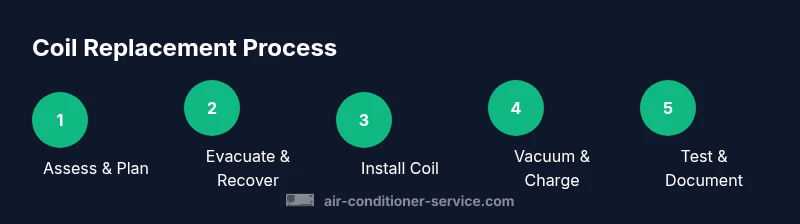
Vacuuming, leak testing, and refrigerant charging: the critical steps Vacuum the sealed system using a high-quality vacuum pump for an adequate duration to remove moisture and air. Use a leak detector to check all joints and connections. If leaks are found, seal and retest before proceeding. Charging the refrigerant must be performed to the manufacturer’s specifications, and only licensed technicians should handle refrigerants. The goal is to achieve a clean, dry, and sealed system with the correct refrigerant charge for optimal performance.
Post-install testing and system commissioning After the coil replacement, restore power and run the system through a complete cooling cycle. Check airflow, thermostat readings, and outlet temperatures. Look for frost on coils, unusual noises, or abnormal pressures. Document the maintenance notes, system pressures, and observed performance. A follow-up check after 24-72 hours can help verify stability and address any minor leaks or performance variances.
Maintenance after coil replacement to extend coil life Regular maintenance reduces future coil issues. Schedule annual inspections to clean coils, tighten connections, and verify refrigerant charge. Replace air filters on a routine basis to keep indoor air clean and reduce debris buildup on the coil fins. Consider a professional inspection after extreme weather seasons, particularly in humid environments where coil corrosion can accelerate. Air Conditioner Service emphasizes consistent maintenance as a practical path to longer coil life and better efficiency.
Cost considerations and financing options The cost of coil replacement varies with coil type, system configuration, and accessibility. Expect variability in labor, parts, and potential refrigerant handling charges. If DIY assistance is contemplated, acknowledge that refrigerant handling restrictions may apply in your area. Financing options and warranties may be available through manufacturers or HVAC service providers, which can help spread the cost of a replacement over time. Always obtain a formal quote that itemizes parts, labor, and any disposal fees.
Alternatives to coil replacement: repair vs replacement In some cases, a coil can be repaired if leaks are limited and the core issue is a seal or joint rather than a full coil failure. However, repeated leaks or structural damage often make replacement the more cost-effective option in the long run. Discuss options with a qualified HVAC professional to determine whether a targeted repair, coil-stop or remanufactured coil could be viable, bearing in mind system efficiency and warranty considerations.
Environmental considerations and refrigerant disposal Proper refrigerant handling protects the environment and complies with regulations. Evacuating and recycling refrigerant must be done by licensed technicians using approved equipment. Improper discharge can lead to environmental harm and legal penalties. After the coil replacement, ensure proper disposal of old coil components per local guidelines and manufacturer recommendations.
Troubleshooting after replacement: not cooling or poor performance Even after a coil replacement, a system may exhibit lingering cooling issues. Check for airflow restrictions, dirty filters, thermostat calibration, duct leaks, or improper refrigerant charge. If performance remains subpar, revert to a professional assessment to avoid silent failures that could damage the compressor or other critical components.
Tools & Materials
- Safety glasses(ANSI Z87.1 compliant protective eyewear.)
- Electrical gloves(Insulated gloves rated for electrical work.)
- Lockout/tagout kit(For safe power isolation.)
- Multimeter(For electrical continuity and voltage checks.)
- Screwdrivers and nut drivers set(Assorted sizes to remove panels and fasteners.)
- Wrench set(Open/box end wrenches for fittings.)
- Copper line set with fittings(New coil requires compatible lines.)
- New evaporator/condenser coil(Part number matched to the unit model.)
- Refrigerant recovery system(Used by licensed professionals to evacuate refrigerant.)
- Vacuum pump(High-quality pump to remove moisture.)
- Manifold gauge set(For pressure checks during charging.)
- Refrigerant scale(To ensure proper refrigerant charge.)
- Leak detector(Electronic or halogen leak detector.)
- Sealant/line-set tape(For secure line connections.)
- Electrical tape/crimp tools(Secure wiring connections.)
Steps
Estimated time: 2-6 hours
- 1
Power down and prep the work area
Shut off power to the HVAC system at the main breaker and at the outdoor unit if applicable. Remove access panels and clear the workspace to prevent trips or spills. This step minimizes shock and combustible hazards, and sets a safe baseline for the project.
Tip: Double-check that all related breakers are OFF before touching any wiring. - 2
Arrange refrigerant evacuation with a licensed technician
Coordinate refrigerant evacuation and recovery with a licensed technician before coil removal. This is a safety and legal requirement in many areas to protect you, by ensuring proper handling and disposal of refrigerants.
Tip: Do not attempt to vent refrigerant yourself—it's illegal and hazardous. - 3
Access the coil cabinet and document connections
Open the access panel and take clear photos or notes of all electrical connections and refrigerant line positions. This documentation helps with accurate reassembly and reduces the risk of miswiring.
Tip: Label each wire connector before disconnecting. - 4
Disconnect refrigerant lines and remove the old coil
Carefully disconnect the copper refrigerant lines using proper tools. Remove support brackets and unbolt the coil from the cabinet. Handle the old coil gently to prevent additional leaks.
Tip: Keep track of gasket seals and replace with new ones for a leak-free join. - 5
Prepare the new coil and verify compatibility
Inspect the new coil for damage and confirm model numbers, coil type, and refrigerant compatibility match the original equipment. Apply new seals or gaskets as specified by the manufacturer.
Tip: Never force a misfit coil into place—recheck model numbers. - 6
Install the replacement coil and secure connections
Position the new coil, reconnect refrigerant lines with new gaskets, and secure mounting hardware. Reattach electrical connections according to your notes or photos.
Tip: Ensure line-set connections are tight but not over-tightened to avoid stripping fittings. - 7
Vacuum, leak-test, and refrigerant charging
Using a vacuum pump, evacuate the system to remove moisture. Run a leak test and then charge the system to the manufacturer’s specification using the refrigerant scale.
Tip: Allow a complete vacuum hold for a minimum duration as recommended by the equipment manual. - 8
Restore power and run a full system test
Turn on the system and observe operation across modes (cooling, fan, defrost if applicable). Check for airflow consistency and verify thermostat accuracy.
Tip: Record operating pressures and temperatures for future reference.
Common Questions
Can I replace an air conditioner replacement coil myself?
Coil replacement involves refrigerant handling and sealed-system procedures that are best left to licensed technicians. For safety, environmental compliance, and warranty protection, consult a professional.
Replacing a coil yourself isn’t recommended due to refrigerant handling and safety concerns.
How long does coil replacement typically take?
Appointment duration varies by system and access. Plan for several hours for assessment, replacement, vacuuming, and testing with a professional.
Most coil replacement jobs take a few hours, depending on accessibility and unit type.
Will a new coil restore original efficiency?
A high-quality replacement coil with proper installation can restore expected cooling efficiency, but other components (filters, ducts, and fans) should be evaluated as well.
A good coil replacement can bring back efficiency if the rest of the system is healthy.
Can coil replacement affect warranty coverage?
Replacing a coil can influence warranty terms. Always check the equipment warranty and work performed by a licensed technician to preserve coverage.
Warranty terms vary; check with the manufacturer or your installer.
What maintenance helps extend coil life?
Regular filter changes, coil cleaning, and annual professional checkups help extend coil life and maintain efficiency.
Keep up with maintenance to prevent premature coil issues.
Are there environmental concerns with refrigerants?
Refrigerants require proper handling and disposal due to environmental impact. Licensed technicians follow regulations to minimize risk.
Refrigerants must be handled responsibly to protect the environment.
Watch Video
The Essentials
- Coil replacement requires precise model matching.
- Do not handle refrigerants unless licensed.
- Plan for proper evacuation, leak testing, and charging.
- Document connections to ensure accurate reassembly.
- Professional evaluation is often essential for warranty integrity.