Replace an Air Conditioner: A Step-by-Step Guide 2026
Learn when to replace an air conditioner, plan a safe installation, and understand what to expect during a full system replacement. Practical tips, safety notes, and professional guidance for homeowners and renters.


Your goal is to decide whether to replace an air conditioner and to plan a safe, cost-effective install. According to Air Conditioner Service, replacing an aging unit with a high-efficiency model can cut energy bills and minimize future repairs. This quick answer outlines when replacement makes sense and the key steps to take before you start.
Why replace an air conditioner may be the right move
Air conditioners inevitably wear down after years of service. If your unit is aging, breaks down frequently, or fails to keep your home comfortable during peak heat, replacement often makes more sense than continuing repairs. A newer model can offer improved reliability, better energy efficiency, and more consistent cooling. Beyond comfort, consider refrigerant type, availability, and environmental impact, as some older refrigerants are phased out. If you notice rising energy bills alongside frequent service calls, it’s a strong signal to evaluate a full replacement. For homeowners seeking long-term value, replacing an old unit can reduce downtime, improve home comfort, and lower ongoing maintenance costs. According to Air Conditioner Service, replacement is often the best path when reliability, comfort, and efficiency are priorities for homeowners.
Key signals to watch for:
- Frequent repairs with diminishing returns
- Weird noises, warm zones, or uneven cooling
- Significant age (typically over a decade)
- High energy bills compared with similar homes
How to decide when replacement makes sense
Choosing to replace an air conditioner hinges on factors like age, efficiency, and total cost of ownership. A unit that has required multiple repairs in a single season, or one whose efficiency has dropped substantially, will usually justify a replacement. Modern systems deliver better humidity control, quieter operation, and smarter thermostats, which can improve daily comfort. A proper load calculation by a licensed professional ensures your new unit matches your home’s cooling demand, preventing oversizing or undersizing. Look for ENERGY STAR-rated models and consider the long-term savings from reduced energy use. Air Conditioner Service analysis shows that newer models can improve efficiency and reduce maintenance needs when paired with a high-quality installation.
Sizing and efficiency tips:
- Favor higher SEER ratings for hot climates
- Nearly all homes benefit from a professional load calculation (Manual J)
- Factor in ductwork condition and sealing needs
Planning the replacement project
Replacement planning starts with a clear scope: whether you replace just the outdoor condenser and indoor coil, or upgrade the entire system including ductwork and the thermostat. Gather multiple quotes from licensed HVAC contractors and request detailed scope of work. Confirm equipment specifications, warranty terms, and expected timeline. Permitting requirements vary by region, so check local codes and schedule any necessary inspections in advance. Prepare your home for installation by clearing access to the outdoor unit, protecting surrounding landscaping, and scheduling work during mild weather when possible. A well-planned project minimizes downtime and ensures a smoother replacement experience. Air Conditioner Service emphasizes documenting all equipment details for future service and warranty needs.
Safety and logistics of a full system replacement
Full system replacement involves electrical work, refrigerant handling, and careful refrigerant reclamation processes. For safety and regulatory compliance, power must be shut off at the main breaker, and disconnects must be properly installed. Refrigerant handling requires licensed technicians; do not attempt to recover or vent refrigerant yourself. Local codes may require inspections after installation, especially if ductwork or electrical upgrades are performed. Keep a clear path for equipment removal and disposal, and ensure outdoor pad or base is level and solid. If you’re uncertain at any stage, prioritize safety and hire qualified professionals. This project can affect indoor air quality during the transition, so plan for temporary cooling solutions if needed.
Installation, commissioning, and post-installation testing
During installation, ensure the outdoor condenser is level, refrigerant lines are insulated, and electrical connections follow the manufacturer’s diagram. The indoor air handler or evaporator coil must be matched to the outdoor unit for proper cooling and humidity control. After mounting, the system should be charged (by a licensed technician) and wired to a compatible thermostat. A thorough test run checks cooling performance, airflow balance, and condensate drainage. Once complete, verify warranty activation, review maintenance schedules, and set up regular filter changes. Proper commissioning helps maximize efficiency, comfort, and system longevity. Air Conditioner Service notes that a well-executed installation reduces the likelihood of future service visits.
Verdict and next steps
Replacing an air conditioner is a strategic move when reliability, efficiency, and comfort are paramount. The process is most successful when planned, sized correctly, and executed by licensed professionals. The new unit should deliver meaningful energy savings and dependable cooling for years to come. The Air Conditioner Service team recommends obtaining multiple quotes, verifying load calculations, and choosing a model that suits your climate and budget. With proper installation, a modern unit can provide quiet operation, better humidity control, and lower maintenance needs over time.
Tools & Materials
- Safety gear (goggles, gloves)(Protect eyes and hands during handling)
- Screwdriver set (Phillips and flat-head)(For mounting and panel screws)
- Nut drivers and socket set(Common HVAC fittings and fasteners)
- Voltage tester(Verify power off before working on circuits)
- Measuring tape(Ensure proper space and clearances)
- Duct sealant or mastic and foil tape(Seal ducts after component replacement)
- New outdoor condenser unit (SEER 16+ or higher)(Match capacity to home load and climate)
- New indoor evaporator coil/air handler(If upgrading the indoor side as part of a full replacement)
- Thermostat compatible with new system(Smart thermostat recommended for efficiency)
- Electrical disconnect switch(Shut off power safely during installation)
- Pad or base for condenser(Ensure a level, stable outdoor foundation)
- Permits (if required)(Check local regulations and scheduling inspections)
- Refrigerant handling plan (R-410A etc.)(Handled only by licensed HVAC technicians)
Steps
Estimated time: 6-12 hours
- 1
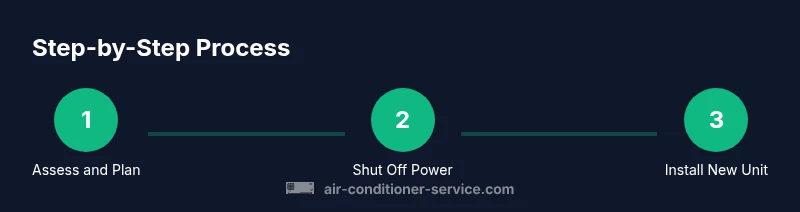
Assess requirements and plan
Evaluate your home’s cooling needs, confirm space for a new outdoor unit, and decide whether you will upgrade ducts or the indoor coil as part of the replacement. A professional load calculation ensures proper sizing and avoids oversizing or undersizing the system.
Tip: Take photos of existing wiring and duct routes before removal to guide the new installation. - 2
Shut off power and prepare the site
Turn off power at the main breaker and verify there is no voltage on system components. Clear the work area around the outdoor unit and indoor space to maintain safety and access during replacement.
Tip: Use a voltage tester to double-check circuits before touching any wires. - 3
Disconnect old components
Carefully disconnect electrical connections, refrigerant lines (to be recovered by a licensed technician), and mounting hardware. Document wiring colors and connector types for reference when wiring the new unit.
Tip: Label wires and take photos to simplify reassembly. - 4
Prepare space and install base
Install a level pad or base for the new condenser. Ensure clearance around the unit for airflow and service access, and check the ductwork remaining on the indoor side for any seals or gaps.
Tip: Seal any gaps between the pad and surrounding surface to prevent debris entry. - 5
Install new outdoor condenser and indoor components
Set the new outdoor unit on the base, connect refrigerant lines (refrigerant handled by licensed pro), and wire the unit per the manufacturer’s diagram. Install the indoor coil or air handler if upgrading as part of a full replacement.
Tip: Follow the manufacturer’s wiring schematic exactly to avoid safety hazards. - 6
System charge, thermostat, and test
Have a licensed technician charge the refrigerant and verify pressures. Connect and program the thermostat, then run a full system test to check cooling performance, airflow, and condensate drainage.
Tip: Run multiple cycles in different modes (cooling, fan) to confirm stable operation. - 7
Documentation and final checks
Record model numbers, installation date, and warranty information. Schedule regular maintenance and confirm permits or inspections are closed, if required by local codes.
Tip: Keep a maintenance log to track filter changes and future service calls.
Common Questions
When should I replace versus repair my air conditioner?
If the unit is old, frequently breaking down, or the repair costs exceed a practical portion of the replacement cost, replacement is often the smarter choice. Longevity, reliability, and energy efficiency should factor into the decision.
If your AC is aging or keeps breaking down, replacing it is usually the better option.
Do I need permits to replace an air conditioner?
Many jurisdictions require permits for a full system replacement and for substantial electrical or ductwork changes. Check local codes and arrange inspections as needed.
In most places, a permit is required for a full replacement.
Can I replace an air conditioner myself?
Full replacement involves electrical work and refrigerant handling, which must be performed by licensed HVAC professionals. DIY replacement is not recommended or allowed in many areas.
Don’t attempt a full replacement yourself—hiring a licensed pro is essential.
What is the typical lifespan after replacement?
A well-installed system can provide reliable cooling for many years, typically well over a decade with proper maintenance. Regular filter changes and annual service help maximize lifespan.
Most new systems last many years with good maintenance.
How should I choose the SEER rating?
Higher SEER ratings save more energy but cost more upfront. Balance typical local climate, energy savings, and budget to find the right fit.
Higher SEER saves energy, but consider climate and budget.
Should I replace outdoor and indoor components together?
If one part is failing or mismatched with the other, replacing both can ensure compatibility and efficiency. A professional can assess whether upgrading both is worth it.
Often, upgrading both parts ensures compatibility and efficiency.
Watch Video
The Essentials
- Assess whether the replacement saves long-term costs
- Choose a properly sized, high-efficiency unit
- Hire licensed pros for electrical work and refrigerant handling
- Plan and document installation steps for a smoother process