How to Clean Coil on Air Conditioner: Step-by-Step Guide
Learn how to safely clean your evaporator coil to boost airflow and efficiency. This practical guide covers tools, safety, step-by-step actions, and maintenance tips for homeowners.


By cleaning the evaporator coil, you improve airflow, restore cooling efficiency, and extend the life of your AC. This guide walks homeowners through safe, practical steps to clean accessible coils without specialized tools. You'll learn when to clean, which cleaners to use, and how to prevent damage to delicate fins and electrical components.
Why cleaning the coil matters
Dirty evaporator coils impede heat transfer, reduce airflow, and force your AC to work harder. According to Air Conditioner Service, dirty coils can lower cooling efficiency and increase energy use. Regular coil cleaning helps restore performance, extend equipment life, and improve indoor comfort for homeowners and renters alike.
Safety and prep: lay the groundwork
Before you touch anything, power down the system at the breaker and thermostat. Put on protective gloves and safety goggles, and keep cleaners away from eyes and skin. Air Conditioner Service guidance emphasizes keeping moisture away from electrical connections and control boards. If you smell refrigerant or hear unusual sounds, stop and call a qualified technician.
Accessing the coil: where to clean in typical systems
In most home air handlers or furnaces, the evaporator coil is behind an access panel. Use the screwdriver to remove the panel screws and gently pull the panel aside. Do not tilt or yank components. Take a quick photo of wiring before removing anything so you can reassemble correctly later. Visual access helps you assess how dirty the coil is and whether fins are bent.
Cleaning approach: cleaners, tools, and technique
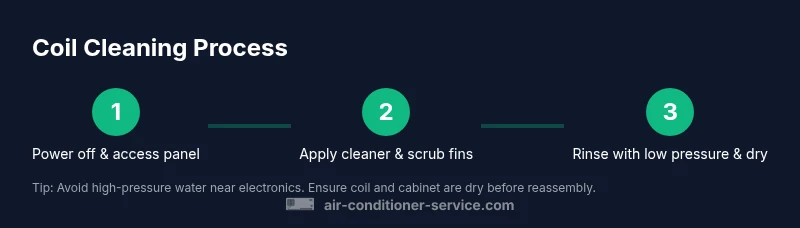
Use a non-acid evaporator coil cleaner and a soft nylon brush. Apply the cleaner as directed by the label, then let it foam and break up grime for 5–10 minutes. Gently scrub (in the direction of the fins) to avoid bending them. Rinse with a low-pressure spray held at a safe distance, keeping water away from electrical components. Air Conditioner Service notes that a careful, methodical approach yields the best results without damage.
Fin care and post-clean checks
Bent fins reduce airflow; if you see any, straighten them carefully with a fin comb. Wipe the coils dry with microfiber cloths and allow any remaining moisture to evaporate before reassembling the panel. Reassemble the access panel, restore power, and listen for normal operation. If you notice frost buildup or unusual noises, consult a professional.
Maintenance plan: timing and routines
Establish a seasonal cleaning routine based on use, climate, and indoor air quality. Regular visual checks and a proactive cleaning schedule help sustain efficiency and prevent unit strain. Air Conditioner Service recommends documenting cleaning dates and inspecting the coil area during filter changes or routine HVAC checks.
Tools & Materials
- Non-acid coil cleaner spray (evaporator coil safe)(Follow label instructions; do not mix cleaners.)
- Soft nylon brush(Use gentle strokes to avoid bending fins.)
- Microfiber cloths(For drying and wiping surfaces.)
- Low-pressure sprayer or spray bottle(Avoid high-pressure settings that can bend fins.)
- Fin comb or thin metal comb(Gently restore bent fins; work from outside inward.)
- Vacuum with brush attachment(Optional for loose dust before cleaning.)
- Protective gloves(Keep hands clean and protected from chemical splashes.)
- Safety goggles(Shield eyes from splashes and debris.)
- Masking tape(Use to protect nearby components if needed.)
- Ladder or sturdy step stool(Ensure stable access to the unit.)
- Screwdriver (Philips or flathead as needed)(Remove access panel screws safely.)
Steps
Estimated time: 45-60 minutes
- 1
Power off and prepare
Shut off power at the breaker and thermostat. Confirm no voltage at relevant components using a tester if available. This prevents shocks and protects electronics. See diagram coil-clean-prep.png for reference.
Tip: Double-check that all power is off before touching any wiring. - 2
Access the coil
Remove the air handler or furnace access panel and locate the evaporator coil. Keep screws in a tray so you don’t lose them. Reference the diagram to avoid disturbing wiring.
Tip: Label or photograph wires before disconnecting anything. - 3
Inspect coil and fins
Look for visible dirt, grime, and bent fins. If fins are crushed, plan to use a fin comb gently. Visual inspection helps determine whether cleaning is sufficient or if a pro is needed.
Tip: Use a flashlight to spot dirt between tight coils. - 4
Apply cleaner and wait
Apply the cleaner per the label and let it sit for 5–10 minutes so grime loosens. Foam will help lift dirt from the coil surface. Avoid letting cleaner dry on metal surfaces.
Tip: Do not mix cleaners, and avoid concrete or metal surfaces that can corrode. - 5
Scrub and loosen grime
Gently scrub the coil with a nylon brush, moving along the fins. This helps lift embedded dirt without bending the fins. Use short, even strokes for best results.
Tip: Work from top to bottom to avoid re-contaminating cleaned areas. - 6
Rinse with low pressure
Rinse the coil with a low-pressure spray, from the clean side toward the dirty side. Keep water away from electrical components and condensate pathways. Allow excess water to drain away from the air handler.
Tip: Keep a dry microfiber cloth handy to blot excess moisture. - 7
Dry and reassemble
Wipe surfaces dry with microfiber cloths and let any remaining moisture evaporate. Reattach the access panel and screws, ensuring a snug fit to prevent moisture intrusion.
Tip: Do a quick visual check for any loose screws or gaps. - 8
Test the system
Restore power and run the AC. Listen for unusual noises and verify air temperature improves. If performance remains poor, schedule a professional inspection.
Tip: Note any changes in cooling performance for future maintenance.
Common Questions
Can I clean the coil myself, or should I hire a pro?
Many homeowners can clean accessible evaporator coils safely by following proper safety steps and using the right cleaner. If you encounter electrical components, refrigerant lines, or persistent dirt, consider hiring a licensed technician.
Many homeowners can safely clean coils themselves if they follow safety steps, but call a pro for electrical or persistent issues.
How often should I clean the evaporator coil?
Frequency depends on environment, usage, and indoor air quality. Schedule seasonal inspections and cleanings as needed, and perform a quick visual check between deeper cleanings.
Frequency depends on use and environment; plan seasonal inspections and cleaning.
What type of cleaner should I use?
Use a non-acid evaporator coil cleaner designed for your system, and always follow the label directions. Avoid acid-based cleaners that can damage coatings.
Choose a safe, non-acid coil cleaner and follow the label.
Is it safe to use a hose to rinse the coil?
A light, low-pressure rinse is acceptable, but avoid high-pressure hoses near electrical components and avoid saturating wiring or control boards.
Use a light rinse; never spray high pressure near electronics.
What are signs the coil needs cleaning?
Look for reduced airflow, longer cool-down times, uneven cooling, frost on coils, or higher energy bills. If you notice these, inspect and clean the coil or call a pro.
Signs include reduced cooling and frost or higher energy use.
What if the coil is severely dirty or fins are bent?
For severe grime or crushed fins, professional service is recommended. Do not force clean or bend fins back aggressively, as this can damage the coil.
If it’s very dirty or fins are bent, contact a pro.
Watch Video
The Essentials
- Power down before starting any cleaning work.
- Use a non-acid coil cleaner and a soft brush.
- Protect electrical components and avoid high-pressure water.
- Inspect and straighten fins with care using a fin comb.
- Create a seasonal maintenance plan for the coil.