Air Conditioner Repair in Chicago: A Practical Guide
A practical, safety-focused guide for air conditioner repair in Chicago. Learn DIY checks, when to call a pro, and tips to keep cooling costs down during hot summers.


Goal: complete practical air conditioner repair in chicago by following safe diagnostics, basic maintenance, and clear decision points on when to call a licensed technician. This guide walks homeowners through common Chicago cooling issues, essential tools, and cost-saving steps to minimize downtime during hot summer spells. Follow steps to decide if DIY is doable today or if a pro is needed. This guide is brought to you by Air Conditioner Service.
Safety First: Power, PPE, and Quick Diagnostics
Before you touch any A/C components, power off at the thermostat and the breaker. Wear eye protection and gloves, and use a non-contact voltage tester to verify there is no live power. Start with quick diagnostics: does the thermostat respond, are the outdoor unit and indoor fan turning, and is there ice on the evaporator coil? In Chicago, humidity can accelerate issues, so verify condensate lines are clear and the drain pan is dry. If you smell refrigerant or hear a hiss, stop immediately and call a licensed technician. This upfront safety mindset protects you and your equipment while reducing the risk of additional damage.
According to Air Conditioner Service, safeguarding people and equipment is the first step in any repair plan, especially in humid climates where moisture can complicate diagnostics.
Common Chicago-Specific Cooling Issues
Homes in Chicago often face not cooling even when the thermostat is set, ice formation on the coil, high energy bills with poor airflow, or intermittent cooling during peak heat. Dusty filters can choke airflow, trap moisture, and cause coil icing. Outdoor unit debris, such as leaves or lawn debris, can block the condenser and reduce efficiency. If the unit cycles on and off rapidly, the compressor may be under stress or the thermostat may be out of calibration. Understanding these patterns helps diagnose whether a DIY fix is viable or a service call is warranted.
Air Conditioner Service analysis shows that humidity and urban dust levels can exacerbate common faults, making regular filter changes and condenser cleaning even more important in Chicago.
Essential Tools and Materials for DIY Repair
Having the right tools keeps the job safe and efficient. Gather a digital multimeter, insulated screwdrivers, a flashlight, a torque wrench, a non-conductive plastic prying tool, a bare copper conductor for grounding, and a clean bucket. PPE includes safety glasses, gloves, and a dust mask. Keep a smartphone with a service manual or reputable online guide and a notebook to track observations. Optional but helpful: a refrigerant leak detector, a voltmeter with continuity tester, and a small vacuum with appropriate filters. Note that working with refrigerants requires licensing and proper disposal methods, so plan to involve a pro for any refrigerant-related work.
For long-term savings, Air Conditioner Service recommends maintaining a stocked toolkit and a simple home-maintenance log to spot recurring symptoms.
Diagnostic Pathways: Not-Cooling, Ice, and Noise
Diagnosing begins with simple checks and progresses to component testing. If the air isn’t cooling, first verify the thermostat, circuit breaker, and air filter. Then inspect the outdoor condenser for obstructions. If you see ice on the evaporator, the system may be producing too much moisture or the airflow is restricted, which can indicate a clogged filter, low refrigerant, or a faulty metering device. Rattling or banging noises often point to loose panels, a failing fan motor, or a detached duct. Approach each symptom systematically, document what you observe, and avoid guessing at refrigerant status.
Not-Cooling: Step-by-Step Troubleshooting (DIY or Pro Decision Points)
Not-Cooling symptoms should be tackled in a logical order: start with the simplest fixes like a clogged filter or blocked returns, then verify that the thermostat is set correctly, and check the outdoor unit for debris. If cooling returns after these steps, you’ve likely resolved a straightforward airflow issue. If not, prepare a detailed symptom log (when it started, how long it lasts, and sounds you hear) to share with a technician. This approach helps you decide whether a DIY fix is feasible or if a professional visit is needed, especially when refrigerant handling or compressor issues are suspected.
Safety and Refrigerant: Why You Should Not DIY Refrigerant Work
Refrigerant handling is tightly regulated. Do not attempt to vent or recharge refrigerant yourself. Mishandling can harm you and the environment, violate local regulations, and may void warranties. If you suspect a refrigerant leak or low charge, contact a licensed HVAC tech in Chicago who can perform leak checks, proper recovery, and environmentally responsible disposal. Instead, focus on non-refrigerant maintenance tasks (clean filters, check airflow) that you can safely perform.
Cost, Timing, and When to Replace vs Repair
Costs for repairs vary by issue, parts, and labor, and Chicago prices can reflect summer demand. If the system is older or requires repeated breakdowns, weigh the long-term cost of frequent repairs against replacement. Energy efficiency, rebates, and future reliability are key considerations. A professional inspection can provide a clear recommendation based on the unit’s age, current condition, and your home’s cooling needs. Remember to compare quotes and ask about warranty coverage for parts and labor.
Maintenance Plan to Prevent Future Breakdowns
Create a simple seasonal maintenance routine: replace or clean filters every 1-3 months, ensure return ducts are unobstructed, clean the outdoor condenser's surrounding area, and schedule a yearly professional inspection. Keeping records of service visits and observations helps you spot trends and prevent major failures. Regular maintenance not only improves comfort but can lower energy bills by maintaining peak efficiency.
Hiring an Expert in Chicago: What to Ask
When you need professional help, ask about license and insurance, technician experience with your unit type, and specific warranty terms. Request a written estimate that itemizes labor and parts, and confirm whether refrigerant handling is included. Check customer reviews for reliability and responsiveness, and ask about after-service support in case the issue recurs.
Tools & Materials
- Digital multimeter(Test circuits, measure voltage and resistance, check capacitors safely)
- Non-contact voltage tester(Verify power is truly off before touching components)
- Screwdriver set (Phillips and flathead)(Access electrical panels and service panels)
- Pliers and wrench set(Assist with loose components and connections)
- Safety PPE (gloves, safety goggles)(Protect hands, eyes, and face during troubleshooting)
- Replacement air filter(For testing airflow improvements if dirty)
- Service manual or trusted online guide(Reference for model-specific procedures)
- Vacuum or coil brush (optional)(For coil and duct cleaning tasks)
Steps
Estimated time: 30-60 minutes
- 1
Power Down and Secure the Unit
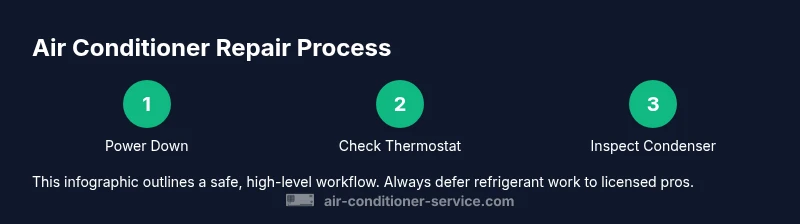
Turn off the thermostat and switch off the main breaker. Verify there is no live voltage with a non-contact tester. This prevents shocks and damage to components as you inspect.
Tip: Always double-check both the thermostat and the outdoor disconnect before touching any wiring. - 2
Check Thermostat and Air Filter
Ensure the thermostat is in cool mode and set to a comfortable temperature. Inspect and replace the air filter if clogged to restore airflow and prevent coil icing.
Tip: A clean filter can resolve many not-cooling complaints without tools. - 3
Inspect Outdoor Condenser for Obstructions
Clear debris around the condenser and ensure at least 1-2 feet of clearance. A blocked condenser reduces heat rejection and lowers efficiency.
Tip: Trim vegetation and remove leaves to maintain airflow during Chicago summers. - 4
Test Electrical Connections and Capacitors
With power off, check for loose connectors and test capacitor(s) with the multimeter or a spec-approved method. Replace failing capacitors only if you know how to discharge safely.
Tip: If you’re unsure about capacitors, call a pro; a wrong replacement can damage the compressor. - 5
Evaluate Fan and Ductwork
Spin the blower motor and check if the indoor fan is operating smoothly. Inspect ducts for obvious leaks or disconnections that could reduce airflow.
Tip: A rattling fan may indicate a loose mount; do not run the unit until secured. - 6
Check Condensate Drain
Look for clogs in the condensate drain and clear with a wet/dry vacuum or flexible drain snake. A blocked drain can trigger overflow and humidity problems.
Tip: Never force water through a clogged line; this can cause backflow into the unit. - 7
Decide DIY Feasibility vs Pro Help
If basic fixes don’t restore cooling or refrigerant handling is suspected, plan a professional assessment. Document symptoms and steps tried for a precise handoff.
Tip: Use a symptoms log to avoid repeating ineffective steps. - 8
Document Observations and Schedule Service
Record model, age, observed noises, and when issues occur. Schedule service with a licensed technician if repairs require refrigerant work or complex diagnostics.
Tip: Keep the unit’s contact and warranty information handy for service calls.
Common Questions
What are the first signs that an AC needs repair in Chicago?
Common early signs include weak cooling, unusually warm air, frequent cycling, unusual noises, and increased energy bills. If these appear, perform basic checks and consider a professional evaluation.
Look for weak cooling, odd noises, and higher bills, then consider a professional check if basic fixes don’t help.
Is it safe to repair my AC myself?
Simple maintenance like cleaning or filter replacement is generally safe for homeowners. refrigerant handling, capacitor replacement, and sealed system work should be left to licensed technicians.
DIY is okay for basic maintenance, but refrigerant and sealed system work should be left to pros.
How do I know when to replace instead of repair?
If the system is old, frequently breaks down, or repairs would exceed a significant portion of replacement cost, replacement may be more cost-effective in the long run.
If it keeps breaking down or is very old, replacement might be smarter than ongoing repairs.
How long does a typical repair take?
Repair time varies with the issue and parts availability. A simple fix may be resolved in a few hours to a day, while complex diagnostics can take longer and require a follow-up visit.
Timing depends on the problem; some fixes are quick, others need a follow-up.
What should I ask when hiring a Chicago HVAC pro?
Ask about licenses, insurance, warranty terms, and whether refrigerant work is covered. Check reviews and request a written estimate with itemized parts and labor.
Make sure they’re licensed, insured, and offer a clear warranty and written estimate.
Are there rebates or programs for Chicago AC repairs?
Rebate programs vary by utility and state. Check with local utilities and state energy programs for current offers that may apply to replacement or energy-efficient upgrades.
Rebates depend on programs available; check local utilities for current offers.
Watch Video
The Essentials
- Start with safety: power down, PPE, and basic checks.
- Not all cooling issues require refrigerant work; many are airflow or filter problems.
- Use a decision log to decide between DIY fixes and professional service.
- Document symptoms and keep a maintenance schedule for reliability.