Air Conditioner Not Working After Power Outage: A Practical Troubleshooting Guide
A practical, urgent troubleshooting guide for homeowners and renters whose air conditioner stops after a power outage. Safe steps, diagnostic flow, step-by-step fixes, prevention tips, and when to call a professional. Learn with Air Conditioner Service guidance.


Most likely, a power outage tripped the breaker or blew a fuse that cuts power to the outdoor condenser or indoor blower. Start by safely resetting the breaker, then verify power at the outlet and thermostat. If it still won’t run, follow our step-by-step guide for the next fixes.
Why power outages cause AC malfunctions and what to check first
Power outages can leave an air conditioner not working after power outage by interrupting the control electronics, tripping safety switches, or cutting power to the outdoor unit. According to Air Conditioner Service, the most frequent post-outage problem is a tripped circuit breaker or a blown fuse that prevents the outdoor condenser or indoor blower from receiving electricity. In many homes, the thermostat or smart relay loses communication with the control board after a blackout, which can make the system seem unresponsive even when power returns. The goal of this section is to outline safe, immediate checks that can confirm whether the issue is electrical, control-related, or something more complex. Remember to prioritize safety and avoid touching live components; when in doubt, call a licensed technician.
Quick safety and safety-first mindset after a power outage
After a power outage, your first instinct should be to shut down the system and confirm power with a basic, safe approach. Never bypass a breaker or pull a panel cover while it’s live. Wear rubber-soled shoes and use insulated tools if you must test a disconnect. If you see scorch marks, burnt smells, or a frequent breaker trip, evacuate and contact a professional immediately. This episode highlights why immediate safety steps matter: they prevent injuries and protect the equipment from further damage. Air Conditioner Service emphasizes that safe handling reduces the risk of electric shock, refrigerant exposure, and accidental capacitor discharge.
Common homeowner checks you can perform without special tools
Begin with visible and non-invasive checks that often resolve the problem. Confirm the main breaker and the branch breakers are in the ON position and that the disconnect outside is powered. Check the thermostat display for any error codes and ensure it’s set to a proper cooling mode with a comfortable temperature target. Inspect the air filter for dirt that could trigger low airflow and cause the system to shut down or run inefficiently. If your thermostat is wireless or smart, verify it has regained network access and re-paired with the air handler if required.
Understanding the control wiring and the safety switches
Post-outage, the system’s safety interlocks can trip even if power is restored. A tripped high-pressure or low-pressure switch, or a locked-out control, may prevent startup. Look for the outdoor unit’s power wiring and the contactor coil on the outdoor relay — a sticky or burnt contactor can fail to pull in when voltage returns. Do not attempt to bypass safety features. If you notice loose connections, buzzing sounds, or a clicking noise without starting, it’s a clue to inspect wiring integrity and potential component wear that requires a professional.
Outdoor unit health: debris, airflow, and weather-related concerns
A power outage can coincide with seasonal debris buildup that hinders outdoor airflow. Check the condenser coil for dirt, leaves, or pests that can impede heat exchange. Ensure there’s no fencing, vegetation, or structures obstructing airflow within the recommended clearances. Inspect the fan blade for damage and verify that the fan spins freely when power is restored. Severe weather events during outages can drive moisture or pests into the outdoor compartment, causing corrosion or short circuits. These checks can prevent future outages from causing persistent failures.
Thermostat and indoor controls: rebooting, sensing, and configuration
Sometimes an outage resets or unpairs the thermostat, leading to a miscommunication with the air handler. If your thermostat has a reset option, perform a factory reset on the device and reconfigure scheduling, cooling setpoints, and Wi-Fi connectivity. For smart thermostats, ensure the app shows the correct indoor temperature, and confirm the thermostat is communicating with the HVAC control board. If you rely on a mechanical thermostat, verify that the setpoint is lower than the room temperature and that the device isn’t stuck in an emergency heat mode.
Step from symptom to potential fixes: a diagnostic mindset
Treat ‘air conditioner not working after power outage’ as a flow: verify power, check safety switches, inspect the thermostat and control wiring, and then examine the outdoor unit. The most common root causes can be resolved with safe, simple actions, but persistent symptoms indicate a component level issue (capacitors, contactors, or motors) that typically requires professional service. Air Conditioner Service notes that systematic checks save time and prevent unnecessary part replacements by targeting the real fault.
Long-term prevention and best-practice care after outages
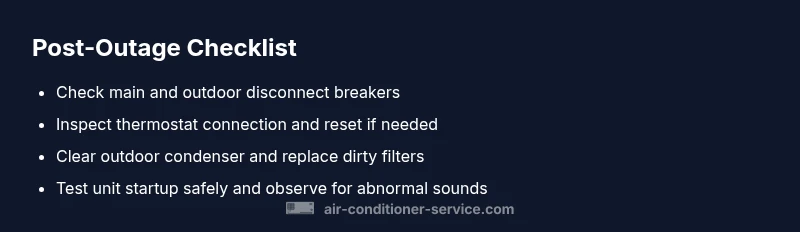
Plan preventive steps to minimize future power-outage disruption. Use a surge protector or whole-house surge protection to limit voltage spikes. Schedule regular maintenance for coils, filters, and blower motors to sustain airflow and efficiency. Label and document your electrical panel circuits so you can quickly identify breakers during outages. Keeping a simple outage recovery checklist helps you restart the system quickly and reduces the risk of repeated tripping. This proactive approach strengthens reliability and extends equipment life.
When to seek professional help and what to expect
If the basic checks do not restore cooling, it’s time to contact a qualified HVAC technician. A professional will perform a safe power isolation, test for capacitor and contactor health, verify refrigerant pressures, and diagnose potential control board faults. Expect a site assessment, a safety-focused diagnostic, and a written estimate for parts and labor. The Air Conditioner Service team recommends scheduling service promptly when you notice unusual noises, warm air, or persistent breaker trips after a power outage.
Steps
Estimated time: 60-90 minutes
- 1
Power off and safety check
Turn off the HVAC system at the main breaker and the indoor thermostat. Confirm the outdoor disconnect is not energized before touching wires. This reduces the risk of electric shock and protects components during inspection.
Tip: Always wear insulated gloves and non-conductive footwear when working near live panels. - 2
Inspect breakers and fuses
Look for tripped breakers or blown fuses in the main panel and the outdoor disconnect. Reset or replace as needed, and re-test the system.
Tip: If a breaker trips again, there may be an underlying overload or short; stop and call a pro. - 3
Check thermostat status
Verify the thermostat is set to cool, with a sensible target temperature. Reconnect any wireless thermostat if it has lost connection and test readings from the display.
Tip: A quick reboot of a Wi‑Fi thermostat can resolve miscommunication after outages. - 4
Inspect the outdoor unit
Ensure the unit is clear of debris and the fan can spin freely. Check the contactor coil and look for signs of wear, corrosion, or burning at the relay.
Tip: Do not touch the contactor with hands while power is on; observe from a safe distance. - 5
Check airflow and filters
Inspect and replace clogged air filters. Poor airflow can trigger protective shutoffs and reduce cooling capacity, leading to a non-start condition.
Tip: Keep intake and supply vents clear for optimal performance. - 6
Reset safety switches
If your system has high/low pressure or float switches, reset them following the manufacturer’s instructions. Do not bypass safety features.
Tip: If you’re unsure where a switch is located, consult the service manual or a professional. - 7
Test control wiring
With power restored, check visible wiring for loose connections or signs of heat damage. Tighten connections if you know how to do so safely, and look for corrosion on terminals.
Tip: Only attempt wiring checks if you’re confident; otherwise, skip and call a pro. - 8
Decide on next steps
If the unit starts but runs poorly, you may have a capacitor or motor issue. If it won’t start at all, a professional diagnostic is likely required to avoid hazards.
Tip: Document symptoms and times of failure to help the technician diagnose faster.
Diagnosis: Air conditioner not working after power outage
Possible Causes
- highPower outage or tripped breaker cutting power to outdoor/indoor unit
- highBlown fuse in disconnect or fuse box
- mediumThermostat reset or unpaired smart thermostat
- mediumStuck contactor, capacitor, or relay failure in outdoor unit
- lowBlocked airflow or dirty filters causing safety shutoffs
Fixes
- easyReset main and branch circuit breakers; verify power is present at the outdoor unit and thermostat
- easyReplace a blown fuse or reset the external disconnect, if accessible and safe
- easyReset or re-pair thermostat (and reprogram schedules if smart)
- mediumTest and replace failing capacitor or sticky contactor in outdoor unit
- hardInspect for refrigerant issues only by a licensed tech; do not attempt to recharge yourself
Common Questions
Why did my air conditioner stop working after a power outage?
Power outages can trip breakers, reset smart devices, or disrupt control signals. Start with a safe power reset, then verify thermostat and outdoor unit power. If issues persist, there may be a component fault that needs professional attention.
Power outages can trip breakers or unpair thermostats. Start with a safe power reset and check the thermostat and outdoor unit; if it still won’t run, call a professional.
Is it safe to reset the outdoor unit myself?
Yes, as long as you shut off power first and follow the manufacturer’s safety guidelines. Don’t touch live components, and avoid bypassing protective switches. If you’re unsure, contact a licensed technician.
You can reset if you switch off power and follow safety steps. If you’re unsure, call a pro.
What should I check first if the AC won’t turn on?
Check the main and branch circuit breakers, confirm thermostat set to cool, and inspect the outdoor unit for debris or tripped safety switches. These quick checks resolve many post-outage start issues.
Check breakers, thermostat, and outdoor unit for safety switches.
Why is my AC blowing warm air after an outage?
Warm air can indicate a refrigerant or compressor issue, a thermostat misread, or airflow restrictions. Verify the thermostat settings, inspect filters, and consider a professional diagnostic if the problem persists.
Warm air after an outage often means a control or refrigerant issue; check thermostat and filters first.
When should I call a professional after a power outage?
If basic checks don’t restore cooling, or you hear buzzing, smell burning, or see scorch marks, a professional should diagnose wiring, capacitors, and refrigerant performance to prevent hazards.
Call a professional if basic checks fail or you detect burning smells or buzzing.
Can a power outage cause compressor damage?
Power surges during outages can damage components like the compressor or control boards. Look for abnormal noises, reduced cooling, or breaker trips; if seen, a pro should assess refrigerant pressures and electrical integrity.
Surges can harm the compressor or control boards; get a professional check if you notice strange noises or poor cooling.
Watch Video
The Essentials
- Verify power first: breakers and fuses come before anything else.
- Reset thermostat connections and recheck indoor controls.
- Inspect the outdoor unit for debris and faulty relays.
- If symptoms persist, call a licensed HVAC technician promptly.
- Adopt preventive maintenance to reduce outage impact.