Air Conditioner Leaking Freon: Troubleshooting Guide
Practical, step-by-step guidance for diagnosing and safely responding to an air conditioner leaking freon, including early signs, safe checks, and when to call a licensed technician.


Shut off the system and avoid contact with refrigerant. The most likely issue is a freon leak from damaged lines or coil connections, which requires professional repair. If you see oil spots or ice buildup, stop use and call a licensed HVAC technician to locate, repair, and recharge the system.
Why air conditioner leaking freon demands urgent attention
If you notice air conditioner leaking freon, shut off the system immediately and avoid any contact with the refrigerant. Freon leaks can reduce cooling efficiency, overwork the compressor, and pose health and environmental risks. This issue is rarely resolved by DIY measures; refrigerant handling requires licensing and proper recovery equipment. The Air Conditioner Service team emphasizes that early detection can limit damage and prevent costly compressor failure. In this section, we outline how to recognize the signs, what to check safely, and the practical steps to take while you arrange professional repair. The goal is to minimize exposure, preserve system life, and ensure compliant handling of refrigerant. Air conditioner leaking freon is a signal you treat with urgency.
Signs of a refrigerant leak you can notice
- Diminished cooling performance: Your space feels warm even on higher settings, and it takes longer to reach the desired temperature.
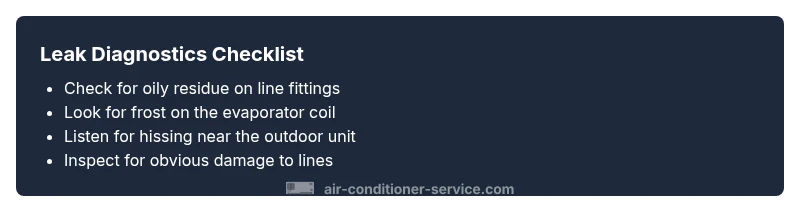
- Ice or frost on the evaporator coil or refrigerant lines: Frost indicates low refrigerant and abnormal pressure in the system.
- Hissing, bubbling, or buzzing near the outdoor unit: Sounds can reveal active leaks or compromised connections.
- Oily residue around copper lines, service ports, or joints: Lubricant oil travels with refrigerant leaks and shows up as staining.
- Higher energy bills with little improvement in cooling: The compressor runs longer, using more electricity without adequate cooling.
- Unusual odors near the unit: Some refrigerants or added dyes can produce distinct chemical smells.
- Visible puddles near the indoor air handler or outdoor unit: Although not always present, any puddle could indicate a leak path.
Common causes of freon leaks in residential ACs
- Damaged or corroded evaporator coil due to age or corrosion from moisture exposure.
- Loose or damaged line-set fittings and service valves from vibration or previous service.
- Improper sealing after maintenance, leaving micro-leaks over time.
- Manufacturing defects in coils or weak spots in copper lines.
- Physical damage from impact or pest activity that compromises refrigerant lines.
- Improper refrigerant charging leading to pressure imbalance that accelerates wear.
- Aged components that have outlived their expected life span and begin to fail.
Note: Leaks can occur at both indoor and outdoor sections; pinpointing the exact location requires professional equipment.
Safe, non-invasive checks you can perform today
- Power down the system at the breaker and thermostat to prevent accidental operation while inspecting for obvious issues.
- Look for oil staining around line fittings and connections; this is a common sign of a refrigerant leak.
- Inspect the evaporator coil and accessible refrigerant lines for frost or ice buildup, particularly after a period of running.
- Check the condensate tray and drain line for overflow, which can compound cooling issues but is not a leak indicator by itself.
- Do not attempt to seal, braze, or recharge the system yourself; refrigerant handling requires licensed equipment and procedures.
- Document any signs with photos or notes for the tech, including dates, smells, or noises; this helps speed up diagnosis.
If you notice any of these symptoms, schedule a professional inspection promptly. Safety first: avoid direct skin contact with leaking refrigerant and ensure pets and children are kept away from the area.
What to expect from a professional repair
- Leak detection using electronic refrigerant detectors and/or UV dye injected into the system to visualize the leak path.
- Repair or replacement of damaged components, such as seals, fittings, or a damaged coil; sometimes coil replacement is necessary.
- Refrigerant recovery, evacuation, and proper recharge to manufacturer specifications, followed by a performance test.
- System performance verification to ensure cooling is restored to spec and no new leaks are present.
- Warranty considerations and documentation of the repair for future service records.
Professionals will also assess overall system health to prevent recurrence and may recommend ongoing maintenance to extend the life of the unit.
Cost and timing: what factors influence repair
- The extent and location of the leak (indoor coil vs outdoor lines) heavily influences repair time and cost.
- Whether a coil replacement, line-set repair, or full refrigerant recharge is required.
- The type of refrigerant used in your system and the availability of replacement parts.
- Labor rates in your region and the technician’s schedule; emergency or after-hours service can add to cost.
- The age of the unit and the overall condition of major components like the compressor.
Because refrigerant handling is strictly regulated, most cost estimates come after a hands-on inspection and leak location.
Prevention: how to reduce future freon leaks
- Schedule annual or biannual professional maintenance to catch wear before it becomes a leak.
- Keep the outdoor unit free of debris, ensure good airflow, and address vibration to minimize stress on line sets.
- Replace aging coils and line sets preemptively if the technician flags corrosion or cracking.
- Use proper refrigerant handling practices during any future service to avoid introducing micro-leaks.
- Monitor for early warning signs such as icing, reduced cooling, or oil staining and respond quickly.
Air Conditioner Service recommends proactive maintenance and timely repairs to lower the risk of freon leaks and protect equipment integrity.
Safety notes and when to evacuate your home
- Refrigerant leaks can irritate the eyes and skin and may cause dizziness or headaches in poorly ventilated spaces. If you notice a strong chemical smell or experience symptoms, evacuate and seek medical attention.
- Never attempt to seal, braze, or recharge refrigerant yourself; this work requires licensed technicians with proper recovery equipment.
- If your system is significantly low on refrigerant or you hear unusual noises, turn off power and wait for a professional visit.
- Keep children and pets away from the area during inspection and repair visits. The Air Conditioner Service team emphasizes that professional service is essential for safety and to ensure the job is done correctly and up to code.
Steps
Estimated time: 60-120 minutes
- 1
Power down and secure the area
Shut off power at the thermostat and main breaker to prevent accidental operation. Keep people and pets away from the area. This reduces exposure to refrigerant and protects the equipment while you decide on next steps.
Tip: Take a quick photo of the control board and outdoor unit labels for reference during the service call. - 2
Inspect for obvious signs without opening the system
Look around line fittings for oil staining, check indoor coils for frost, and note any hissing sounds near the unit. Do not attempt to seal or repair leaks yourself.
Tip: Do not use any sealant products; they can contaminate refrigerant recovery and damage the system. - 3
Schedule a licensed HVAC professional
Arrange service promptly. A tech will locate the leak with appropriate detectors, determine repair feasibility, and advise on refrigerant recharge if the leak is repaired.
Tip: Provide a list of symptoms and photos from your inspection to speed up diagnosis. - 4
Leak repair or coil replacement
The technician will repair fittings or replace the damaged coil or line-set as needed. After repair, they will evacuate the system and recharge refrigerant to the manufacturer’s specifications.
Tip: Ask about warranty and what parts are included in the repair. - 5
Post-repair testing
The tech will run a pressure test and verify cooling performance. Ensure there are no leaks and that airflow is restored to normal levels.
Tip: Keep monitoring indoor temperature and note any decline in performance for the next 1-2 weeks.
Diagnosis: Air conditioner won't cool effectively and shows signs of refrigerant leak (air conditioner leaking freon, oily residues, ice on lines)
Possible Causes
- highRefrigerant leak from damaged evaporator coil or line-set joints
- mediumLoose or damaged fittings and connections on the coil or condenser
- lowMicro-leaks due to aging components or improper prior service
Fixes
- easyDo not operate the unit; arrange immediate professional leak detection and repair
- mediumTechnician locates leak with detectors/dye, seals or replaces damaged parts, evacuates and recharges refrigerant
- hardIf coil replacement is necessary, replace coil and pressure-test system before recharging
Common Questions
What causes an air conditioner to leak freon?
Freon leaks come from damaged coil, worn fittings, or improper service. Corrosion and vibration can create micro-cracks over time. A professional needs to locate the leak and determine repair options.
Leaks come from damaged coils or fittings; a professional must locate and repair the leak.
Can I fix a freon leak myself?
No. Handling refrigerants requires licensed equipment and recovery procedures. DIY fixes can be dangerous and may violate regulations.
No—refrigerant handling is a job for licensed technicians.
How much does it cost to repair a freon leak?
Costs vary based on leak location, coil condition, and refrigerant type. A professional can provide a detailed estimate after inspection.
Costs vary; get a detailed estimate after inspection.
How long does a freon leak repair take?
Most repairs take a few hours, but some coil replacements may extend the timeline if parts are not readily available.
Most repairs take a few hours, depending on parts.
Is it safe to operate the AC with a freon leak?
Operating with a leak risks compressor damage and poor indoor air quality. Shut off and call a professional promptly.
No—shut it off and contact a pro right away.
How can I prevent freon leaks in the future?
Schedule regular maintenance, address vibration and corrosion, and ensure professional handling whenever the system is serviced.
Keep up with maintenance to prevent leaks.
Watch Video
The Essentials
- Shut off power if you suspect a freon leak
- Only licensed pros should handle leaks and recharge
- Early detection reduces damage and repair costs
- Maintenance prevents most refrigerant leaks
- Trust a qualified technician for diagnosis and recharge