How to prevent air conditioner freon leaks
A practical guide to prevent freon leaks in your AC. Learn maintenance steps, inspection checklists, and safe handling practices to keep your system efficient and leak-free.


To handle how to prevent air conditioner freon leaks, start with regular professional inspections, proper refrigerant handling, and keeping connections tight. Key steps include inspecting the coils, sealing or replacing damaged line sets, insulating exposed refrigerant lines, and having a licensed technician test for leaks with the correct charge. Regular maintenance reduces leak risk and keeps energy efficiency high.
Understanding Freon Leaks and Why They Happen
According to Air Conditioner Service, understanding how to prevent air conditioner freon leaks begins with recognizing how refrigerant systems work and what can compromise their integrity. Freon leaks occur when seals, joints, or line-sets develop small flaws that allow refrigerant to escape. Even tiny leaks can reduce cooling performance and raise energy use, and over time they force the compressor to work harder. In this guide on how to prevent air conditioner freon leaks, you’ll learn practical steps to minimize leak risk and extend system life. Most leaks stem from aging components, vibration, corrosion, or improper installation. Regular, proactive maintenance is the best defense.
Proactive Maintenance: The First Line of Defense
Maintaining your AC system isn’t just about keeping it cool; it’s about preventing refrigerant loss. Regular maintenance helps you spot signs of wear before a leak becomes severe. Air Conditioner Service analysis shows that inspections, coil cleaning, and line-set insulation dramatically reduce the chance of refrigerant escape when performed consistently. Focus on the outdoor condenser area, the insulated line-set running to the evaporator, and the service ports. Clean coils free of dirt and debris improve heat transfer and reduce stress on joints, while protecting line connections from corrosion. When you follow the practices described in this guide, you’ll be taking concrete steps toward how to prevent air conditioner freon leaks in everyday maintenance. Build a routine that includes visual inspections of lines, ports, and electrical connections, and keep the area around the unit clear to avoid accidental damage.
Inspection Checklist: What a Technician Will Do
A professional inspection forms the backbone of how to prevent air conditioner freon leaks. A licensed technician will assess line-set integrity, service-port tightness, coil condition, electrical connections, and the overall refrigerant circuit. They’ll run a baseline pressure test, inspect for oil traces that indicate slow leaks, and use electronic detectors or UV dye to localize any breaches. Homeowners can perform light visual checks—looking for oily residue, corrosion on metal components, and obvious kinks in insulated lines—but refrigerant repair itself requires trained personnel and proper certification. Never attempt to seal or braze leaks yourself.
If a leak is suspected, do not continue operating the system; shut it down and contact a technician promptly. This approach aligns with best practices for how to prevent air conditioner freon leaks.
Safe Handling and Refrigerant Practices
Understanding safe refrigerant handling is essential to prevent freon leaks and protect your household. Use only the refrigerant type specified by the manufacturer and avoid mixing refrigerants. Never vent refrigerants to the atmosphere; leaking refrigerant harms the environment and poses health risks. Keep refrigerant lines well-insulated to prevent condensation and temperature stress, and store tools away from heat sources. All service work should be performed by a licensed technician who follows Environmental Protection Agency (EPA) guidelines and local regulations. When maintenance is done correctly, the system operates more efficiently and the risk of leaks decreases.
Seasonal Maintenance and Quick Wins
Seasonal maintenance is a practical way to prevent air conditioner freon leaks year-round. Before the peak cooling season, schedule a professional inspection, clean the coils, and verify line-set insulation. After severe weather or storms, inspect for physical damage and reseal any exposed lines. Small, proactive steps—such as keeping debris away from the outdoor unit and checking the condensate drain for blockages—help prevent leaks from becoming larger issues. Reviewing the system’s history and keeping a simple maintenance log reinforces how to prevent air conditioner freon leaks over time and supports a longer, more reliable life for your cooling system.
Tools & Materials
- refrigerant leak detector(Electronic detector capable of sensing common refrigerants (e.g., R-410A) with a calibrated sensor.)
- manifold gauge set (low/high side)(For pressure checks and leak verification during service.)
- line-set insulation material(Heat- and moisture-resistant insulation for exposed refrigerant lines.)
- coil-cleaning supplies(Non-corrosive cleaner and soft brushes for coils.)
- insulation tape or foam sealant(Air-tight sealing around joints and service ports.)
- safety gear (gloves, goggles)(Personal protective equipment for handling refrigerants and tools.)
- basic hand tools (wrenches, screwdrivers, pliers)(For checking fittings and accessing components.)
- UV dye and blue LED black-light (optional)(Optional aid for locating leaks when used by a licensed tech.)
Steps
Estimated time: Estimated total time: 2-6 hours
- 1
Inspect the system baseline
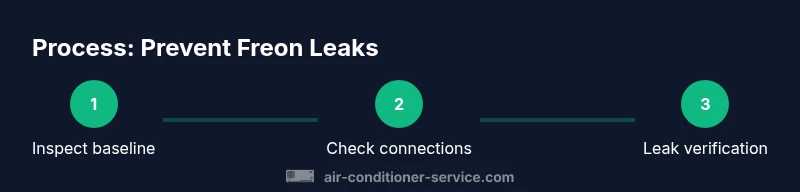
Document the current condition of line sets, joints, and service ports. Look for visible corrosion, oil residues, or damaged insulation. This establishes a safe starting point for how to prevent air conditioner freon leaks.
Tip: Take clear photos of each area before touching anything. - 2
Check line-set connections and fittings
Gently tighten loose fittings and inspect clamps. If you find damaged gaskets or warped connections, flag them for replacement by a professional. Loose connections are a common leak source.
Tip: Do not overtighten metal fittings; use appropriate torque as per manufacturer specs. - 3
Assess coil condition and cleanliness
Inspect evaporator and condenser coils for dirt, bent fins, or wet spots that indicate leaks or condensation issues. Clean coils to reduce stress on the refrigerant circuit and improve system efficiency.
Tip: Use a non-abrasive brush and avoid harsh chemicals near the refrigerant lines. - 4
Test for leaks with detectors
Use an electronic leak detector to sweep the line-set and joints. If a leak is suspected, mark the area and stop work until a licensed tech confirms.
Tip: Never rely on do-it-yourself dye methods as the sole leak indicator. - 5
Consult a licensed technician for repairs
If a leak is confirmed, schedule professional repair or component replacement. Refrigerant repairs require proper certification and disposal of old refrigerant.
Tip: Ask for a written repair plan and warranty details. - 6
Verify refrigerant charge with a tech
A technician will recover, evacuate, and recharge the system to manufacturer specifications. Ensure the charge matches the system’s model and refrigerant type.
Tip: Request a per-season charge check to prevent future leak-related performance loss. - 7
Post-repair leak testing
After repairs, re-test with detectors to confirm absence of leaks. Run the system through a full cycle and monitor pressures to ensure stability.
Tip: Keep a maintenance log with dates and test results. - 8
Document maintenance and plan ahead
Record what was inspected, what was replaced, and when the next check should occur. Regular documentation supports proactive prevention and helps you track the system’s life.
Tip: Set reminders for annual inspections and seasonal checks.
Common Questions
Is DIY refrigerant repair safe?
No. Refrigerant handling and repairs require licensing and proper containment. DIY attempts can be dangerous and are often illegal. Always hire a licensed HVAC technician.
No. Refrigerant work is for licensed technicians due to safety and regulatory concerns.
What are the signs of a freon leak I should watch for?
Look for hissing sounds, oily residue around fittings, reduced cooling performance, ice on components, or unusually high energy bills. If you notice these signs, stop using the unit and call a pro.
Watch for hissing sounds, damp spots, or icy coils, then call a pro.
How often should I have my AC inspected for leaks?
Schedule preventive inspections at least once a year as part of routine maintenance. Additional inspections may be needed after severe weather or after any repairs.
Aim for an annual check, plus after severe weather.
Will a leak affect my system’s efficiency?
Yes. Leaks reduce refrigerant charge, lowering cooling efficiency and increasing energy consumption. Prompt repair helps restore performance.
Leaks make cooling less efficient, so fix them quickly.
What should I do if I suspect a leak right now?
Turn off the system to prevent further loss and contact a licensed HVAC technician immediately. Do not run the unit until it’s inspected.
If you suspect a leak, shut it off and call a pro right away.
Watch Video
The Essentials
- Inspect regularly to catch leaks early
- Keep line-sets insulated and joints tight
- Rely on licensed technicians for leaks and recharge
- Document maintenance for future reference