Air Conditioner Refrigerant Leak Troubleshooting Guide
Identify signs of an air conditioner refrigerant leak and follow a practical, safety-first troubleshooting guide. Learn diagnosis steps, fixes, and when to call a licensed professional.


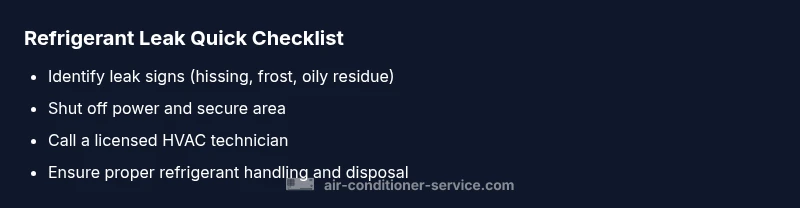
An air conditioner refrigerant leak is the most likely cause when cooling drops or you hear hissing. Start by shutting off the outdoor unit and power, avoid contact with refrigerant, and call a licensed HVAC technician for leak repair and refrigerant recharge. This issue often requires professional repair and line replacement.
What is an air conditioner refrigerant leak?
Refrigerant is the lifeblood of your AC system, absorbing heat from indoor air and moving it outside. When a leak occurs, the system cannot carry enough refrigerant to transfer heat properly, causing reduced cooling efficiency and longer run times. Early signs include a drop in cooling performance, longer cycling, frost buildup on the evaporator coil, and sometimes a hissing or buzzing sound near refrigerant lines. Leaks can also cause higher energy bills because the compressor works harder to achieve the same cooling. Refrigerant leaks are more than just an annoyance—they can damage components, impair humidity control, and pose safety risks if refrigerant comes into contact with skin or if fumes accumulate in poorly ventilated spaces. According to Air Conditioner Service, many leaks start at the copper lines where vibration, corrosion, or improper connections over years allow tiny holes to form. The Air Conditioner Service team found that homeowners often mistake a power issue or dirty air filters for a leak when, in fact, refrigerant loss is the underlying problem. If you notice any of these signs, treat it as urgent and arrange a professional assessment promptly.
Signs and risks
Signs of a refrigerant leak can appear suddenly or develop gradually. The most obvious is a noticeable drop in cooling effectiveness, with the thermostat showing lower temperatures but rooms staying warmer. You may also hear a faint hissing near the outdoor unit or along refrigerant lines, or see frost on the copper pipes or the indoor coil. Oily residues around connections can indicate a leak, as refrigerant vapor carries lubricants from the system. Another warning is a frozen evaporator coil, which happens when the refrigerant level is too low to absorb heat. If the system runs longer or longer cycles to reach the setpoint, it is a strong signal that something is wrong. Refrigerant leaks can have environmental and health implications; refrigerants used in HVAC systems can contribute to ozone depletion and climate effects if released untreated. In many regions, regulations require licensed technicians to repair leaks and reclaim refrigerant rather than simply vent it. Early detection reduces the risk of compressor damage and helps keep indoor air quality stable during the repair window.
How to diagnose safely
Diagnosing a refrigerant leak should be done with safety as the top priority. Start by turning off the AC and powering down the outdoor unit to prevent accidental exposure to refrigerant. Look for visible signs: oil stains along joints, corrosion, or dark damp spots near connections. If your system has service dye installed, you may notice colored staining indicating a leak path. Do not attempt to seal leaks or recharge refrigerant yourself; these actions require proper certifications and equipment. If you smell a strong chemical odor or feel lightheaded, leave the area immediately and contact emergency services if needed and a licensed HVAC technician. A professional will perform precise leak-detection methods, such as electronic sniffer tests or UV dye tracing, and will determine the exact location and size of the leak. Remember that accurate diagnosis is the first step toward a safe, durable repair and a properly charged system.
Diagnostic flow: symptom → diagnosis → solution
- Symptom: Not cooling as expected, longer cycles, or ice on the evaporator coil.
- Initial check: Confirm system is charged (without opening refrigerant containers) and inspect for obvious signs of a leak.
- Diagnosis: Use professional leak-detection tools to locate the leak and assess refrigerant quantity.
- Solution: Repair the leak, evacuate and recharge with the correct refrigerant type, and test performance.
- Confirmation: Monitor cooling performance and ensure no residual leaks or pressure drops.
- Safety: If the refrigerant type is not known or the system uses a regulated gas, rely on licensed technicians for handling and disposal.
Steps
Estimated time: 1-4 hours
- 1
Shut down power and secure the area
Power down the thermostat and outdoor unit to prevent refrigerant exposure or accidental discharge. If you smell chemical fumes, evacuate the area and call for help.
Tip: Wear eye protection and avoid direct contact with any refrigerant residues. - 2
Inspect for obvious signs of a leak
Look for oil stains on joints, greenish/brown residue on fittings, or frost on copper lines and coils. Document any findings with photos for the tech.
Tip: Keep kids and pets away from the equipment during inspection. - 3
Confirm you’re not dealing with a non-leak issue
Check air filters, thermostat settings, and duct blockages. A dirty filter or blocked return can mimic cooling problems, delaying correct diagnosis.
Tip: If the unit runs longer or struggles to reach temperature, note the hours of operation. - 4
Schedule a professional leak-detection visit
Arrange service with a licensed HVAC technician who can locate, quantify, and repair the leak using approved methods and refrigerant types.
Tip: Ask for a written inspection report and a previsou repair plan. - 5
Repair, evacuate, and recharge by pros
The technician will repair the leak pathway, evacuate the system, and recharge with the correct refrigerant under prescribed procedures.
Tip: Ensure the system is fully tested after recharge before resuming normal use. - 6
Test performance and prevent future leaks
Run the system and verify stable pressures and cooling performance. Schedule preventive maintenance to minimize future leaks.
Tip: Ask about vibration isolation and line-set protection during maintenance.
Diagnosis: AC isn't cooling or runs constantly; you hear hissing or see frost and oily spots on lines
Possible Causes
- highLow refrigerant level due to a leak
- highDamaged or corroded copper refrigerant lines
- mediumFaulty fittings or connections
Fixes
- easyTurn off the system and schedule a professional leak repair
- easyDo not attempt to recharge refrigerant yourself
- hardRepair or replace damaged lines or fittings as recommended by the tech; evacuate and recharge only by a licensed pro
Common Questions
What causes an air conditioner refrigerant leak?
Leaks are commonly due to damaged copper lines, loose fittings, vibration, or poor installation. Regular maintenance can help catch these issues early.
Leaks are usually from worn lines, loose fittings, or improper installation, which maintenance can prevent.
Is a refrigerant leak dangerous?
Yes. Refrigerant exposure can be hazardous in high concentrations and can cause frostbite on contact. Ventilate the area and call a pro.
Yes, it's potentially dangerous; ventilate and call a professional.
Can I fix a leak myself or recharge refrigerant?
No. Refrigerant handling requires certification and special equipment. Do not attempt to recharge or seal leaks yourself.
No, you should not try this at home; contact a licensed HVAC tech.
How much does leak repair typically cost?
Costs vary depending on leak location, refrigerant type, and parts needed. Get a quote from a qualified technician.
Costs vary; get a professional quote for the repair and recharge.
How long does leak repair take?
Most repairs are completed within a few hours, depending on leak location and required components.
Most repairs take a few hours; the exact time depends on the location and parts.
What if cooling doesn’t improve after repair?
There may be additional issues beyond the leak, such as compressor problems or duct issues. Have the system rechecked by a pro.
If cooling is still off after repair, get the system rechecked by a professional.
Watch Video
The Essentials
- Act quickly at first signs of a refrigerant leak
- Never attempt DIY refrigerant recharge
- Rely on licensed techs for diagnosis and repair
- Maintenance reduces risk of future leaks