Refrigerant Leak Troubleshooting for Air Conditioners
Urgent guide to diagnose, fix, and prevent refrigerant leaks in your air conditioner. Learn symptoms, safety steps, professional repair, and maintenance tips from Air Conditioner Service.


A refrigerant leak is most often caused by a damaged coil, loose connections, or a failed seal. For safety, shut the system off and avoid direct contact with refrigerant. Do not run the unit if you suspect a leak. Contact a licensed HVAC technician to locate the leak, repair the damaged area, and recharge the refrigerant to factory specs.
What a refrigerant leak means for your AC
According to Air Conditioner Service, a refrigerant leak can rob your system of cooling power and force the compressor to work harder, increasing energy use and risk of component damage. Refrigerant isn’t a fuel you consume; it circulates in a sealed loop. When a leak occurs, the system loses pressure, cooling efficiency drops, and ice may form on evaporator coils. Sudden temperature swings, longer cooling cycles, or hissing sounds near the outdoor unit are red flags. If you notice a faint sweet or solvent-like odor around the unit, treat as a potential refrigerant leak air conditioner issue. Addressing the leak promptly helps protect the compressor and reduces environmental impact. This guide helps homeowners and renters identify the problem, perform safe checks, and decide when to call a pro. The Air Conditioner Service team emphasizes safety first: avoid skin contact with refrigerant and never attempt to seal or recharge a leak yourself.
Common causes of refrigerant leaks
Leaks most often originate at joints, service ports, or along corroded coils where the metal has become brittle with age. Piping joints in outdoor units can loosen from vibration, causing small leaks that worsen over time. Damaged coil housings, crushed lines, or improper installation can also create entry points for refrigerant to escape. External damage from lawn equipment or hail can nick the lines. Poor repair work from previous maintenance can leave micro-gaps that gradually leak refrigerant. Air Conditioner Service notes that regular inspection of lines, connections, and the refrigerant circuit is essential to catch these issues before they become noticeable failures.
Signs you have a refrigerant leak
Low cooling performance is the most obvious sign: the system runs longer but doesn't reach the set temperature. You may see the evaporator coil frost or ice forming, especially on humid days. Hissing, gurgling, or bubbling noises at the indoor unit or outdoor lines can indicate escaping refrigerant. Uneven cooling between rooms, higher energy bills, and the compressor cycling on and off frequently are additional clues. If refrigerant levels fall too low, the system can trigger low-pressure protection, shutting down before damage occurs. For safety and accuracy, do not attempt to diagnose by weighing refrigerant yourself; rely on professional diagnostics. Air Conditioner Service stresses that handling refrigerant requires proper equipment and training.
Safety first: immediate steps you should take
Immediately shut off power to the air conditioner at the thermostat and the service disconnect. Do not touch copper lines or attempt to seal leaks. Refrigerant exposure can cause frostbite and breathing irritation; wear eye protection and avoid skin contact if you suspect a leak. Ventilate the area if possible and keep pets away. Do not run the unit to test repairs; an active leak can reappear and worsen. Contact a licensed HVAC technician as soon as possible to locate the leak, isolate the affected components, and determine the right course of action for repair and refrigerant recharge.
Diagnostic flow: symptom to solution
Begin with the core symptom (reduced cooling, frost, or hissing). Consider common causes in order of likelihood: first check for a low refrigerant charge from a leak, then assess the coil for damage, and finally inspect fittings and service ports for looseness or corrosion. Use leak detectors or gauges when a professional performs the check. If you notice oil around joints or a consistent refrigerant smell, document the findings and prepare for a professional assessment. Air Conditioner Service recommends a structured approach so you can communicate clearly with technicians and minimize downtime.
Step-by-step: most common fix workflow
- Power down and safety prep: turn off the thermostat and main breaker, unplug portable units if applicable. 2) Inspect accessible lines and joints for oil signs, corrosion, or damage. 3) Check for frost on evaporator coils and unusual airflow patterns. 4) Call for professional leak detection with proper equipment; do not attempt to seal or refill. 5) Follow technician recommendations for repair or component replacement and refrigerant recharge. 6) After service, run a test cycle and note any abnormal behavior for future maintenance. The goal is to restore pressure, seal the leak, and return to normal refrigerant charge. Air Conditioner Service emphasizes not attempting DIY refrigerant work.
Prevention and maintenance to avoid future leaks
Invest in routine maintenance that includes inspection of lines, fittings, and coils; replace worn seals promptly; ensure correct installation from the start. Keep an eye on signs of aging like rust or physical damage from lawn equipment. Use professional leak tests during each service visit, and replace any components showing wear before failures occur. Air Conditioner Service recommends scheduling annual inspections to catch issues before they become leaks.
What to expect from professional repair and recharge
When you hire a licensed HVAC technician, they will locate and repair the leak using approved methods and evacuate the refrigerant safely. After repairing the leak, they will recharge the system to the correct manufacturer specs and test for proper operation and leak-free performance. A good technician will also verify that the system maintains proper pressure and ensure airflow and efficiency are restored. Air Conditioner Service notes that refrigerant charging and leak repair should be performed in a sealed, compliant environment to protect you and the system.
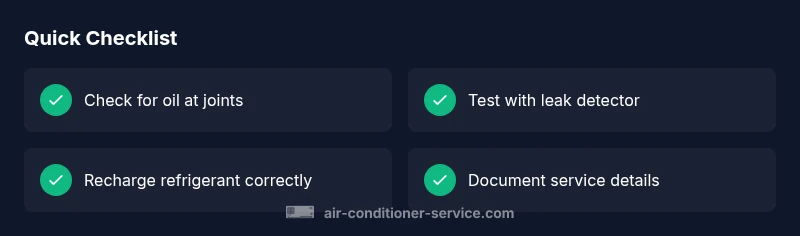
Quick checklist you can print
- Power off the unit and breaker before inspecting
- Look for oil around joints and damaged lines
- Note frost on coils and unusual noises
- Schedule a professional leak check and recharge
- Document findings for the technician
Steps
Estimated time: 60-120 minutes
- 1
Power down and safety prep
Turn off the thermostat and main breaker. If portable, unplug the unit. Confirm the area is safe and accessible for a technician.
Tip: Wear eye protection and avoid skin contact with any refrigerant residues. - 2
Inspect lines and joints
Visually check refrigerant lines, joints, and service ports for oil stains, corrosion, or obvious damage. Do not attempt to pry or tighten fittings aggressively.
Tip: Take clear photos for the technician to review. - 3
Check evaporator and outdoor coils
Look for frost/ice on the evaporator or signs of corrosion on the outdoor coil. Uneven cooling can indicate a leak or airflow restriction.
Tip: Note times of day when cooling performance changes. - 4
Call for professional leak detection
A licensed technician uses electronic detectors or ultrasonic devices to locate leaks and verify refrigerant levels. Do not attempt to seal or refill.
Tip: Ask about the type of refrigerant used and the warranty on repairs. - 5
Repair or replace and evacuate
Technician repairs the leak, evacuates the refrigerant, replaces damaged components if needed, and recharges to the correct charge.
Tip: Request a written quote and expected warranty period. - 6
Test run and preventive plan
Run the system to confirm normal operation and check for residual leaks. Set up a maintenance plan to prevent future leaks.
Tip: Schedule annual inspections and monitor for signs of wear.
Diagnosis: AC not cooling effectively with possible frost on the evaporator and a hissing sound
Possible Causes
- highLow refrigerant charge from a leak
- mediumDamaged evaporator or condenser coil
- lowLoose or damaged refrigerant fittings or service ports
Fixes
- easyShut off the system and schedule leak detection with a licensed HVAC technician; do not attempt to seal or refill refrigerant yourself
- mediumHave the technician locate and repair the leak, evacuate the refrigerant, and recharge to correct levels
- hardIf a coil or major component is damaged, replacement may be required per the technician's assessment
Common Questions
What causes refrigerant leaks in air conditioners?
Leaks usually occur at joints, seals, damaged coils, or after improper service. Regular professional checks help catch these issues early.
Leaks usually happen at joints, seals, or damaged coils; regular professional checks help catch them early.
Is it safe to operate my AC if I hear hissing or see ice?
No. Power down the unit and call a professional to diagnose and repair safely.
No—turn off the unit and call a professional to diagnose and repair safely.
How long does a leak repair take?
Timeline varies based on leak location and component condition; expect at least a diagnostic visit and potential follow-up appointment.
Time varies, but you'll typically need a diagnostic visit and possibly follow-up work.
Will I need a refrigerant recharge after repair?
Yes, after repairing a leak the system must be evacuated and recharged to proper levels.
Yes, the system needs to be evacuated and recharged after repair.
How can I prevent leaks in the future?
Regular maintenance, proper installation, and avoiding physical damage help prevent leaks.
Regular maintenance and careful installation help prevent leaks.
Watch Video
The Essentials
- Shut down the system to stop refrigerant release.
- Call a licensed HVAC technician for leak detection and repair.
- Avoid DIY refrigerant handling for safety and codes.
- Schedule preventive maintenance to prevent future leaks.