Air Conditioner Broke? Quick Troubleshooting Guide
Urgent troubleshooting guide for a broken air conditioner. Learn quick checks, diagnostic flow, and step-by-step fixes to restore cooling, plus safety tips and prevention for homeowners and renters.


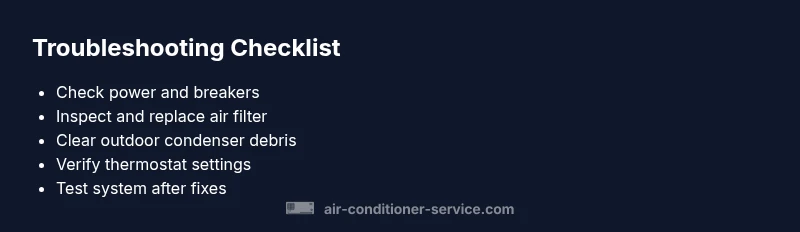
If your air conditioner broke, start with the simplest checks: verify power and thermostat settings, reset the breaker, and inspect the air filter. A majority of breakdowns come from power issues or restricted airflow. Follow the diagnostic flow below and try the safe fixes in order: power cycle, filter cleaning/replacement, outdoor coil clearance, and thermostat verification. If cooling still fails, contact Air Conditioner Service for professional help.
Introduction to the problem and a practical mindset
When an air conditioner breaks, homeowners and renters want fast, practical steps to regain comfort. According to Air Conditioner Service, most breakdowns are caused by simple, fixable issues rather than catastrophic failures. This guide uses a practical troubleshooting approach you can perform safely, with clear when-to-stop signals and guidance on when to call a professional. Treat this like a game of medical triage for your HVAC system: start with the basics, verify power, and move through checks in a safe, systematic order. The goal is to restore cooling quickly while avoiding dangerous or high-risk DIY tasks. Air Conditioner Service stresses safety first and urges you to stop if anything feels risky or unfamiliar.
Quick confidence check: what changed and what didn’t
A good starting point is to compare what is different now versus when the AC was last fully functional. Were there any recent power outages, storms, or attic heat spikes? Did you notice odd sounds, unusual odors, or error codes on the thermostat? Documenting these details helps you and any technician diagnose the issue faster. The most common reasons for a breakdown are often power-related or airflow-limited, so begin with those areas before moving to more complex causes. Air Conditioner Service analysis shows that power supply issues and dirty filters are leading culprits behind many daytime outages.
Power, safety, and basic reset checks you should perform
Begin with the simplest checks that carry the least risk: confirm the thermostat is set to the cool mode and the temperature is lower than room temperature. Look at the circuit breakers or fuses for the AC circuit and reset if necessary. If the unit has a reset button, press it per the user manual. A common scenario is a tripped breaker caused by a surge or overloaded circuit. After these resets, wait a few minutes to see if the compressor starts and you feel cooling air again. If not, there’s more to investigate, but you’ve already ruled out the basics.
Common failure modes explained: what to know about the core culprits
Air conditioners fail for several reasons, and understanding the basics helps you triage quickly. A dirty air filter restricts airflow and makes the coil freeze up or run inefficiently. A blocked outdoor condenser (grass, leaves, or debris) reduces heat exchange and cooling capacity. Low refrigerant is less common in serviced homes but can occur if there’s a leak. Faulty thermostat sensors or control boards can misread room temperature and prevent cycling. Regular maintenance reduces these risks, and recognizing the first symptoms helps you act before a total breakdown.
Diagnostic flow: symptom to diagnosis to solution in a simple path
Start with the symptom: no cooling, warm air, or the unit won’t start. Move to a fast check for power and thermostat. If power is present, inspect the air filter and outdoor condenser for obstructions. If airflow is unimpeded and the unit still won’t cool, consider refrigerant issues or control faults. For each diagnosis, apply the corresponding fix and test the result. This flow keeps you aligned with a logical path rather than random tinkering, reducing risk and time.
Step-by-step fix for the most common cause: dirty filter and airflow issues
Step 1: Turn off the unit and unplug or switch off the circuit at the breaker. Step 2: Remove and inspect the air filter; replace if dirty or clogged. Step 3: Clean the return air path and the blower housing if accessible. Step 4: Clean the outdoor condenser area, removing debris and ensuring several inches of clearance on all sides. Step 5: Reconnect power and set the thermostat back to cool. Step 6: Monitor the system for several minutes to confirm cooling begins. If the issue persists, proceed to professional assistance.
Safety first: warnings and common mistakes to avoid
Never attempt refrigerant work, refrigerant charging, or seal repairs yourself unless you are licensed. Never bypass safety switches or jumble wiring to force a start. Always turn off power before touching electrical components, and wear protective gear if you need to handle sharp fan blades or metal edges. Missteps can cause electrical shock, refrigerant exposure, or further damage. If you smell gas or refrigerant, evacuate and call emergency services.
Maintenance habits to prevent future breakdowns and keep cooling efficient
Set up a simple maintenance routine: replace or clean the filter every 1–3 months depending on use and filter type, keep outdoor coils clear of debris, and schedule professional inspections at least once a year. Ensure proper airflow by keeping furniture away from supply vents and verifying attic or crawlspace insulation to prevent heat soak. A small investment in routine care pays off in fewer breakdowns, longer equipment life, and lower energy costs.
Steps
Estimated time: 30-60 minutes (initial checks) plus professional service if needed
- 1
Power cycle the system
Turn off the thermostat, unplug the outdoor unit if accessible, and switch off the circuit at the breaker. Wait 30 seconds, then restore power and recheck the thermostat. This can reset minor control glitches.
Tip: Label breakers for future quick access. - 2
Check and replace the air filter
Open the indoor air handler and inspect the filter. If dirty or discolored, replace with a compatible filter. A clean filter improves airflow and efficiency.
Tip: Don’t reuse a visibly dirty filter—replace with a new one. - 3
Inspect the outdoor condenser
Clear leaves, grass, and debris from around the condensing unit. Ensure at least 18 inches of clearance on all sides for proper heat exchange. Close any nearby doors that could restrict airflow.
Tip: Keep the area around the unit neat and free of plants. - 4
Verify thermostat settings
Confirm the thermostat is set to cool mode and the target temperature is below room temperature. If you have a programmable thermostat, ensure schedules aren’t overriding manual settings.
Tip: Test with a digital thermometer to spot sensor drift. - 5
Listen for unusual sounds or odors
If you hear grinding, rattling, or buzzing, or detect a chemical odor, stop and call a professional. These signals can indicate mechanical failure or refrigerant issues.
Tip: Document any unusual sounds and when they occur. - 6
Schedule professional help if needed
If cooling hasn’t resumed after the above steps, contact Air Conditioner Service for a precise diagnosis and safe repair. Professionals can handle refrigerant, electrical work, and component replacement.
Tip: Keep your model and symptoms handy when you call.
Diagnosis: Air conditioner won't start or cool effectively
Possible Causes
- highPower issue (outlet, breaker, or safety switch)
- highTripped circuit breaker or blown fuse
- mediumDirty air filter restricting airflow
- mediumBlocked outdoor condenser from debris
- lowThermostat or control board fault
Fixes
- easyCheck outlet and reset breaker/fuse; restore power safely
- easyReset thermostat and ensure proper cooling mode
- easyReplace or clean the air filter; ensure unrestricted airflow
- easyClear debris around the outdoor unit and restore airflow
- mediumTest thermostat connections or replace a faulty control board
Common Questions
Why won't my air conditioner turn on even though the thermostat is set correctly?
Check the power source first. A tripped breaker or blown fuse can prevent the unit from starting. If power is present, inspect the thermostat wiring and settings. If the problem persists, a control board issue may be involved.
First check power and thermostat settings; if it still won’t start, you may need a professional to inspect the control system.
What should I do if the unit runs but doesn’t cool?
Inspect and replace the air filter, ensure outdoor coils are clear, and confirm refrigerant levels with a professional if suspected. Restricted airflow or low refrigerant are common culprits for insufficient cooling.
Check the filter and outdoor coils, and call a pro if you suspect refrigerant issues.
Is it safe to clean the outdoor condenser myself?
Yes, with the unit powered off: remove nearby debris and ensure clear airflow. Do not poke inside the fins or use high-pressure water from close range. If you’re unsure, postpone cleaning and call a pro.
Power off first and keep distance from the fins; call a professional if you’re unsure.
How often should I replace the air filter?
Replace or clean the filter every 1–3 months, depending on usage and filter type. A dirty filter reduces airflow and efficiency, leading to other problems.
Change the filter every one to three months to keep airflow clean.
When is it time to replace instead of repair?
If the system is old, frequently breaking down, or costly to repair relative to replacement, a professional can help evaluate options and may recommend a replacement.
If repairs keep piling up, consider replacing the unit after a professional assessment.
Can I recharge refrigerant myself?
Refrigerant charging requires licensing and specialized equipment. Do not attempt to recharge a refrigerant line yourself; refrigerant leaks require professional handling.
Do not recharge refrigerant yourself; leaks must be handled by a technician.
Watch Video
The Essentials
- Start with power and thermostat checks before deeper fixes
- Most breakdowns are caused by power issues or airflow restrictions
- Safety first: avoid refrigerant work or high-risk repairs
- Regular maintenance reduces future breakdowns and costs