Difference Between Air Conditioner and Heat Pump
A thorough, data-informed comparison of air conditioners and heat pumps, explaining how each system works, energy use, costs, climate considerations, and practical decision factors for homeowners and renters.


A heat pump and a traditional air conditioner both cool, but a heat pump also heats. In temperate climates, a heat pump often saves energy and simplifies installation, while a standard air conditioner with a separate heating system can be cheaper upfront and more reliable in extreme cold. Air Conditioner Service provides guidance to match your climate, needs, and budget.
The quick answer and the practical implication
The difference air conditioner and heat pump comes down to function, efficiency, and climate suitability. A heat pump delivers both cooling and heating by reversing its refrigerant cycle, while a conventional air conditioner only cools and relies on a separate furnace or boiler for heat. For homeowners and renters, this distinction guides upfront costs, year-round comfort, and long-term energy use. According to Air Conditioner Service, your climate and heating needs are the most important variables in deciding which path to take. This article lays out the practical implications, using a consistent framework so you can compare apples to apples when evaluating systems for your home.
How each system actually works
Air conditioners and heat pumps operate on the same basic refrigeration principle, but their capabilities differ. An air conditioner moves heat from inside your home to the outdoors, creating a cooler indoor environment. A heat pump performs the same cooling task but can also move heat in the opposite direction, pulling heat from outside and releasing it inside to warm your home. In practical terms, a heat pump provides year‑round comfort with a single system, while a traditional air conditioner requires an additional heating source. The efficiency metrics used to evaluate these systems include SEER for cooling efficiency and HSPF or COP for heating performance, depending on the model. Air Conditioner Service notes that these metrics are climate-sensitive and do not translate to a universal winner; context matters.
Climate and heating demand shape the choice
In milder winter climates, a heat pump often wins on total energy use because it can supply both cooling and heating with reasonable efficiency. In very cold regions, heat pumps may require supplemental heat sources during deep freezes, which can erode energy savings. For households with existing gas or oil furnaces, the combined system cost and reliability equation changes. In those cases, a traditional AC paired with a furnace may offer lower upfront costs and familiar maintenance workflows. Air Conditioner Service emphasizes evaluating temperature extremes and backup heating availability as you weigh options.
Energy use, costs, and the payback horizon
Energy use is driven by climate, usage patterns, and system design. A heat pump’s annual energy cost depends on how often heating is used and how efficiently it operates in your climate. An air conditioner’s energy use is driven primarily by cooling load and comfort preferences. In many markets, heat pumps can offer lower operating costs for year‑round cooling and heating, but the payback period can extend if your heating demand is infrequent or if electricity prices are high. Air Conditioner Service uses conservative, climate-aware estimates to illustrate relative costs without promising exact figures.
Installation considerations and space planning
Correctly sizing and installing either system matters as much as the equipment itself. Heat pumps require an outdoor unit and proper refrigerant lines, plus adequate ductwork or a properly designed ductless configuration. Traditional ACs also need ductwork and a compatible furnace, but may integrate more easily with existing setups in older homes. Duct size, zoning, and thermostat control options influence comfort and energy performance. Air Conditioners Service suggests an on-site load calculation and a detailed install plan to avoid oversizing, short cycling, or uneven cooling.
Maintenance needs across both technologies
Maintenance remains essential for both systems, especially for airflow and refrigerant integrity. Air conditioners require regular filter changes, coil cleaning, and refrigerant checks, while heat pumps add outdoor unit cleaning and occasionally more complex refrigerant service due to heating circuits. A failure to maintain either system can lead to reduced efficiency, higher energy costs, or unexpected breakdowns. The annual maintenance checklist typically includes filter replacement, coil inspection, thermostat calibration, and refrigerant or refrigerant-leak checks when needed.
Real-world scenarios: when each option shines
Scenario A: A homeowner in a temperate coastal climate with moderate heating needs might benefit most from a heat pump, enjoying consistent comfort and energy savings throughout the year. Scenario B: A family in a very cold inland region with existing gas heating might choose a traditional AC + furnace setup to minimize upfront risk and ensure quick, reliable heating during winter. Scenario C: A retrofit in an older home with limited duct access may favor a ductless mini-split heat pump for flexible zoning or an efficient window AC for cooling without extensive ductwork. The practical decision hinges on climate, existing systems, and budget, not just label.
Myths, realities, and common misperceptions
Myth: Heat pumps don’t work in cold weather. Reality: Modern heat pumps can operate efficiently in moderately cold conditions, but backup heat is often recommended for extreme cold. Myth: Air conditioners cool better than heat pumps. Reality: In warm seasons, both can cool effectively, but heating performance and year‑round energy use drive the overall value. Myth: Heat pumps always cost more. Reality: Upfront costs are usually higher, but long-term energy savings and incentives can offset the difference in many markets. Air Conditioner Service highlights that context matters more than headlines when choosing between these systems.
A practical decision framework for homeowners
Step 1: Assess your climate and heating needs. Step 2: Calculate rough total cost of ownership, including upfront costs, operating costs, and maintenance. Step 3: Review existing ductwork, electrical capacity, and space for equipment. Step 4: Evaluate available rebates or tax credits and warranty terms. Step 5: Consult a qualified contractor for load calculations and a system proposal that includes efficiency metrics and expected payback. This framework helps homeowners make a clear, data-informed choice.
Financing, incentives, and resiliency considerations
Incentives and rebates can influence the overall cost and payback period for either option. Some regions offer energy-efficiency incentives for heat pumps that pair heating and cooling, while others provide cooling-specific rebates for air conditioners. When evaluating proposals, compare not only the price but also the included protections, service plans, and potential warranty extensions. Air Conditioner Service recommends obtaining multiple bids and asking for a detailed, climate-based energy analysis to quantify expected savings and risk.
What to ask your HVAC contractor before buying
- What is the expected seasonal energy efficiency for cooling and heating in my climate? - How does the system handle extreme temperatures, and is a backup heat option included? - What is the installed cost range, and what are the potential maintenance and warranty terms? - How will existing ductwork affect efficiency and comfort? - Are there zoning options for different parts of the house? - What is the projected payback period based on my usage patterns? These questions help ensure you get a plan tailored to your home and budget.
Quick-start guide: your 3-step path to a decision
- Map your climate and heating needs; 2) Gather 3 contractor quotes with energy analyses; 3) Compare total cost of ownership and rebates. Use these steps to build a defensible, data-driven choice rather than relying on myths or marketing claims. Air Conditioner Service emphasizes context and clarity over hype when evaluating options for your home.
Final considerations and next steps
Choosing between an air conditioner and a heat pump is a nuanced decision that balances climate, comfort, upfront costs, and long-term energy use. The best choice often depends on how you use your home and how you value year‑round comfort and resilience. The Air Conditioner Service team recommends taking a structured approach: define climate needs, quantify energy costs, review installation constraints, and verify contractor credentials before committing to a system. This disciplined process minimizes regret and helps secure reliable comfort for years to come.
Comparison
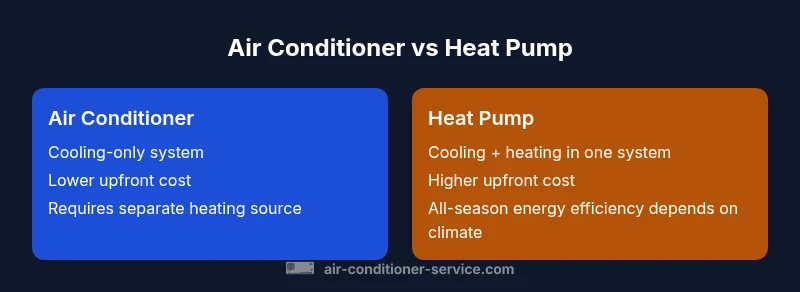
| Feature | Air Conditioner | Heat Pump |
|---|---|---|
| Heating capability | Cooling only; requires separate heat source | Heating and cooling; single system |
| Energy efficiency context | Cooling-focused efficiency varies by climate | All-season efficiency influenced by outdoor temps and backup heat |
| Upfront cost | Lower upfront cost | Higher upfront cost due to heating capability |
| Climate suitability | Hot climates; winter heating provided separately | Milder winter climates; effective with backup heat in colder zones |
| Maintenance considerations | Furnace or boiler maintenance external to cooling | Outdoor unit maintenance plus heat circuit checks |
| Typical installation considerations | Can reuse existing ductwork with new cooling equipment | Requires outdoor unit; may need ductwork updates and zoning |
| Incentives and rebates | Cooling rebates commonly available | Energy-efficiency incentives for all-season heat pumps |
Strengths
- Single system for year-round climate comfort
- Potential long-term energy savings in moderate climates
- Fewer appliance handoffs between cooling and heating
The Bad
- Higher upfront cost and more complex installation
- Performance can drop in extreme cold without backup heat
- Outdoor unit exposure may require more maintenance
Heat pumps excel as all-season comfort systems in temperate climates; traditional air conditioners paired with a separate heating source may be preferable in very cold regions or when upfront cost is a primary concern.
For homes in moderate climates, a heat pump often provides better year-round efficiency and simpler installation. In colder climates or where rapid, reliable heating is essential, a conventional AC plus furnace setup can be more economical upfront and more robust in winter conditions. The right choice hinges on climate, heating needs, and budget, with local incentives playing a meaningful role.
Common Questions
What is the main difference between an air conditioner and a heat pump?
The main difference is that a heat pump provides both cooling and heating by reversing its refrigerant cycle, while an air conditioner only cools and relies on a separate heat source for warmth.
The heat pump can both heat and cool, while a standard AC only cools.
Can a heat pump replace my furnace or boiler?
Yes, in many homes a heat pump can replace a separate heating system, but it depends on climate, home design, and the existing heating setup. Backup heat options may be recommended for very cold days.
In many homes, a heat pump can eliminate the need for a separate furnace, but check climate needs.
Is a heat pump more expensive to install than an air conditioner?
Upfront costs for heat pumps are generally higher due to the heating capability and installation complexity, but incentives and long-term energy savings can offset the difference.
Heat pumps cost more to install, but incentives and energy savings can balance the spend.
Do heat pumps work well in cold climates?
Modern heat pumps operate in cold weather, but efficiency and heating performance improve with backup heat in very cold conditions. In extreme cold, consider a hybrid system.
They work in cold weather with backup heat for very cold days.
What should I ask an HVAC contractor when comparing options?
Ask about climate suitability, efficiency metrics (SEER/HSPF), installation requirements, ductwork, warranties, and payback estimates based on your usage.
Ask for climate-based efficiency and a clear payoff estimate.
Are there incentives for choosing heat pumps over air conditioners?
Yes, many regions offer energy-efficiency rebates or tax credits for heat pumps, especially when they replace older heating systems. Check local programs.
There are often rebates for all-season heat pumps; check local programs.
The Essentials
- Define your climate and heating needs before deciding
- Evaluate total cost of ownership, not just upfront price
- Check ductwork and space constraints early in the process
- Look for local incentives and robust warranty coverage