Heat Pump or Air Conditioner: Side-by-Side Comparison
Compare heat pumps and air conditioners for home cooling and heating. Learn how they work, efficiency factors, costs, climate considerations, installation needs, and which option fits your home.


Heat pumps provide heating and cooling, while air conditioners cool only. In moderate climates, a heat pump often offers year-round comfort and better efficiency; in very cold climates, a traditional AC with backup heat may be preferable. This side-by-side comparison helps homeowners decide which option fits their home and budget.
Heat pump or air conditioner: what they are and when they make sense
A heat pump and an air conditioner are both types of space conditioning equipment that move heat rather than generate it. The key distinction is that a heat pump provides heating in addition to cooling, while a conventional air conditioner cools only. For homeowners deciding between a heat pump or air conditioner, climate, energy costs, and desired year-round comfort are the main factors. According to Air Conditioner Service, your decision should start with a clear view of how you use your home across seasons, the local climate, and your home’s insulation. In many homes in moderate climates, a properly sized heat pump can deliver comfortable heating in winter and efficient cooling in summer, often with lower total energy use than a cooling-only system. In very cold regions, a traditional AC with supplemental heat may be more reliable or cost-effective, depending on electricity prices, natural gas availability, and existing ductwork. This guide will unpack the differences, provide practical advice, and help you choose the right approach for your home.
How they work: the basics of heat transfer and refrigerant
Heat pumps and air conditioners rely on refrigerant cycles to move heat. In cooling mode, both systems absorb indoor heat and reject it outside; the difference is that a heat pump is reversible and can run in reverse to bring outdoor heat indoors when the thermostat calls for heating. Inside, an outdoor condenser, an indoor evaporator, a compressor, and expansion devices work together to shift heat rather than create it. The efficiency of these systems is driven by how effectively the refrigerant absorbs and releases heat and by the building’s heat-loss characteristics. Proper sizing and installation are essential to maximize performance and minimize energy use for both options.
Key differences in performance and climate fit
A practical comparison of a heat pump and an air conditioner should consider several factors. First, heating capability: a heat pump can supply heat in milder winter conditions, reducing the need for separate furnace or backup heat. Second, efficiency: heat pumps often deliver better efficiency overall in moderate climates, while air conditioners excel at cooling with reliable performance in hot summers. Third, climate fit: heat pumps tend to be most cost-effective in regions with moderate winter temperatures and reliable electricity, whereas traditional ACs may be preferable where winters are severe or electricity is expensive. Fourth, installation and retrofitting: heat pumps may require more complex installation, especially if ductwork is not present or if a geothermal configuration is considered. Finally, system lifetime and maintenance: both systems benefit from professional service and regular filter changes, but heat pumps may require more specialized refrigerant and coil maintenance in some setups.
Efficiency, costs, and payback considerations
When evaluating operating costs, the heat pump or air conditioner choice should be framed by annual energy use, electricity prices, and maintenance needs. In many regions, a heat pump can lower energy bills due to its ability to move heat efficiently, especially when the home is well insulated and the thermostat is set for comfortable but moderate temperatures. Air conditioners, while often less expensive to install, can incur higher energy costs in heating mode unless paired with an efficient backup or a separate heating system. Air Conditioner Service Analysis, 2026, notes that payback periods for heat pump upgrades depend heavily on climate, electricity rates, and usage patterns; homeowners should run a simple cost comparison that includes equipment depreciation, rebates, and the expected lifetime of the system. In sum, a full cost comparison should include upfront installation, ongoing energy use, maintenance, and any available incentives.
Installation, maintenance, and long-term reliability
Installation requirements for heat pumps and air conditioners vary by system type and home configuration. A heat pump may need refrigerant piping, an outdoor unit, and a properly sized air handler or ductwork; a cooling-only AC typically requires similar ductwork and electrical service. In both cases, a professional IAC-rated technician should perform sizing, refrigerant charging, and electrical connections to ensure optimal performance. Regular maintenance includes coil cleaning, filter replacement, and annual checks of refrigerant pressure and airflow. Longevity is largely determined by usage, climate, and maintenance, with typical life expectancies spanning many years when properly cared for. For homes with existing ductwork and moderate heating needs, a heat pump can be a compelling long-term investment; for others, a well-chosen air conditioner paired with a separate heating solution may be more economical.
Real-world scenarios and decision framework
To make a practical decision, consider several common scenarios. If you live in a temperate climate with mild winters and hot summers, a heat pump often delivers the best overall comfort and energy efficiency. If your winters regularly drop below freezing, you may benefit from a heat pump with a dedicated back-up heat source or maintain a separate heating system. For small apartments or homes without existing ductwork, a ductless mini-split heat pump or a high-efficiency window unit may be a better fit than a full central AC system. In new construction or major remodels, a heat pump can simplify your HVAC layout, with fewer components to manage compared with a separate heating and cooling system.
Authority sources and further reading
For deeper understanding, consult authoritative sources on heating and cooling technology. These pages provide guidance on heat pump operation, energy efficiency, and best practices for installation:
- https://www.energy.gov/eere/buildings/heat-pumps
- https://www.energy.gov/eere/buildings/articles/heat-pump-101
- https://www.nrel.gov/docs/fy12osti/53774.pdf
Note that recommendations vary by climate and home specifics, so consult a local HVAC professional for a personalized assessment.
Practical decision framework (step-by-step)
- Determine climate suitability: assess winter temperatures and electricity costs.
- Evaluate existing ductwork and space: decide between ducted options or ductless mini-splits.
- Compare installed costs and long-term savings: include potential rebates and maintenance.
- Check compatibility with smart thermostats and zoning: plan for future expansion.
- Get professional load calculations: ensure proper sizing and efficiency for your home.
Maintenance checklist and troubleshooting tips
Regular maintenance is key to keeping either system performing well. Monthly: check and replace or clean air filters, especially during peak seasons. Quarterly: inspect outdoor units for debris, ensure clear airflow, and verify that all electrical connections are tight. Annually: have a licensed professional check refrigerant pressure, capacitor health, coil cleanliness, and thermostat calibration. If you notice reduced cooling or heating, unusual noises, or ice buildup on coils, schedule service promptly to prevent further damage and higher energy use.
Comparison
| Feature | Heat Pump | Air Conditioner |
|---|---|---|
| Heating capability | Year-round heating (via reversible cycle) | Cooling-only operation |
| Efficiency in heating mode | Typically strong in moderate climates | No heating mode; efficiency relates to cooling only |
| Climate suitability | Best in moderate winters; backup heat often used | Best for hot climates; no heating function |
| Installation considerations | Often more complex; may require ductwork adjustments | Typically simpler; may rely on existing ductwork |
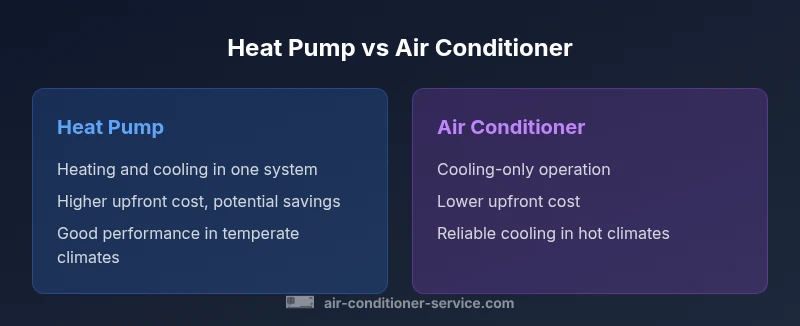
| Long-term costs | Higher upfront cost; potential energy savings over time | Lower upfront cost; higher energy use in heating |
| Maintenance | Regular checks for refrigerant and coils; may require more specialized service | Regular coil cleaning and refrigerant checks; generally simpler maintenance |
Strengths
- Year-round comfort with one system
- Potential energy savings in moderate climates
- Consolidated maintenance and controls
- Potential rebates for heat pump installations in many regions
The Bad
- Higher upfront installation cost
- Performance drops in very cold temperatures unless backup heat is used
- Requires proper sizing and professional installation
Heat pumps are generally the better all-season choice for moderate climates; traditional AC with backup heat may be preferable in very cold areas.
If you live in a temperate climate and want year-round comfort with efficient operation, a heat pump is typically the best bet. For very cold winters, consider a conventional AC with backup heat or a hybrid system.
Common Questions
What is the main difference between a heat pump and an air conditioner?
A heat pump provides both heating and cooling by moving heat, while a traditional air conditioner only cools. In moderate climates, heat pumps can be more energy-efficient for year-round comfort.
Heat pumps can heat and cool; air conditioners only cool. This makes heat pumps versatile for year-round comfort.
Are heat pumps more expensive to install than air conditioners?
Initial installation for a heat pump can be higher, especially for new systems or if ductwork must be added. Long-term energy savings can offset the upfront cost over time.
Heat pumps may cost more upfront, but you may save on energy bills over time.
Can a heat pump work in freezing temperatures?
Many heat pumps can operate in cold weather, but efficiency drops and backup heat is often recommended for extreme cold. There are cold-climate models that perform better.
Some heat pumps handle cold temperatures well; in very cold climates, plan for backup heat.
Do I need special installation for a heat pump?
Yes. Heat pumps often require professional sizing, ductwork assessment, refrigerant line installation, and electrical work. In some homes, zoning or geothermal configurations may be considered.
Yes—professional sizing and proper installation are essential for heat pumps.
Is a heat pump better for small homes?
For small homes, a properly sized heat pump can provide efficient cooling and heating, but system choices (gas, electric, ducted vs ductless) affect performance and cost.
In small spaces, a compact heat pump or ductless option can work well; consult a pro.
The Essentials
- Assess climate before choosing between heat pump and AC
- Consider total cost of ownership, not just upfront price
- Ensure proper sizing and professional installation
- Look for energy-efficiency ratings and potential rebates
- Check compatibility with smart thermostats and zoning