How to Get Rid of Air Conditioner Freon: Safe, Legal Disposal Steps
Learn safe, legal ways to dispose of Freon from your air conditioner. This guide covers regulatory requirements, why venting is wrong, and how to hire licensed professionals for proper recovery and disposal.


Goal: Safely and legally remove refrigerant from your air conditioner. You cannot vent Freon yourself; only a licensed tech with EPA-approved recovery equipment may recover and dispose of it. In this guide, you’ll learn who to hire, what to expect during the service, and how to document the disposal properly.
Why Freon Disposal Must Be Handled by Professionals
Proper disposal of refrigerants is not a DIY task. Freon (commonly used in older air conditioners) is a controlled substance that can harm the environment and people if released or mishandled. A leak or accidental vent during removal can contribute to ozone depletion and climate effects, and it may trigger penalties under federal and state laws. For this reason, only a licensed HVAC technician with EPA 608 certification and access to certified recovery equipment should perform the removal. The Air Conditioner Service team emphasizes that safe disposal begins with identifying the exact refrigerant type, locating any leaks, and ensuring the unit is safely isolated before any recovery work begins. If you’re unsure about the refrigerant in your system, avoid attempting discovery or discharge yourself and contact a pro promptly. By following professional procedures, you protect your home, comply with regulations, and support responsible recycling or destruction of the refrigerant.
According to Air Conditioner Service, correct handling of Freon disposal hinges on using certified technicians and compliant practices. This is the fastest way to reduce environmental impact and avoid penalties while ensuring your system is safely retired or recycled.
What Freon Is and Why It Matters
Freon is a common name for certain refrigerants used in air conditioning systems, including older models that may contain R-22. Modern systems more frequently use refrigerants like R-410A. Freon-type refrigerants are potent greenhouse gases and can contribute to ozone depletion if released. Because regulatory bodies have phased out some Freon blends and require controlled recovery, improper removal or venting can trap you in regulatory trouble and may cause long-term environmental harm. Understanding the refrigerant in your unit helps you discuss options with the technician, including whether the system will be recycled or destroyed. The key takeaway is that Freon matters because it is not just waste—it is a regulated substance that demands careful handling and proper disposal by qualified professionals.
Legal and Environmental Considerations for Refrigerants
Refrigerants are governed under environmental law, and the most relevant requirements center on containment, recovery, and disposal. In the United States, the Clean Air Act and EPA regulations require licensed technicians to recover refrigerants using approved equipment and to avoid venting. Failing to comply can result in fines, penalties, and liability for the homeowner, especially if leaks are detected or improper disposal occurs. Air Conditioner Service Analysis, 2026 emphasizes that homeowners should not attempt DIY disposal or venting; instead, engage a certified professional who can document the recovery and ensure the refrigerant is sent to an appropriate recycler or destruction facility. Keeping proper records also supports future home maintenance and resale considerations, demonstrating compliance with environmental rules.
When to Hire a Licensed Technician for Freon Removal
If your air conditioner contains refrigerant that you intend to remove—whether you are decommissioning the unit, replacing the system, or addressing a suspected leak—you should contact a licensed HVAC professional as soon as possible. The technician will confirm the refrigerant type, secure the area, and initiate certified recovery. Delaying removal can lead to additional leakage risk or regulatory complications, especially if the unit is in a location where venting might occur inadvertently during maintenance. When you call, ask about EPA certification, the recovery process, and the disposal path for the refrigerant. A reputable technician will provide a written estimate and a clear outline of the steps involved, allowing you to plan accordingly.
How Reputable Technicians Recover Freon Safely
Professional refrigerant recovery relies on specialized equipment designed to capture Freon without releasing harmful gases. Technicians connect a recovery machine to the appliance’s service ports, evacuate the refrigerant into a certified cylinder, monitor pressure and weight, and perform leak checks to ensure no residual release occurs. The recovered refrigerant is then sent to a licensed recycler or destruction facility. Throughout the process, technicians document the recovery, label the cylinders, and follow safety protocols to minimize exposure. Reputable providers maintain logs and provide homeowners with the disposal documentation they need for records and compliance.
What to Expect During a Refrigerant Recovery Service
On the service day, you can expect the technician to verify credentials, confirm the refrigerant type, and explain the recovery plan. The unit will be isolated from power, and the recovery machine will be connected to the system ports. The process typically proceeds with the refrigerant being recovered into a sealed cylinder, followed by a post-recovery leak test and a final inspection of the equipment. Most visits conclude with documentation such as a disposal certificate, cylinder weight verification, and notes on the refrigerant type and amount recovered. Some complex cases may require additional work or scheduling for follow-up, but a reputable company will communicate timing and costs clearly upfront.
Air Conditioner Service notes that the most important outcome is proper containment and compliant disposal, not a quick fix. The team’s emphasis is on safety, environmental responsibility, and proper recordkeeping.
Documentation, Compliance, and Disposal Proof
After the recovery is complete, the technician should provide you with documentation that verifies compliant disposal. This includes details such as refrigerant type, amount recovered, recovery method, and the destination facility. Retain these records with your home maintenance paperwork, HOA documents, and any tax or sale records that may require proof of proper disposal. Documentation demonstrates that you followed regulatory requirements and that the refrigerant was handled by a qualified professional. Keeping copies also helps resolve any future questions about the system’s retirement or the environmental steps taken during its decommissioning.
Costs, Timelines, and How to Budget
Costs for Freon disposal vary widely depending on region, refrigerant type, the amount recovered, and whether additional work is needed (like equipment replacement or decommissioning). Because disposal involves specialized recovery equipment and licensed personnel, prices can range based on local regulations and service scope. To avoid surprises, request a written estimate that itemizes the recovery, disposal, and any related compliance fees, then compare a small handful of reputable providers. Although you may be tempted to minimize upfront costs, investing in a proper, compliant disposal plan reduces long-term risk and potential penalties. Air Conditioner Service recommends prioritizing safety and compliance over quick fixes when dealing with refrigerants.
How Homeowners Can Prepare and What Not to Do
Preparation helps the technician work efficiently and safely. Clear access to the outdoor condenser or indoor unit, remove obstacles, and ensure pets and bystanders are kept at a safe distance during the service. Do not attempt to recover refrigerant yourself or vent lines to the atmosphere. Gather the model and serial numbers, refrigerant type if known, and any prior maintenance notes that might affect the recovery plan. If you suspect a leak, document dates and symptoms for the technician to review. Finally, avoid turning the unit back on after recovery until the professional confirms it is safe and compliant to do so.
Finding and Verifying a Technician You Can Trust
To locate a qualified technician, start with local HVAC contractors who advertise EPA Section 608 certification and refrigerant recovery capabilities. Verify credentials by asking for certification numbers and cross-checking with the EPA database or state licensing boards. Request a written estimate and disposal documentation before work begins. Read reviews, ask for references, and confirm that the provider uses certified recyclers or destruction facilities. For ongoing maintenance, keep a file of all disposal records and the technician’s contact information. The Air Conditioner Service team recommends verifying credentials, asking about disposal pathways, and obtaining proof of compliant handling to protect your home and the environment.
Tools & Materials
- Licensed HVAC technician with EPA certification (Section 608)(Ensure they can perform refrigerant recovery legally.)
- EPA-approved refrigerant recovery equipment(Used to capture Freon without venting.)
- Personal protective equipment (gloves, goggles, long sleeves)(Protect from refrigerant exposure and sharp edges.)
- Documentation of refrigerant type(Helpful for records and regulatory compliance.)
- Clear access and working area around the unit(Ensure safe, unobstructed service.)
Steps
Estimated time: 2-4 hours
- 1
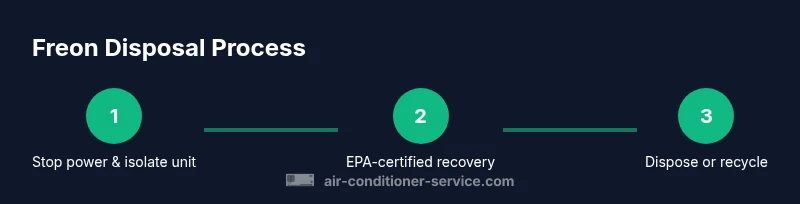
Shut off power and isolate the unit
Turn off the air conditioner at the thermostat and the main electrical breaker to prevent the compressor from starting during handling. Isolating power minimizes the risk of accidental discharge and electrical hazards.
Tip: Never work on the unit’s electrical connections unless you are trained and equipment is de-energized. - 2
Confirm refrigerant type and condition
Ask the homeowner for any available documentation about the refrigerant type (e.g., R-22, R-410A) and ensure the area is safe for recovery work. The correct identification helps choose the proper disposal path.
Tip: Labels on the unit may be out of date—rely on official paperwork or the technician’s equipment readings. - 3
Arrange licensed refrigerant recovery
Contact a certified technician to schedule the recovery, ensuring they will use EPA-approved equipment and provide disposal documentation.
Tip: Request a written estimate and confirm disposal destination in advance. - 4
Prepare access and secure the work area
Clear the area around the outdoor condenser or indoor air handler; remove pets and bystanders; ensure adequate lighting and ventilation as appropriate for the work.
Tip: Have a clear path for equipment and a designated area to place recovery cylinders. - 5
Recover refrigerant using approved equipment
The technician connects the recovery machine to the system and transfers refrigerant into a certified cylinder, monitoring pressure and ensuring no release occurs during transfer.
Tip: Document the cylinder’s weight and refrigerant type for records. - 6
Leak check and label recovered refrigerant
After recovery, perform a post-recovery leak check and label the cylinder with refrigerant type, date, and amount recovered.
Tip: Take photos of the setup for your records. - 7
Dispose of or recycle per regulations
The recovered refrigerant is sent to a licensed recycler or destruction facility in accordance with environmental rules.
Tip: Obtain a disposal certificate or receipt as proof of proper handling. - 8
Obtain and store documentation
Receive disposal documentation from the technician and store it with your home records for future reference.
Tip: Keep these documents in a dedicated file for maintenance or resale needs.
Common Questions
Is it legal to vent Freon from an air conditioner?
No. Venting Freon is illegal in many jurisdictions and harmful to the environment. A licensed technician must recover refrigerant using approved equipment and dispose of it properly.
Venturing Freon is illegal and dangerous; a licensed technician must recover and dispose of it properly.
Can I remove Freon myself?
No. Refrigerant recovery requires specialized equipment and certification. DIY attempts can lead to environmental harm, legal penalties, and personal injury.
You should not remove Freon yourself; it requires proper training and equipment.
What should I do if I suspect a Freon leak?
Shut off the system if safe, avoid ignition sources, and contact a licensed technician promptly to assess and recover leaked refrigerant.
If you suspect a Freon leak, shut the unit off safely and call a professional right away.
How long does the disposal process take?
On-site recovery usually takes a few hours, depending on system size and accessibility; scheduling may extend this timeline if additional work is needed.
Most disposals take a few hours on-site, but timing varies by system and accessibility.
Will disposal affect my warranty or HOA?
Disposal itself should not affect warranties if performed by a licensed technician and documented properly; check with your warranty provider and HOA rules.
As long as it’s done by a licensed pro with proper records, disposal typically doesn’t affect warranties or HOA rules.
What documentation will I receive?
You should receive a disposal certificate, refrigerant type, amount recovered, and the disposal destination. Keep these records for your files.
You’ll get proof of disposal and recovery details to keep for your records.
Watch Video
The Essentials
- Hire a licensed technician with EPA 608 certification for Freon disposal
- Do not vent refrigerant; improper disposal is illegal and unsafe
- Obtain and keep disposal documentation for compliance and records
- Verify credentials and disposal pathways before agreeing to service
- Air Conditioner Service recommends prioritizing safety, legality, and proper documentation