How to Get Rid of an Air Conditioner Unit: Safe Disposal Guide
A practical, step-by-step guide to safely removing, recycling, and disposing of an old air conditioner unit, with safety tips, DIY vs. pro options, and local regulations.


If you’re asking how to get rid of air conditioner unit, start by turning off power at the breaker, then decide between DIY removal for a window unit or hiring a professional for a split/central system. Safely disconnect refrigerant lines, protect yourself with PPE, and choose a recycling or bulk-waste option. Always check local regulations first.
Understanding Why You Might Remove an AC Unit
Removing an air conditioner unit becomes necessary when upgrading to a more efficient system, moving a property, or ending a rental agreement. This task requires careful planning to avoid safety hazards and environmental harm. If you’re searching for guidance on how to get rid of air conditioner unit, start with power isolation and a clear plan for disposal. Remember that refrigerants and other components are regulated by local rules, so you should verify disposal options before handling the unit. The goal is to protect your family, comply with local waste programs, and minimize the ecological impact by choosing responsible recycling or donation whenever possible. Throughout this process, document the steps you take and keep any receipts for disposal or pickup to ensure accountability and smooth communication with waste services.
Types of Units and How Removal Differs
Air conditioners come in several configurations, and the removal approach changes with each type. Window units are self-contained and sit in a sill or frame; their removal often involves unbolting a few mounting brackets, lifting the unit out with help, and then preparing it for transport to a recycling or bulk-waste site. Split systems have an indoor evaporator and an outdoor condenser, plus refrigerant lines that require licensed handling. Central or ducted systems involve larger outdoor condensers and complex refrigerant and electrical connections, typically requiring a qualified technician for safe decommissioning. Knowing which type you have helps you determine whether you can DIY safely or should hire a pro. If you want to minimize risk and ensure proper disposal, consider the unit type from the moment you start planning the removal.
Reuse, Donation, and Recycling Options
Before sending a unit to the curb, explore options to reuse or recycle. Working units can be donated to charity or sold for parts; even non-working units may have salvage value for metal recycling. Refrigerant handling is a controlled process and should be performed by licensed technicians, who can also ensure the unit is decommissioned in compliance with regulations. Local scrap yards and e-waste programs may recycle copper, aluminum, and steel components. By choosing recycling over landfilling, you reduce environmental impact and may recover some value from the materials. This approach aligns with responsible disposal practices and supports a circular economy for air-conditioning equipment.
Safety Essentials You Should Know Before You Start
Safety comes first when removing an air conditioner unit. Always cut power at the main breaker before touching any wiring or components. Wear eye protection, gloves, and sturdy footwear to guard against sharp edges and heavy parts. Refrigerants and oils can be hazardous; never attempt to vent refrigerant or puncture lines yourself. If you suspect refrigerant or a compressed component issue, pause and call a licensed technician. When removing outdoor units, avoid working alone in high wind or on unstable surfaces. Proper handling prevents injuries and keeps the environment safe during the disposal process.
Planning Your Removal: DIY Window-Unit Removal vs Hiring a Pro
DIY removal is feasible for many homeowners with simple window units, provided you have help and the right tools. For larger or more complex installations, such as a multi-split or central system, hiring a professional is usually the safer choice. A licensed technician will recover refrigerants, disconnect electrical connections, and ensure the outdoor unit is removed without damage to your home or surroundings. Weigh the cost of DIY mistakes against the peace of mind and potential safety benefits of professional service. If the unit is old or corroded, a pro can also identify additional hazards, such as compromised mounting or fragile refrigerant lines that require careful handling.
Local Regulations, Permits, and Fees: What to Expect
Disposal requirements vary by city and state. Some areas allow bulk pickup for large appliances, while others require drop-off at a licensed recycling facility. Many municipalities impose fees for bulky-item collection or proper refrigerant recovery. Check your local waste management or city environmental services page to learn about scheduling, packaging, and any documentation you need to provide. Air Conditioner Service analysis shows that following official guidelines not only helps the environment but also minimizes the risk of fines and penalties. Plan ahead for pickup windows and confirm what items are accepted with the disposal program.
Final Steps: How to Complete the Process Safely
After removal, secure the unit for transport using a sturdy strap or dolly, and ensure any loose parts are bagged or labeled for recycling. Bring the unit to the appropriate facility or await curbside pickup if your program accepts bulky appliances. Obtain a receipt or confirmation of disposal for your records, especially if you paid a fee or if a licensed technician performed refrigerant recovery. Keeping documentation helps you stay compliant and simplifies future home improvements.
Authoritative Sources and Resources
For official guidance on appliance disposal and refrigerant handling, consult these sources:
- Environmental Protection Agency (EPA) on household appliance recycling: https://www.epa.gov/recycle/household-appliances
- EPA guidance on used appliance recycling and hazardous waste: https://www.epa.gov/hw/used-appliance-recycling
- Energy.gov on energy efficiency and responsible appliance management: https://www.energy.gov/ These references provide foundational rules and best practices to support the safe and compliant removal of an air conditioner unit.
Tools & Materials
- Safety goggles(ANSI Z87.1 or equivalent.)
- Work gloves(Grip and protection for sharp edges.)
- Screwdrivers (Phillips and flat-head)(Assorted sizes for brackets and covers.)
- Nut drivers or socket set(For mounting hardware.)
- Voltage tester(Verify no live circuits before handling wiring.)
- Pliers and adjustable wrench(Assist in disconnecting hoses and fittings.)
- Rope, strap, or lifting belt(Secure the unit when moving it.)
- Dolly or hand truck(Optional for outdoor removal or heavy units.)
- Trash bags or rigid container(Contain small parts and screws.)
- Labeling materials(Mark parts for recycling or disposal.)
Steps
Estimated time: 2-3 hours
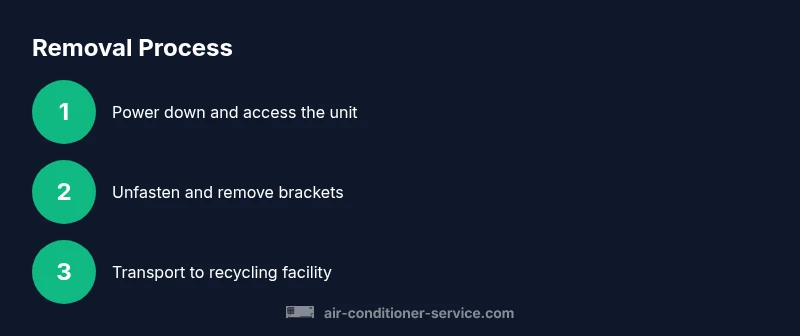
- 1
Power down and verify no voltage
Go to the home's main electrical panel and switch off the breaker that powers the AC unit. Use a voltage tester to confirm there is no live current before touching any wiring.
Tip: Never rely on a switch from inside the house; breakers can be mislabeled. - 2
Access and prepare the unit
Remove the front cover or grille and any access panels; take out the air filter if present to reach mounting screws. Keep screws and small parts organized in a labeled container.
Tip: Take photos during disassembly to aid reassembly if needed. - 3
Unfasten window or wall brackets (window units)
Support the weight with a helper and carefully unbolt or unclip mounting brackets. Slide the unit out of the sash while keeping the sash level to prevent damage.
Tip: Protect window frame edges with a towel or padding. - 4
Decompress refrigerant lines (if needed)
If you are dealing with a split or central system, refrigerant recovery must be performed by a licensed technician. Do not attempt to vent refrigerant yourself.
Tip: Never puncture lines or attempt to open the compressor. - 5
Prepare for disposal or recycling
Wrap sharp edges, seal openings, and transport the unit to the curb for bulky-item pickup or to a recycling facility. Obtain a disposal receipt if available.
Tip: Call ahead to confirm acceptance criteria and hours.
Common Questions
Is it legal to throw away an old window AC unit with regular trash?
In most areas, this is not allowed. Many municipalities require recycling or bulk pickup for large appliances and may prohibit placing refrigerants in regular trash. Always check local guidelines before disposal.
Most places require proper recycling or bulk collection. Always check your city rules first.
Do I need to drain refrigerant before disposal?
Refrigerant handling must be performed by a licensed technician. Do not vent or puncture lines yourself. Arrange professional refrigerant recovery as part of the removal plan.
Only a licensed technician should handle refrigerants; avoid DIY venting.
Can I donate a non-working AC unit?
Some programs accept non-working units for parts or repair. Call local charities or appliance recyclers to confirm acceptance and pick-up options.
Call nearby programs to see if they take non-working units.
Who pays for disposal and what fees might apply?
Costs vary by city and service. Some programs offer free bulk pickup, others charge tipping or service fees for appliance disposal. Always request a written quote where possible.
Fees vary; check with your local program for a quote.
What about the outdoor condenser unit?
Outdoor condensers can often be recycled as scrap metal. Transport to a metal recycler or e-waste facility that accepts outdoor units and refrigerant-holding components.
Take the outdoor unit to a metal recycler that accepts appliances.
How long does the removal process take?
Time depends on unit type, location, and whether refrigerant recovery is required. Plan for a few hours for a window unit and longer for central systems, especially if scheduling a pro.
It varies; plan for a few hours, and possibly more with a pro.
Watch Video
The Essentials
- Plan disposal with local rules in mind
- Prioritize safety with PPE and power isolation
- Reuse, donate, or recycle whenever possible
- Hire a pro for refrigerant handling or complex systems
- Keep disposal receipts for future reference