Cheap Air Conditioner Repair: A Practical How-To for Homeowners
Learn cost-effective, safe methods for cheap air conditioner repair. This educational how-to from Air Conditioner Service covers DIY fixes, maintenance tactics, and when to call a pro—helping homeowners save money without sacrificing comfort.


Learn practical, low-cost ways to fix common air conditioner issues and decide when DIY is appropriate. This guide outlines safe, step-by-step actions to save money while protecting your family and equipment. According to Air Conditioner Service, affordable repair starts with proper diagnosis, honest cost expectations, and practical maintenance that extends the life of your unit. The Air Conditioner Service team found that many households save money by combining quick DIY checks with selective professional service, rather than chasing the cheapest one-off patch.
Understanding cheap air conditioner repair and value
When your AC falters, the term cheap repair often means restoring cooling performance without paying for unnecessary add-ons or trial-and-error fixes. The goal is to fix the root problem safely, avoid creating new issues, and prevent repeat service calls. According to Air Conditioner Service, affordable repair starts with an accurate diagnosis, honest cost expectations, and practical maintenance that extends the life of your unit. The Air Conditioner Service team found that many households save money by combining safe DIY checks with selective professional service, rather than chasing the cheapest patch. In this article, you’ll learn how to balance cost with quality, identify fixes that genuinely help, and know when it’s time to hire a professional. By focusing on value rather than sheer price, you can achieve reliable cooling without overspending.
Common low-cost fixes that are often effective
Many cooling problems emerge from simple, inexpensive causes. A dirty or blocked filter reduces airflow, forcing the system to work harder and potentially shorten its life. A miscalibrated thermostat can cause the AC to run too long or too short, wasting energy and comfort. Debris around the outdoor condenser restricts heat exchange and lowers efficiency. Loose wires at the control board or the contactor can mimic more serious failures. By addressing these items early, you can recover performance with minimal investment. In addition to cleaning and reseating components, resealing ductwork and addressing minor insulation gaps can improve efficiency and reduce the burden on the system. These fixes are often within DIY reach for a careful homeowner, especially when you follow safety guidelines and turn off power before handling any components.
Safe DIY checks you can perform this weekend
Before you touch any electrical parts, switch off the circuit breaker that powers the air conditioner. Start with the air filter: remove and replace it if dirty, and vacuum nearby vents to improve airflow. Inspect the outdoor condenser: clear leaves, grass, and debris, and wipe the fins with a soft brush if accessible. Check the thermostat for proper settings, and ensure it’s not located in direct sun or near heat sources that skew readings. If you have a basic multimeter, test for a stable 24-volt signal to the thermostat and control board; do not test live components without proper training. Finally, listen for unusual noises or sounds that indicate loose fans, belts, or wiring connections. If you observe ice formation on the lines or refrigerant odor, stop DIY work and call a licensed technician. These checks help you identify obvious culprits and decide whether a DIY fix is sufficient or a pro visit is warranted.
Diagnosing performance issues without professional tools
Performance problems often reveal themselves through symptoms rather than obvious parts failure. If the air does not reach the desired temperature, first verify that the thermostat is set correctly and that airflow is unblocked. If cooling is weak or intermittent, inspect air ducts for obvious leaks or disconnected sections. Inconsistent cooling can also stem from a dirty evaporator coil inside the air handler; a light cleaning can improve efficiency, but avoid aggressive techniques that may damage delicate fins. For older systems, listen for unusual grinding or rattling noises, which can indicate a failing fan motor or compressor component. Note any warm air, excessive humidity, or cycling on and off too frequently. Documenting when these issues occur helps a technician diagnose the root cause more quickly and often reduces labor time, contributing to a lower overall cost of repair.
Cost-saving maintenance that reduces future repairs
Prevention is a powerful cost-saver. Regularly changing or cleaning filters, sealing leaks around ducts, and keeping the outdoor condenser free of debris can dramatically improve efficiency and extend equipment life. Schedule periodic professional tune-ups to catch wear and tear early, and ensure refrigerant levels are correct without unsafe DIY refrigerant handling. Keep a replacement parts inventory that includes affordable items like capacitors, contactors, and fuses, but only replace parts you can safely identify and verify with a multimeter and the unit’s service manual. Document all maintenance activities so you can show a technician that you’ve invested in upkeep, which can help justify lower labor times and better warranty alignment. Finally, consider a maintenance plan with a reputable service provider—these programs often offer discounted visits and predictable costs, helping you maintain comfort without unexpected bills.
How to evaluate service providers and quotes for cheap repair
Choosing a service provider is as important as selecting a fix. Look for licensed, insured technicians with clear communication and transparent pricing. Request written estimates that separate labor, parts, and any diagnostic fees, and ask about warranties on both parts and labor. When you describe symptoms, provide a concise timeline of when they started and how they’ve progressed; this helps the technician target likely causes quickly and reduces diagnostic labor costs. Compare responses from multiple reputable providers to gauge value rather than just the lowest price. Remember that the goal of cheap repair is not to rush to a patch but to achieve a safe, reliable fix that lasts. A well-chosen technician will explain the fix, expected outcomes, and maintenance steps you can perform to prevent recurrence.
Safety reminders and when to stop DIY
Never work on live electrical components or refrigerant lines without proper training and safety gear. Refrigerants require specialized handling by licensed technicians, and improper handling can cause leaks or health hazards. If you’re uncomfortable with any step, stop immediately and contact a professional. Prioritize turning off power at the breaker before any inspection, and wear safety glasses and gloves when manipulating parts or cleaning coils. If you notice refrigerant odors, frost on lines, or refrigerant hissing sounds, treat it as an urgent issue and call a pro. By respecting safety boundaries, you protect yourself and your family while still pursuing cost-effective repair options.
Scheduling and follow-up after repair
After a repair, monitor the system for several days to confirm stable performance. Check that cooling is consistent, temperatures are within expected ranges, and there are no unusual noises or vibrations. Keep receipts and notes of parts replaced and any preventive maintenance performed. If you’re unsatisfied with the repair’s duration or performance, request a follow-up inspection within the warranty window. Regular maintenance visits can help catch early signs of trouble before they escalate, preserving reliability and reducing long-term costs. Maintaining a proactive approach to care means you’ll be more likely to enjoy affordable, dependable cooling year after year.
Quick myths about cheap air conditioner repair debunked
There are several myths that mislead homeowners into making costly mistakes. One common misconception is that the cheapest fix is always the best; in reality, a low upfront cost can lead to repeated service calls and bigger expenses later if the root issue isn’t resolved. Another myth is that all DIY fixes are equally safe; some tasks require specialized tools and training to avoid personal injury or equipment damage. Finally, some believe that paying for a full replacement is always superior to repair; while replacement may be warranted in some cases, many problems are effectively addressed with properly chosen repairs and preventive care. By separating fact from fiction, you can pursue affordable repair strategies that genuinely improve comfort and efficiency.
Tools & Materials
- Screwdriver set (Phillips and flat-head)(Precision bits for panel screws; avoid stripping heads)
- Vacuum or air blower(For debris removal around the condenser and blower compartment)
- Soft brush or microfiber cloth(Gentle cleaning of coils and fins)
- Work gloves and safety glasses(Personal protection during inspection and cleaning)
- Digital multimeter(Optional for checking voltage and resistance; not a substitute for professional testing)
- Utility knife or scissors(If duct tape or foil is used for quick seal checks)
- Thermometer or thermostat remote(Helps verify temperature difference across rooms)
- Duct sealant or foil tape(Use for minor duct leaks only; major leaks require professional repair)
Steps
Estimated time: 1-3 hours
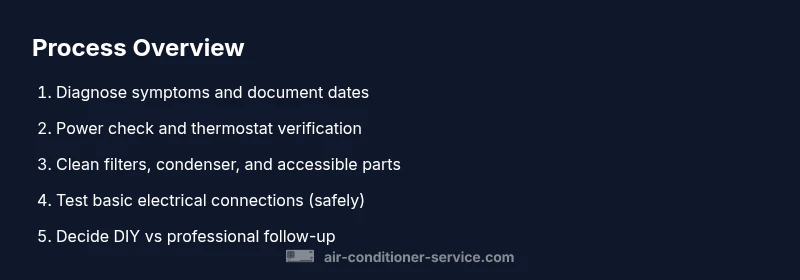
- 1
Inspect air filters and vents
Turn off power at the breaker. Remove and inspect the air filter; replace if dirty or clogged. Vacuum nearby vents and registers to improve airflow and reduce strain on the blower. Clean or replace filters according to manufacturer guidance.
Tip: A clean filter can restore about ten percent of lost efficiency and improve cooling immediately. - 2
Verify thermostat and power supply
Ensure the thermostat is set to cool and the target temperature is realistic for your space. Confirm the thermostat is not exposed to direct sun or heat sources. Check the outdoor disconnect and indoor breakers for signs of tripped circuits and reset if safe to do so.
Tip: If the thermostat displays errors, re-syncing it with the system can resolve minor issues without tools. - 3
Clean condenser and blower area
Shut off power to the outdoor unit. Remove debris around the condenser and gently wipe the fins with a soft brush. If reachable, clean the blower compartment with a vacuum to remove dust buildup that reduces airflow.
Tip: Be gentle with fins; bent fins reduce heat exchange efficiency and may need professional care. - 4
Inspect electrical connections
Look for loose wires or discoloration at the contactor, capacitor, and control board. If you have a multimeter and training, test for proper voltage. Do not touch live terminals; if you’re unsure, skip this step.
Tip: Loose connections are a common cause of intermittent cooling; secure any evident loose screws with appropriate tools. - 5
Check refrigerant-related signs
Look for frost on refrigerant lines or a hissing sound indicating a leak. If you see oil residue near lines or hear unusual noises, stop immediately and contact a licensed technician. DIY handling of refrigerant is unsafe and often illegal without proper credentials.
Tip: Never attempt to recharge or seal refrigerant yourself. - 6
Decide on next steps
If the unit cools but not efficiently, or if there are persistent noises or leaks, plan a professional diagnostic visit. For minor, repeated issues after DIY steps, you may schedule a quick follow-up inspection to confirm stability.
Tip: Document symptoms, dates, and any parts you replaced to speed up future visits.
Common Questions
When is repair cheaper than replacement for an AC unit?
Repair is generally cheaper when the problem is a solvable, common fault (like a clogged filter, dirty coils, or a faulty switch) and the unit has remaining useful life. If core components show significant wear or refrigerant issues, replacement may be more cost-effective in the long run.
Repair is usually cheaper for common faults, but replacement makes sense when major components are worn or leaking refrigerant.
Is DIY safe for a new homeowner with an AC problem?
Simple tasks like filter changes, cleaning accessible coils, and checking airflow can be safe for new homeowners who follow safety guidelines. Avoid electrical testing or refrigerant work unless you have proper training and tools.
Basic DIY tasks are okay if you follow safety rules; avoid electrical and refrigerant work if you're not trained.
What should I ask before hiring a professional for cheap repair?
Ask for licensing and insurance proof, a written estimate with labor and parts, warranty terms, and a clear explanation of recommended repairs.
Ask for licenses, warranties, and a written cost breakdown before work begins.
How long does a typical cheap repair take?
Most routine checks and fixes can be completed within a few hours, depending on access to the unit and the diagnoses required.
Most standard fixes take a few hours, but more complex issues may require longer.
Will a service plan help reduce costs over time?
A maintenance or service plan can reduce surprise visits and provide discounted routine inspections, which lowers the total cost of care over the year.
Maintenance plans can lower long-term costs by spreading out care and giving discounts.
What warranty should I expect on repairs?
Look for a warranty on both parts and labor, typically lasting a reasonable period after the repair. Longer warranties indicate confidence in the fix and reliable parts.
Expect parts and labor warranties; longer warranties are a good sign.
Watch Video
The Essentials
- Prioritize safe, low-cost fixes before expensive repairs
- Regular maintenance reduces the likelihood of costly faults
- Know when to DIY and when to call a licensed pro
- Choose a transparent, warranty-backed service provider
- Document issues and fixes to streamline future visits