How Much Does Air Conditioner Install Cost?
Estimate installation costs for central, ductless, and window A/C units, including labor, permits, and common add-ons. Learn how location, system type, and efficiency influence price.


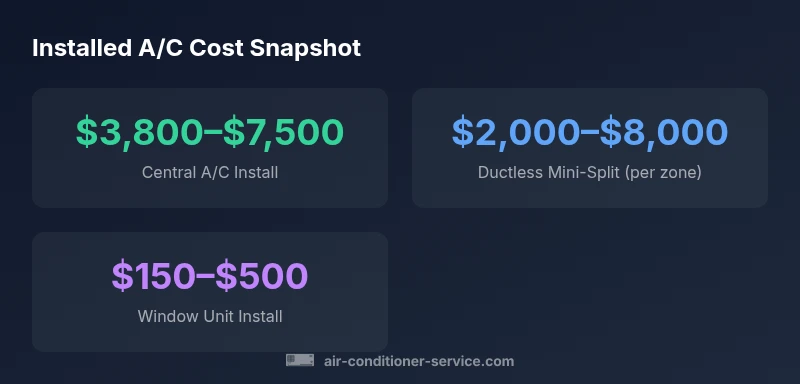
The installed cost of an air conditioner varies widely by unit type and home specifics, but you can expect a broad range. Central AC installation typically costs between $3,800 and $7,500, including equipment and labor; ductless mini-splits often range from $2,000 to $8,000 per zone; window units are far cheaper, usually under $1,000 installed. Permit and removal fees may apply.
Why Installation Costs Vary Across Homes
Costs for installing an air conditioner depend on several factors, including whether you’re upgrading an existing system, adding new ductwork, or replacing an old unit. Central systems often require ductwork sizing and potential electrical upgrades, while ductless systems may demand additional outdoor units or ceiling or wall mounting considerations. Labor rates vary by region, and some contractors include disposal of the old equipment in the bid. According to Air Conditioner Service, the most influential variables are system type, home layout, and the condition of the electrical panel. These factors explain why two neighboring homes can have markedly different installation quotes.
Cost Breakdown by System Type
- Central air conditioning: Typically the most expensive upfront due to equipment, ductwork, and potential permit costs.
- Ductless mini-splits: Price per zone varies with number of indoor heads and line-set length.
- Window units: The simplest and most affordable option, with installation often handled by the installer or owner.
Hidden Costs to Budget For
Even a straightforward install can incur extras: permit fees, duct sealing or redesign, electrical upgrades, refrigerant recovery, and disposal of the old system. Some homes require condensate drainage work or new thermostat wiring, which can add hundreds to thousands of dollars.
Location, Permits, and Scheduling
Prices differ by state and city due to local codes and demand. Permitting requirements vary, and seasonal demand can affect scheduling and labor availability. Scheduling in shoulder seasons can save on labor surcharges and reduce wait times.
How to Get Accurate Estimates
To avoid sticker shock, obtain multiple written quotes that specify equipment type, labor, permits, removal of the old unit, and warranty terms. Provide a clear site plan, room-by-room cooling goals, and any required electrical upgrades. Ask about ductwork, refrigerant adjustments, and post-install testing.
Financing, Warranties, and Value
Many installers offer financing options or promotional rebates for energy-efficient models. Warranties on heat exchangers, compressors, and labor vary by manufacturer and contractor. When evaluating bids, balance upfront cost with long-term energy savings and compressor reliability.
Practical Cost-Saving Tips
Shop during sales, compare multiple bids, and consider consolidating work (e.g., upgrading ductwork once rather than piecemeal). Maintain the current duct system to avoid unnecessary resealing. Ask about tax credits or utility rebates for efficient models.
When Installation Time Matters
Timeline matters for heat waves or extreme comfort needs. If you’re replacing a failed unit, expedited scheduling may be worth a premium, but plan for possible delays due to permits or weather.
Cost ranges by installation type
| System Type | Typical Installed Cost Range | Notes |
|---|---|---|
| Central air conditioning | 3,800–7,500 | Includes equipment and labor; may require ductwork |
| Ductless mini-split (per zone) | 2,000–8,000 | Outdoor condenser + indoor heads; line set costs |
| Window unit installed | 150–500 | Direct-cool, minimal installation; local codes may vary |
| Full-house retrofit/upgrade | 6,000–15,000 | Converts existing home for comprehensive cooling |
Common Questions
What factors most influence air conditioner installation costs?
System type, existing ductwork, electrical upgrades, and local permitting drive most of the price. Labor rates and disposal fees also vary by region, affecting totals.
The price mainly depends on the type of system, ductwork, electrical work, and local permits.
Are permits required for AC installation?
Most installations require a permit in many jurisdictions, especially for central systems and major upgrades. Check with your city or county and your contractor.
Permits are commonly required for new or major installations.
Can I reduce costs without sacrificing quality?
Yes. Compare multiple bids, consider energy-efficient units with rebates, and avoid unnecessary upgrades. Reuse existing ducts when feasible, and schedule in off-peak seasons when possible.
Shop around, look for rebates, and avoid unnecessary upgrades.
How long does installation take?
Most installs take 1–3 days depending on system type and home complexity. Ductwork and electrical upgrades can extend timelines.
Most installs take a day or two.
What is included in a good installation quote?
A detailed breakdown of equipment, labor, permits, removal of old units, ductwork or electrical work, and warranty terms.
Look for a clear line-by-line quote with warranties.
Are there financing options?
Many installers offer financing or manufacturer rebates for energy-efficient models. Check for monthly payment plans and eligibility criteria.
Financing options and rebates are often available.
“Installation costs are driven by system type, ductwork needs, and local codes. A careful bidding process helps homeowners avoid surprises.”
The Essentials
- Understand the system type to estimate cost first
- Get multiple, itemized quotes to compare inclusions
- Budget for permits and potential ductwork changes
- Energy-efficient models can reduce long-term costs