Air Conditioner Installation Cost: A Practical Guide
Learn realistic ranges for air conditioner installation costs, including central, ductless, and window units. This guide breaks down what drives price, how to estimate, where regional differences matter, and tips to avoid surprises with financing, warranties, and maintenance. Air Conditioner Service provides practical insights for homeowners and renters.


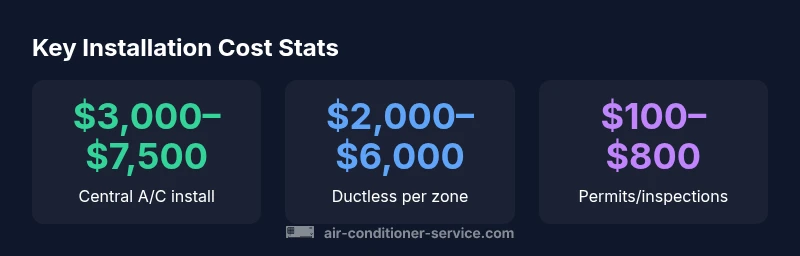
Typical installation costs for a central air conditioner usually fall in the $3,000–$7,500 range, depending on unit size, ductwork, and complexity. Ductless mini-splits run about $2,000–$6,000 per zone, while replacing only the outdoor unit or window units is often under $1,500. Costs include permit, labor, and potential upgrades.
What drives installation costs
According to Air Conditioner Service, installation costs are driven by system type, home layout, existing equipment, and local regulations. While the price tag on the HVAC equipment itself is a major factor, the surrounding work—such as ductwork modification, electrical upgrades, permits, and disposal of old equipment—often determines the final bill. Climate, home size, and how easily a crew can access the installation site also play a significant role. Finally, seasonal demand can push prices up in peak cooling months. Understanding these drivers helps homeowners set a realistic budget and anticipate the most impactful cost drivers before requesting quotes.
Cost components explained
A realistic cost breakdown helps you identify where money goes and where you can negotiate. The four biggest categories are equipment, labor, permits/inspections, and retrofit work. Equipment costs depend on the type and SEER rating; higher efficiency units cost more upfront but save on energy. Labor covers removal of old equipment, site preparation, refrigerant charging, and final testing. Permits and inspections vary by municipality, and retrofit work includes duct sealing, refrigerant line sets, and electrical panel upgrades where required. Don’t overlook disposal fees or recycling charges for old units. In many markets, a professional will provide a single, itemized quote that includes these components and a written warranty for workmanship.
Central A/C vs. ductless mini-splits vs. window units
Central A/C installations typically sit at the top of the cost spectrum due to ductwork and larger equipment; ducted systems usually require more labor, especially if existing ducts need upgrades. Ductless mini-splits offer flexibility and energy efficiency with per-zone installation, which can increase total cost if multiple zones are added. Window unit installations are the least expensive option but are less ideal for whole-home cooling and often require electrical work and secure mounting. When evaluating quotes, compare equal baselines: same tonnage, same SEER, same warranty terms, and similar accessibility. This makes apples-to-apples comparisons possible and helps prevent sticker shock from adding variables later.
Regional and home-specific factors
Geography matters. In milder climates, you may forego certain upgrades, while in hot, humid regions, more robust systems and faster cooling performance are common. Home characteristics also matter: a single-family home with existing ducts is cheaper to outfit than a modern, energy-efficient home requiring duct sealing or fully new ductwork. The age and condition of electrical panels, the need for new breakers, and the complexity of rooftop or attic work affect labor time and costs. Finally, local labor markets influence hourly rates; urban areas tend to be higher than rural regions, all else equal.
Estimating your project: a practical workflow
Start with a needs assessment: determine whether you want a central system, a multi-zone ductless setup, or a window unit solution. Collect at least three on-site written quotes, ensuring each includes equipment, labor, permits, and disposal. Ask for a breakdown of line set lengths, refrigerant charge estimates, and any required electrical upgrades. Compare based on: total installed cost, system efficiency (SEER), installed capacity (tons/zones), and warranty coverage. Confirm installation timelines and whether an annual maintenance plan is included. Use a side-by-side comparison worksheet to keep quotes aligned and prevent scope creep.
Hidden costs and how to avoid surprises
Even well-quoted projects can hide costs. Expect additional charges for duct sealing or replacement, attic/roof penetrations, refrigerant line length adjustments, or upgrades to the electrical panel. Warranty-related exclusions or exclusions on labor can also alter long-term costs. To avoid surprises, request a detailed, written scope of work, a fixed price where possible, and a post-installation inspection window. Ask about the cost of a starter thermostat or smart controls, and whether these items are included or billed separately. A clear contract reduces the risk of unexpected charges during the project.
Financing, warranties and maintenance
Many homeowners finance AC installations through energy-efficient loan programs or contractor financing plans. Compare interest rates, terms, and any promotional offers. Warranties typically cover parts and compressor for several years, but labor coverage varies by contractor. Maintain your system with a preventive maintenance plan; regular service can extend system life and reduce unexpected repairs. When selecting a contractor, verify licensing, insurance, and manufacturer-authorized status to ensure you receive genuine parts and proper installation.
Step-by-step project timeline
A typical installation timeline includes an initial assessment (45–90 minutes), design and quote (1–2 visits or a single multi-hour session), permitting (variable by jurisdiction), scheduling (1–2 weeks in many markets), installation (1–3 days depending on complexity), and a final inspection/test run. If ducts must be replaced or upgraded, the process may extend by 1–2 days. Expect debris cleanup and a walkthrough to ensure comfort controls and zones are functioning correctly. Transparent scheduling helps minimize wasted time and aligns expectations with the contractor.
Putting it all together: getting quotes and final checks
With quotes in hand, prioritize the scope of work, included materials, and warranty details. Check for licensing and insurance proof, and ask for references from past installations similar to yours. Schedule a post-installation inspection to confirm proper refrigerant charge and airflow in all zones. If there are any lingering concerns about energy efficiency, request an energy audit or thermographic assessment. The Air Conditioner Service team recommends collecting and comparing quotes from at least three qualified contractors and validating all assumptions before signing. This upfront diligence helps you lock in a fair price and minimize surprises later.
Cost ranges for common AC installation scenarios
| Category | Typical cost range | Notes |
|---|---|---|
| Central A/C installation (new) | "$3,000–$7,500" | Equipment, labor, permits, basic ductwork |
| Ductless mini-split (per zone) | "$2,000–$6,000" | Outdoor unit + indoor head per zone |
| Window unit installation | "$100–$500" | Electrical and mounting work (unit price excluded) |
| Permits and inspections | "$100–$800" | Jurisdiction-dependent |
Common Questions
Do I need a permit for AC installation in my area?
In many jurisdictions a permit is required for new installations or major upgrades. Your contractor should confirm permit needs during the project scope and include any permit fees in the quote. Failing to obtain proper permits can lead to code violations and future resale complications.
Most installations require a permit; your contractor should handle the process and include fees in the quote.
How long does installation typically take?
Most residential central or ductless installations take 1–3 days, depending on system type, ductwork status, and access. Complex retrofits may require more time. A proper on-site assessment will provide a precise window.
Usually one to three days, depending on the system and home setup.
Can I install an AC system myself to save money?
HVAC installation requires licensing, refrigerant handling, and electrical work. DIY installation is not recommended and often voids warranties. Always hire a licensed contractor to ensure safety and compliance.
We don’t recommend DIY for safety and warranty reasons.
Will adding zones or duct sealing affect cost?
Yes. Adding zones or sealing ducts can increase upfront costs but may improve comfort and efficiency. The long-term savings can offset the initial expense, especially in larger homes or poorly insulated spaces.
More zones or sealing can raise upfront costs but improve comfort and efficiency.
Are there incentives or rebates for energy-efficient installs?
Some regions offer rebates or tax credits for energy-efficient systems. Check with local utility programs and manufacturers and ask your contractor about eligible incentives for your area.
Check local programs and incentives with your contractor.
How can I get an accurate, apples-to-apples quote?
Ensure each quote lists equipment type, SEER, installed tonnage, ductwork scope, permits, labor, removal of old equipment, and warranty terms. Require a fixed-price quote or a clearly defined payment schedule.
Ask for a detailed, itemized quote with clear scope and warranty terms.
“Reliable installation unlocks energy efficiency and long-term savings. The right system, installed correctly, reduces operating costs and prevents premature failures.”
The Essentials
- Ask for three on-site quotes to compare apples-to-apples
- Expect costs to include equipment, labor, and permits
- Ductwork and electrical upgrades are common hidden costs
- Consider energy-efficient options to reduce long-term costs
- The Air Conditioner Service team recommends comparing warranties and service plans