Commercial Air Conditioner Installation: A Step-by-Step Guide for 2026
Learn how to plan, design, and install a commercial air conditioner with practical steps, safety tips, and best practices from Air Conditioner Service.


Steps to correctly install a commercial air conditioner involve site assessment, system selection, permits, proper equipment placement, wiring and controls, and thorough commissioning. You’ll need access to structural plans, electrical service, and a trained installer. This guide provides a clear, fast path to a compliant installation that minimizes downtime and energy waste.
What makes commercial installation different?
According to Air Conditioner Service, commercial air conditioner installation demands rigorous planning and code-compliant design to avoid downtime and excessive energy use. Unlike residential projects, commercial work involves larger equipment, more complex electrical and mechanical systems, and coordination across multiple trades. It starts with a clear understanding of occupancy patterns, heat load, and space constraints. A successful installation aligns with facility objectives, adheres to local building codes, and minimizes disruption to occupants. In this section we’ll explore the core differences: system scale, reliability requirements, and the need for robust commissioning to ensure long-term performance. We'll cover typical configurations like rooftop units, split systems, and chiller-based loops, and explain how zoning, controls, and standby power influence the final layout. Finally, we’ll highlight common pitfalls and how to avoid them through early planning and cross-functional collaboration.
Planning and scope of a commercial installation
Effective planning begins with a formal scope of work that defines performance targets, space constraints, timeline, and budget boundaries. A site survey is essential to identify ductwork, ladder routes, roof access, and structural supports. For installation of commercial air conditioners, size and selection decisions should be based on load calculations, occupancy patterns, external temperatures, and future expansion plans. In practice, you’ll work with a licensed HVAC designer to select an appropriate rooftop unit (RTU), chiller loop, or VRF/ducted solution. The scope should include permits, electrical service upgrades, refrigerant handling, and integration with building automation systems. From the outset, establish roles for each tradesperson and set a realistic schedule that minimizes disruption to tenants or operations. Industry guidance emphasizes documenting all decisions to ease commissioning and future maintenance.
System types commonly used in commercial spaces
Commercial climates use a range of configurations to balance efficiency, reliability, and space. Rooftop units (RTUs) offer centralized cooling with straightforward maintenance but require careful rooftop access and weatherproofing. Ducted split systems provide zoning flexibility for larger footprints, while VRF (variable refrigerant flow) systems maximize efficiency in irregular layouts or where space is limited. For large campuses or multi-zone buildings, chilled-water or air-cooled chiller loops may be the best option. When selecting a type, consider building envelope, existing controls, and future expansion. By matching the system type to load characteristics and occupancy, you can reduce energy waste and extend equipment life.
Site assessment and load calculations
A thorough site assessment identifies existing ductwork, mechanical rooms, electrical panels, and roof access constraints. Load calculations determine cooling capacity, taking into account occupants, equipment heat, lighting, and solar gains. Use ASHRAE-style methods and refer to local code requirements to ensure the selected equipment meets performance targets without oversizing. An oversized system wastes energy and increases equipment stress, while an undersized unit struggles during peak heat events. Document air distribution goals, temperature setpoints, and controls strategy to guide the design. Finally, coordinate with the building operator for ongoing maintenance and access during the initial commissioning period. Air Conditioner Service analysis shows that precise loads reduce energy waste and improve comfort consistency.
Permitting, contracts, and scheduling
Before any physical work begins, verify required permits and code approvals with the authority having jurisdiction. Create a clear contract that defines scope, responsibilities, warranties, and change-management procedures. Develop a phased schedule that aligns with tenant operations, delivery windows, and trade coordination. Schedule crane or ladder access for rooftop equipment, if needed, and plan for temporary cooling if disruptions are expected. Clear communication with building management and occupants minimizes surprises and safety risks. Use this phase to lock in a commissioning plan, equipment warranties, and a contingency path for weather delays.
Installation process overview
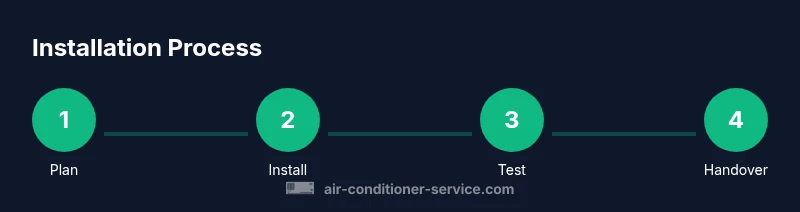
The installation phase follows the approved design and permits. Typical sequences include: equipment placement, ductwork connections, refrigerant piping, electrical connections, and control wiring. Ensure rooftop curbs or spaces are weatherproof and that vibration isolation is applied to reduce noise. During installation, check for proper refrigerant charge and leak detection, and verify condensate drainage routing. After physical installation, perform initial system pressure checks, electrical safety tests, and control sequencing. Schedule interim check-ins with the building operator to verify that spaces remain comfortable during the process. Commissioning should confirm that all zones respond to set points and that energy use aligns with design intent.
Safety, codes, and commissioning
Safety and compliance are non-negotiable in commercial projects. Always follow lockout/tagout procedures when working on electrical components, use fall protection on rooftops, and verify ladder stability. Building codes require documentation of equipment ratings, clearances, and fire-life safety integration. Commissioning tests should include airflow verification, temperature stratification checks, and controls calibration. Train building staff on basic operation and safety considerations before turnover. Document all test results and keep a detailed as-built record for future service and energy audits.
Maintenance, lifecycle, and energy efficiency
A properly installed system demands a proactive maintenance plan to sustain performance and energy efficiency. Scheduling regular filter changes, coil cleaning, and belt inspections reduces pressure drop and improves heat transfer. Monitor energy performance during peak seasons and compare against baseline benchmarks to identify opportunities for optimization. Consider retrofits like improved insulation, variable speed drives, or upgraded building controls to gain additional efficiency. Finally, anticipate lifecycle costs, including replacement timelines and service contracts, to protect your investment. The Air Conditioner Service team recommends scheduling a formal commissioning review and providing occupants with basic operating training to ensure smooth ongoing operation.
Tools & Materials
- Measuring tape(at least 25 ft (7.6 m) flexible tape for spaces and ductwork)
- Electrical multimeter(for voltage, continuity, and resistance checks)
- Manifold gauge set(refrigerant side checks and charging verification)
- Cordless drill(with standard bits for mounting and fasteners)
- Level(to ensure proper alignment of equipment and ductwork)
- Duct sealing materials(mastic or foil tape for airtight joins)
- PPE(hard hat, gloves, eye protection per site rules)
- Ladder or lift(for rooftop access and high mounting points)
- Safety harness(if working on rooftops or elevated areas)
Steps
Estimated time: Total installation time: 2-5 days for small-to-mid-size commercial spaces; longer for multi-building sites.
- 1
Assess site and define scope
Conduct an initial site survey to capture space constraints, roof access, electrical capacity, and occupancy patterns. Document the heat load and performance goals to guide equipment selection. Coordinate with stakeholders and create a draft scope of work.
Tip: Record exact dimensions and access routes; this minimizes back-and-forth changes during design. - 2
Select system type and determine capacity
Choose the appropriate system (RTU, VRF, or chiller loop) based on load calculations and space. Verify that capacity aligns with occupancy, equipment heat, and solar gains. Prepare a preliminary equipment list and rough layout.
Tip: Over- or under-sizing harms energy efficiency and comfort; use conservative but accurate loads. - 3
Secure permits and finalize contract
Submit permit applications and respond to any plan reviews. Finalize contract terms, warranties, and change-management procedures with clear milestones.
Tip: Include a documented commissioning plan to streamline turnover. - 4
Prepare installation space and utilities
Clear the installation area, verify electrical service capacity, and ensure duct routes and mechanical rooms are ready. Protect existing finishes and create access paths for equipment delivery.
Tip: Mark service clearances per manufacturer guidelines before equipment arrival. - 5
Install equipment and connect controls
Place the unit on its curb or mounting, run refrigerant piping, connect electrical and control wiring, and install condensate drainage. Verify secure mounting and code-compliant clearances.
Tip: Double-check refrigerant lines for physical damage and ensure proper insulation. - 6
Commission, test, and train
Charge refrigerant, test leaks, balance airflow, and test control sequences across zones. Train building staff on basic operation and provide handover documentation.
Tip: Keep a log of test results and setpoints for future energy audits.
Common Questions
What permits are required for a commercial air conditioner installation?
Permit requirements vary by jurisdiction, but most projects need electrical, mechanical, and structural approvals. A licensed HVAC contractor can help you identify the exact permits and submit plans for review. Always secure approvals before starting site work.
Permit requirements vary by location; a licensed HVAC contractor can identify the exact permits and help you submit plans for review before any work begins.
How long does a typical commercial installation take?
Time depends on building size, system type, and coordination with other trades. Expect multi-day scheduling for rooftop units or chiller loops, with longer timelines for large campuses or complex controls integration.
Time depends on building size and system type; rooftop or campus projects typically take several days to weeks with coordination.
Can I upgrade an existing system while it remains in service?
Partial upgrades are possible, but require careful sequencing to prevent cooling gaps. In many cases, upgrades are staged during off-peak hours or planned as a phased replacement.
Upgrades can be staged, but plan for temporary cooling gaps and coordinate with occupants.
What maintenance is needed after installation?
Establish a preventive maintenance plan that includes filter changes, coil cleaning, belt inspection, and refrigerant checks. Regular checks help sustain efficiency and prevent unexpected downtime.
Set up regular maintenance for filters, coils, belts, and refrigerant checks to stay efficient.
What is commissioning and why is it important?
Commissioning validates system performance against design goals, ensures proper control sequencing, and trains staff. It reduces energy waste and ensures occupant comfort from day one.
Commissioning checks performance and controls, helping save energy and keep occupants comfortable.
How should duct design be approached for a new commercial space?
Duct design should balance airflow, noise, and space constraints. Use zone strategies to target comfort where it matters most and ensure airtight joints to minimize energy losses.
Design ducts for balanced airflow and efficient zoning to maximize comfort and minimize losses.
Watch Video
The Essentials
- Plan the scope with stakeholders early.
- Match system type to site load and layout.
- Coordinate permits and commissioning from the start.
- Document decisions for future maintenance.