Carrier Air Conditioner Installation: A Step-by-Step Guide
A comprehensive, code-conscious guide to planning, sizing, and performing a Carrier air conditioner installation for homes and rentals. Learn about permits, electrical readiness, outdoor and indoor layout, duct considerations, and safe startup practices with practical tips from Air Conditioner Service.


You’re going to plan, install, and start a Carrier air conditioner installation. This guide covers sizing basics, electrical wiring, outdoor unit placement, refrigerant line routing, condensate drainage, and startup checks. You’ll learn safety tips, permitting basics, and how to verify performance. Air Conditioner Service’s guidance emphasizes practical, code-safe steps for homeowners and renters.
Planning the Carrier air conditioner installation
A successful carrier air conditioner installation starts with thorough planning. Start by confirming the system is correctly sized for the space using standard load calculations or manufacturer guidelines. Check local codes and your home’s electrical capacity; many jurisdictions require permits for new HVAC equipment. Assess ductwork condition and attic or crawl space access, because leaky ducts or restricted access can undermine efficiency. Prioritize energy efficiency: choose a unit with a suitable SEER rating and ensure proper thermostat integration. Consider noise levels for outdoor placement and a stable, level surface for the condenser. Finally, map a route for refrigerant lines and condensate drainage that minimizes bends, avoids heat sources, and protects line insulation. This preparation reduces costly rewiring, leaks, and compliance issues after installation. The Air Conditioner Service team recommends documenting measurements, equipment serial numbers, and the planned layout so the installer can review before work begins.
Outdoor unit placement and indoor system layout
The outdoor condenser belongs on a solid, level pad with good airflow. Maintain minimum clearances from walls, fences, and vegetation (as specified by the manufacturer), and orient the unit to avoid direct sun exposure if possible. Route refrigerant lines and electrical wiring through an approved chase or wall sleeve, keeping each section dry and protected from weather. Inside, the air handler or furnace must be compatible with the new condenser and properly connected to the existing ductwork. Use a sealed plenum or trunk line to reduce air leaks and ensure even distribution. Install a condensate drain with a trap and a clear path to a suitable drain. Finally, check all connections for secure fittings, insulating where required, and verify that all electrical disconnects are accessible. The result is efficient cooling, quieter operation, and longer equipment life.
Authority sources and references
For guidance on safe, code-compliant installation, refer to authoritative sources. These references provide safety standards, energy efficiency guidance, and general best practices to supplement field work:
- https://www.energy.gov/energysaver/home-cooling
- https://www.energy.gov/eere/buildings/hvac-systems
- https://www.epa.gov/iaq
- https://www.osha.gov
Always verify local requirements with your city or county building department, and consult a licensed HVAC professional if you encounter uncertainty around wiring, refrigerant handling, or ductwork issues. Air Conditioner Service recommends using these sources to support a compliant, safe Carrier air conditioner installation.
Tools & Materials
- Safety gear (gloves, goggles)(Wear eye protection and cut-resistant gloves.)
- Electrical multimeter / voltage tester(Check circuit status and confirm power is off.)
- Cordless drill with assorted bits(For mounting fasteners and making pilot holes.)
- Wrench set and screwdrivers (Phillips and flat-head)(For service panels and connections.)
- Measuring tape and level(Ensure precise placement and level mounting.)
- Refrigerant line set (copper) with insulation(Follow manufacturer length and insulation standards.)
- Manifold gauge set(Used for charging checks and pressure verification.)
- Vacuum pump(Evacuate air and moisture from lines before charging.)
- Torque wrench(Torque fittings per spec to avoid leaks or damage.)
- Electrical disconnect switch and wiring accessories(Install per code and unit requirements.)
- Drip pan and drain components(Manage condensate safely and prevent leaks.)
- Permits and documentation(Have on-site for inspection when required.)
Steps
Estimated time: 4-8 hours
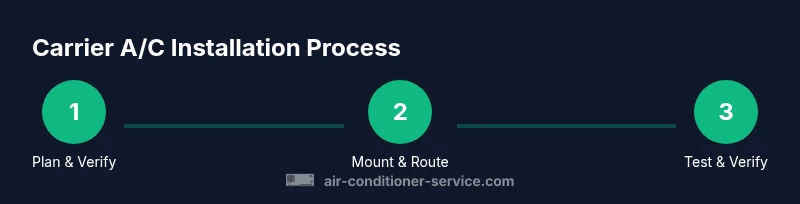
- 1
Plan and verify system sizing
Confirm the Carrier model fits the space using load calculations and existing ducts. Review warranty terms and local permitting requirements. Map out the install path for lines and a condensate drain, and check access to service panels. Document measurements and serial numbers for quick reference.
Tip: Create a simple schematic showing where each component will sit and how piping will run to minimize later changes. - 2
Shut off power and set safety zone
Turn off the main breaker and the outdoor disconnect. Tag circuits if multiple people might work nearby. Confirm zero energy with a voltage tester before handling any wiring. Remove or secure any nearby obstacles to create a clear workspace.
Tip: Lockout-tagout if possible to prevent accidental re-energizing during work. - 3
Mount outdoor condenser on a stable pad
Place the condenser on a level pad or anti-vibration feet on a firm surface. Ensure ample clearance for airflow and service access as per manufacturer specs. Align for convenient line routing and maintain a straight path for refrigerant lines. Fasten securely and verify level.
Tip: Avoid placing directly under branches or areas with heavy debris to minimize cleaning and maintenance. - 4
Route refrigerant lines, drain, and electrical
Cut copper lines to match the planned route, deburr edges, and insulate. Connect lines to the outdoor unit and indoor coil following the manufacturer’s diagram. Install a drain line with a trap and ensure a reliable discharge path. Run electrical wiring in a code-compliant conduit and install a disconnect near the outdoor unit.
Tip: Keep lines as straight as possible; avoid sharp bends that can kink or impede flow. - 5
Connect indoor coil and ductwork
Mount the indoor coil or air handler, connect it to the existing ductwork with sealed joints, and apply furnace-safe sealant or mastic. Check for proper airflow direction and balance using dampers where available. Ensure all heat-exchange surfaces are clean and free of obstructions.
Tip: Seal all duct connections to prevent efficiency loss and air leaks. - 6
Commission, test, and finalize
Evacuate refrigerant lines to remove moisture; charge to the prescribed level using the manifold gauge set. Check for leaks and confirm system pressures and temperatures meet expected ranges. Run a full system test, verify thermostat communication, and document settings and readings. Close panels and remove tools from the work area.
Tip: Record measurements and test results for future maintenance and service visits.
Common Questions
Do I need a permit to install a Carrier air conditioner?
Permitting requirements vary by locality, but many areas require a permit for new HVAC installations. Check with your city or county building department before starting and plan for an inspection if required.
Yes—check with your local building department before starting the installation.
Can I install the indoor unit myself?
Some aspects of installation may be performed by a confident, trained homeowner, but refrigerant handling and electrical work often require a licensed technician. Review local regulations and the manufacturer's guidelines before proceeding.
Work with a licensed technician for refrigerant and electrical tasks if unsure.
What should I consider for outdoor unit placement?
Choose a stable, level pad with good airflow, away from debris and direct heat. Provide required clearance for service and avoid obstructing exhaust or intake paths.
Pick a stable, well-ventilated spot with clear access for service.
How long does Carrier installation typically take?
Installation duration depends on home layout, ductwork, and existing fixtures. Plan for several hours and allow extra time if permits or inspections are involved.
It varies, but set aside a few hours to a full day.
What maintenance steps follow installation?
Schedule regular filter changes, annual professional inspections, and periodic duct sealing checks to maintain efficiency and prolong equipment life.
Keep up with routine maintenance for best performance.
Watch Video
The Essentials
- Plan permits and sizing up front.
- Prioritize safe electrical and refrigerant handling.
- Ensure duct integrity and proper outdoor placement.
- Test thoroughly and document results.