Air Conditioner Mini Split Installation: A Complete How-To
A practical, educational guide to air conditioner mini split installation for homeowners and renters. Learn planning, mounting, wiring, drainage, and testing with clear steps and safety tips.


This guide will help you install a ductless mini-split air conditioner safely and efficiently, covering planning, mounting, electrical connections, refrigerant considerations, and testing. You’ll learn what tools you need, how to measure for placement, how to handle condensate drainage, and how to verify cooling performance. Follow these clear steps to achieve a reliable, energy-efficient setup.
What a Mini-Split System Is and How It Works
A ductless mini-split system consists of an indoor air-handling unit and an outdoor condenser, connected by a slim line set that carries refrigerant and power. Because there are no ducts, installation is less invasive than central systems, and zoning can improve comfort and efficiency. The inverter-driven compressor adapts to heating or cooling loads, delivering precise comfort with lower energy use. Accurate air conditioner mini split installation matters for long-term reliability, so pay attention to placement, ventilation, and indoor air quality as these factors drive performance.
Planning and Permits
Before you drill or mount brackets, map out the installation plan and check local codes. Some jurisdictions require permits for electrical work or outdoor condenser placement. Assess space for unobstructed airflow, access for maintenance, and noise considerations for shared walls. Decide whether to mount on an interior or exterior wall while considering sun exposure and insulation. Evaluate drainage paths to ensure condensate can be vented safely and plan a discreet route for refrigerant lines and wiring. A well-planned install reduces surprises and improves efficiency.
Choosing the Right Mini-Split Size and Model
Sizing hinges on room area, insulation, climate, and occupant load. Start with the manufacturer’s charts and avoid oversizing to prevent humidity issues and short cycling. Consider inverter technology for stable temperatures and energy savings, outdoor unit noise ratings, and filtration options. Compare warranty terms and local service support. The right model should also integrate with existing thermostats or smart home systems if you want seamless control and improved energy efficiency.
Indoor and Outdoor Unit Placement
Mount the indoor unit high on the wall for efficient cooling and unobstructed airflow, avoiding shelves, drapes, or heat sources. The outdoor unit needs adequate clearance around all sides for proper heat rejection and quieter operation. Ensure both units are level and securely mounted to minimize vibration and noise transmission. Plan line-set routing to minimize visible piping and prevent kinks. In tight spaces, a compact outdoor condenser can reduce footprint while maintaining performance.
Electrical Requirements and Safety
A dedicated circuit with appropriate amperage is typically required, plus a compliant disconnect for the outdoor unit. Verify voltage, confirm circuit capacity, and ensure a safe power shutoff near the installation site. Use conduit or wiring methods that meet local codes, and install a weatherproof disconnect if the outdoor unit is accessible. Always turn off the main breaker and test for absence of voltage before touching any wiring to prevent injuries or damage.
Piping, Drainage, and Refrigerant Considerations
Install the copper line set with proper insulation to minimize heat gain and condensation. Ensure a small slope for drainage away from the indoor unit, directing condensate to a safe location. Seal joints and protect line ends during handling. Avoid sharp bends that could impede refrigerant flow. Do not vent refrigerant or components outside; follow the manufacturer’s instructions and local codes to prevent environmental harm and safety hazards.
Installation Steps: A High-Level Roadmap
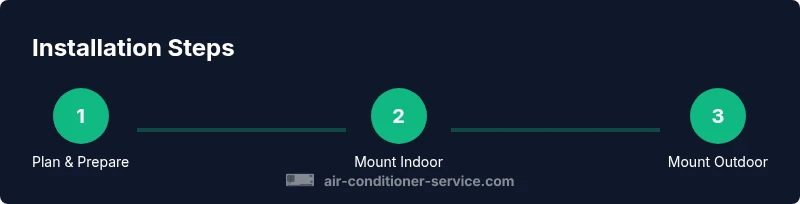
Plan your workflow to minimize wall penetrations and reuse existing openings when possible. Mount the indoor unit first, route the line set through a wall, install the outdoor unit, then connect electrical, drainage, and refrigerant lines. Evacuate air from the refrigerant circuit, check for leaks, and test cooling and heating operation. This high-level roadmap keeps the project organized and safe while reducing the risk of mistakes.
Testing, Commissioning, and Troubleshooting
Power on the system and verify basic controls, ensuring the indoor unit operates quietly and cycles correctly. Check airflow, verify refrigerant pressure if you have the tools, and perform a leak test. Confirm condensate drains properly and that both cooling and heating functions respond to setpoint changes. If issues arise, revisit wiring, line-set connections, and unit orientation before calling for professional service.
Maintenance and Seasonal Readiness
Regular maintenance extends system life. Clean or replace filters every 1–3 months, inspect coils for dust, and schedule annual professional checks for refrigerant integrity and electrical safety. Keep the outdoor unit clear of debris, trim nearby vegetation, and listen for unusual noises. With proper maintenance, your air conditioner mini split installation will maintain efficiency year-round.
Tools & Materials
- Cordless drill and drivers(for mounting brackets and screws)
- Masonry drill bits(for masonry walls if needed)
- Stud finder(locate studs for secure mounting)
- Level (laser or bubble)(keep units level to prevent water drainage problems)
- Tape measure(accurate clearances and line-set routing)
- Pencil/marker(mark drill holes and conduit path)
- Screwdrivers (Phillips & flat)(for mounting hardware and covers)
- Wrench or adjustable wrench(line-set fittings and connections)
- Copper line set (size per model)(include insulation and end caps)
- Line-set insulation(prevent condensation on piping)
- Drain hose or condensate pump(ensure proper drainage path)
- Vacuum pump and gauge(evacuate refrigerant lines and remove moisture)
- Safety gear: gloves and goggles(personal protection during installation)
- Conduit and wiring supplies(per local electrical codes)
- Disconnect switch (outdoor)(code-compliant shutoff near outdoor unit)
- Electrical tester(verify power conditions)
- Wall penetration kit (optional)(for neat wall pass-throughs)
Steps
Estimated time: 4-8 hours
- 1
Plan placement
Evaluate room layout, select mounting height, and plan line-set routing. Confirm access for maintenance and ensure adequate clearances around the indoor and outdoor units.
Tip: Double-check wall thickness and available space behind the mounting surface to avoid difficult line-set routing. - 2
Mount the indoor unit
Mark and drill mounting holes, install the wall bracket, and secure the indoor unit frame. Level the bracket before attaching the unit to prevent misalignment.
Tip: Use a laser level to ensure perfect vertical alignment for even airflow. - 3
Route line-set and electrical to wall
Create a clean pass-through through the wall for the refrigerant line set and electrical wiring. Seal any openings to prevent air leaks and water intrusion.
Tip: Keep line-set path as short and straight as possible to minimize energy loss. - 4
Mount the outdoor unit
Select a stable surface with sufficient airflow and secure the outdoor condenser. Ensure vibration isolation and level mounting to reduce noise.
Tip: Place the unit away from strong winds and ensure access for service technicians. - 5
Connect line-set and electrical
Attach the copper line set to the indoor and outdoor units, insulate, and seal joints. Make the electrical connections according to the manufacturer’s diagram and local codes.
Tip: Avoid bending lines too sharply; use generous curves to prevent kinks. - 6
Vacuum and test for leaks
Evacuate the line set with a vacuum pump, then check for leaks and ensure a dry system before charging refrigerant.
Tip: Monitor gauge readings to confirm a deep vacuum; a short test can save future headaches. - 7
Install drainage
Connect the condensate line and verify gravity drainage away from the home. Install a condensate pump if gravity drainage isn’t feasible.
Tip: Test drainage by pouring water to confirm a steady outflow. - 8
Power up and initial test
Restore power, set the system to cooling mode, and verify airflow, temperature, and control responsiveness.
Tip: Start on a moderate ambient temperature to avoid overheating components during initial test. - 9
Final inspection
Check for rattles, verify wiring, and ensure there are no leaks or condensate issues. Document model numbers and warranty details.
Tip: Keep a record of service dates and adjustments for future maintenance.
Common Questions
Do I need a professional to install a mini-split?
Many areas require licensed electrical work and proper refrigerant handling. If you’re not confident with electrical wiring and refrigerant, hire a pro to install or commission the system.
In many places, professional installation is required for electrical and refrigerant work.
What size mini-split do I need for my space?
Sizing depends on room area, insulation, and climate. Use the manufacturer’s chart and consider insulation quality to select the correct capacity.
Size is based on room size, climate, and insulation; consult the chart.
How long does installation typically take?
For a typical single-room install, plan for several hours to a full day, depending on wall type and routing complexity.
It usually takes several hours, depending on layout and wiring.
Do I need permits for mini-split installation?
Permit requirements vary by locality. Check with your city or county building department before starting.
Permits may be required based on your location; verify with local authorities.
What maintenance is needed after installation?
regularly clean filters, inspect coils, and schedule an annual professional check for refrigerant and electrical safety.
Clean filters regularly and schedule annual professional checkups.
Watch Video
The Essentials
- Plan early to avoid awkward compromises.
- Size the system correctly using manufacturer charts.
- Ensure safe electrical and drainage setup.
- Test thoroughly and document results.
- Maintain the system for long-term efficiency.