Portable Air Conditioner Price Guide (2026)
Learn how much a portable air conditioner costs in 2026, with price ranges by BTU, features, and energy use. Practical buying tips from Air Conditioner Service to maximize value.


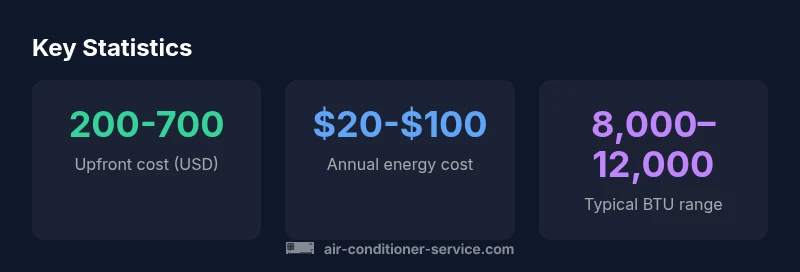
How much is a portable air conditioner? Most units cost between $200 and $700 upfront, with price rising for higher BTU ratings, dual-hose designs, and energy-efficient features. If you’re shopping in 2026, factor in installation accessories and potential warranties. For a quick baseline, expect a mid-range 12,000 BTU model to land around the $350–$600 range, depending on brand and sales.
What affects portable AC price
How much is a portable air conditioner? Pricing in 2026 is driven by several core factors. According to Air Conditioner Service, the primary levers are cooling capacity (BTU), hose configuration (single vs. dual hose), energy efficiency (EER/SEER), and added features such as Wi‑Fi, smart controls, and noise reduction. A compact 8,000 BTU unit intended for a small bedroom will typically be cheaper than a 14,000 BTU unit designed for larger living spaces. Dual-hose models often command a premium because they deliver faster cooling and better humidity control, especially in hot climates. Build quality, warranty length, and brand reputation also influence price. Additionally, portability features—casters, weight, and included accessories—can push the sticker price higher. If you’re asking how much is a portable air conditioner, start by defining the room size and energy goals, then map that to a price band that aligns with your budget and usage patterns.
Price ranges by BTU and features
Price ranges reflect cooling capacity and feature sets. In 2026, common price bands look like this (for typical consumer models):
- 8,000–10,000 BTU, single-hose: roughly $200–$350
- 12,000–14,000 BTU, single- or dual-hose: roughly $300–$600
- 12,000–14,000 BTU, dual-hose or smart-enabled: roughly $500–$750
- 14,000–16,000 BTU+, inverter/advanced features: roughly $650–$900
These ranges vary by brand, warranty length, and where you buy (retailers often run promotions). Energy-efficient models, particularly those with higher SEER or ENERGY STAR branding, tend to sit toward the upper end of the range even for mid-sized rooms. When budgeting, compare price tags to the expected energy savings and cooling performance. Air Conditioner Service analysis suggests that the value of extra features is highest when you have larger spaces or higher cooling demands.
Hidden costs to consider
The sticker price is only part of the picture. Many portable AC buyers overlook the additional costs that can affect total ownership. You may need a window kit, a drainage hose, or an exhaust duct extension, which can add $20–$60 upfront. Some models require a dedicated outlet or a surge protector, and extended warranties can add $50–$150. Operating costs are also a consideration: running a portable AC in a hot climate can raise your monthly electricity bill, depending on local rates and usage. If you use the unit for long periods, factor in potential maintenance like filter replacements and periodic coil cleaning. Finally, think about noise and room placement; a louder unit may prompt you to run it less, reducing both energy use and cooling effectiveness. Planning for these hidden costs helps you avoid surprises when you get to the checkout.
How to pick value for your budget
To extract the most value from a portable air conditioner, start with a simple calculation: determine the cooling needs for your space (roughly BTU per square foot) and estimate annual energy costs based on local electricity rates. Then match these to a price tier that offers the features you actually need. Prioritize units with good warranty terms, reliable customer support, and ease of maintenance. If you frequently move rooms or host guests, consider wheel design and compact form factors. Beware of marketing buzzwords; a higher price does not always guarantee better comfort. When in doubt, compare models with the same BTU and dual-hose configurations to see how much extra you’re paying for features like smart controls or quieter operation. Finally, check for deals during seasonal promotions—air conditioners often drop in price during spring and late summer.
Comparison with alternative cooling options
Portable ACs are one of several cooling choices for homes or rentals. Window air conditioners are often cheaper upfront but require a window and can block light or ventilation. Mini-split systems offer high efficiency and quiet operation but involve professional installation and higher upfront costs. A portable unit may be best when you rent, need temporary cooling, or lack a window that accommodates a window unit. When evaluating, compare total cost of ownership, including energy costs and potential installation constraints. In small apartments, a 8,000–12,000 BTU portable can be sufficient, while larger rooms may require 14,000–16,000 BTU or multiple units. The key is to weigh convenience against the long-term energy impact and the available space.
Maintenance tips to extend life and save money
Regular maintenance helps you get the most value from a portable AC. Clean the exhaust hose and air filters monthly during peak use, check for leaks, and ensure proper drainage to avoid mold or moisture buildup. Use a reusable or washable filter and replace disposable ones as recommended by the manufacturer. Keep the unit out of direct sunlight and away from heat sources to reduce strain. When the compressor cycles on and off frequently, it can indicate undersized capacity or poor venting. A well-maintained unit runs more efficiently, reducing energy costs and extending service life. Finally, store the unit properly during off-season to prevent damage.
Buying strategies and common traps
Be strategic when purchasing. Compare at least three models with similar BTU ratings and warranty terms. Watch for calculated energy costs rather than just upfront price. Beware low-cost units with flimsy fans or noisy operation; the long-term cost may be higher due to maintenance and early failure. Look for models with easily accessible filters and hoses, and check consumer reviews for reliability. If you plan to use it in multiple rooms, consider the weight and mobility features. Finally, track promotions and bundle deals—retailers frequently offer discounts with extended warranties or accessory kits.
Real-world scenarios: small apartment vs large room
In a small apartment, an 8,000–10,000 BTU portable with a dual-hose design can manage typical summer days without breaking the bank. For a larger living space or studio, you may need 12,000–14,000 BTU and a model with smart controls to optimize energy use. If you’re on a tight budget, a mid-range unit with essential features often delivers the best balance of cost and cooling. In all cases, verify venting setup and outlet availability before buying to avoid surprises. Keep in mind that your climate, room orientation, and ceiling height can change the needed power, so adjust expectations accordingly.
Price ranges by portable AC model type
| Model Type | Typical Price Range | Key Considerations |
|---|---|---|
| Single-hose portable | $200-$450 | Compact; affordable; best for small rooms; venting limitations in some layouts |
| Dual-hose portable | $350-$700 | Faster cooling; better humidity control; heavier; more tubes; less portable |
| Smart/inverter portable | $500-$900 | Energy-efficient; Wi-Fi; app control; higher upfront; value depends on usage |
Common Questions
What is the typical price range for a portable air conditioner?
Most portable units fall within a broad range that depends on BTU, hose design, and features. You’ll commonly see affordable models around the lower end and feature-rich units at the higher end. Always compare like-for-like BTU and dual-hose configurations to gauge true value.
Most portable ACs cost a few hundred dollars upfront, with higher-end models reaching the mid to upper range for bigger spaces and extra features.
Do portable AC units cost more to run than window units?
Running costs depend on size, usage, and local electricity rates. Portable units often consume more energy per BTU than efficient window units, especially if you run them in a hot room all day. Energy‑efficient models can help offset higher running costs.
Running costs vary; energy-efficient models help, but it’s smart to compare yearly energy estimates before buying.
What features drive price the most?
BTU capacity, dual-hose design, and energy efficiency ratings consistently push prices higher. Smart features like Wi-Fi control and advanced noise reduction also add cost, but can improve user experience and long-term savings.
Higher BTU and better efficiency usually mean more money upfront, plus smart features can add to the price.
Are dual-hose models worth the extra cost?
Dual-hose models typically offer better cooling efficiency and humidity control, which can justify the higher price in warm climates or large rooms. If you live in a smaller space or have budget constraints, a single-hose model may suffice.
In hot spaces, dual-hose units often pay back in energy savings and comfort.
Is it cheaper to buy used or refurbished portable AC?
Used or refurbished units can be tempting for the upfront price, but they may lack warranties or have reduced lifespan. If you buy used, ensure it’s in good working condition, comes with basic safety checks, and has available replacement parts.
Used can save money, but check the warranty and condition carefully.
“Pricing is a balance between upfront cost and operating expenses. Prioritize value and efficiency to maximize long-term comfort.”
The Essentials
- Know the core price drivers before shopping
- Expect higher prices for larger BTU and dual-hose designs
- Factor in installation accessories and energy costs
- Prioritize warranty and service when buying
- Compare models with the same BTU to isolate feature value