AC Price Guide 2026: What Shoppers Should Budget
A comprehensive 2026 guide to air conditioner prices, covering unit types, installation costs, rebates, and practical tips to compare quotes and save on energy bills.


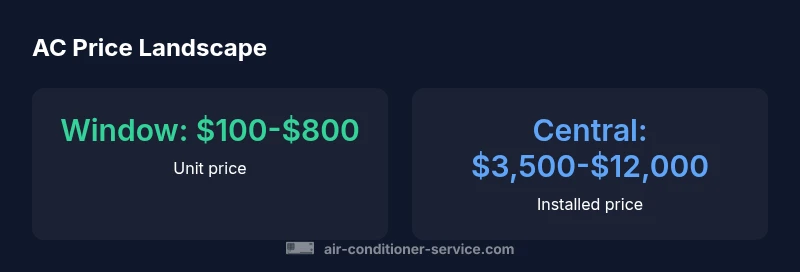
AC price varies widely by type and installation. Window units typically cost $100-$800, portable units $200-$700, split-system components $600-$2,500, and central air installed prices usually range from $3,500 to $12,000, depending on efficiency and ducting. Air Conditioner Service Analysis, 2026 notes that higher SEER ratings raise upfront costs but can slash energy bills over time; plan for installation, permits, and potential ductwork.
What drives ac price in 2026
The ac price you see on a tag or in a quote reflects several factors that go beyond the sticker price. Unit type is the most obvious driver: window and portable models are designed for single rooms and are cheaper upfront, while central air systems provide whole-home cooling at a premium. Efficiency (as measured by SEER) and the complexity of installation (ductwork, wiring, and refrigerant handling) add meaningful cost. Brand reputation and included warranties also affect price. Finally, installer labor and regional permitting influence final totals. For homeowners evaluating quotes, understanding these levers helps separate a good deal from a poor one. The term ac price appears repeatedly in price discussions because it captures both upfront purchase and long-term operating costs.
Price ranges by unit type
Prices vary widely by unit type, but typical ranges provide a rough budgeting framework:
- Window AC: $100-$800 for the unit alone, with installation rarely required for most models.
- Portable AC: $200-$700 for the unit, plus simple setup.
- Split-system (one outdoor condenser, indoor air handler): $600-$2,500 for the unit, with installation often needed.
- Central AC installed: $3,500-$12,000 or more, depending on home size, ducting, and SEER rating.
These figures reflect common market conditions in 2026 and can shift with supply, labor, and energy-efficiency incentives. When planning, also account for accessories like thermostats, zoning, and smart control features, which can add several hundred dollars to the total.
Efficiency and SEER ratings: balancing upfront cost and long-term savings
Higher SEER (Seasonal Energy Efficiency Ratio) units cost more upfront but typically save more on energy bills over the system’s lifetime. The price premium for upgrading SEER generally translates into annual energy savings, especially in hotter climates or homes with poor insulation. Some homeowners recoup the premium within several years, while others realize slower payoffs depending on usage, local electricity rates, and maintenance habits. When evaluating ac price, compare the incremental cost of higher efficiency against projected annual energy savings using a simple payback calculation. This approach helps set realistic expectations for long-term value.
Installation, ductwork, and labor costs
Installation complexity is a major variable in ac price. A window unit may require little more than placement and sealant, while central AC often involves permitting, ductwork modification, wiring upgrades, refrigeration line routing, and condenser placement. Labor can account for a sizable portion of the installed price, especially if existing ducts must be retrofitted or replaced. In some homes, upgrading to a multi-zone system or adding air quality features (like advanced filtration) adds both upfront cost and long-term benefits. Budget for permits, potential scaffolding, and disposal of old equipment.
Financing and incentives that reduce the sticker price
Many homeowners reduce the upfront burden by using financing options, rebates, and energy-efficiency incentives. Some manufacturers and retailers offer promotional financing, while utilities and government programs provide rebates for qualifying high-SEER equipment or heat pumps. Local incentives can vary widely, so it pays to research state and municipal programs before purchasing. When calculating ac price, include potential discounts and rebates in your total project cost to obtain an apples-to-apples comparison between quotes.
Hidden costs and upgrades to consider
Beyond the price tag, several add-ons can shift the total investment. Extended warranties, smart thermostats, additional filtration, duct cleaning, and service plans can all affect 12-month and 5- to 10-year costs. If a system requires ductwork, plan for potential attic or crawl-space access improvements. Finally, if the home’s insulation is inadequate, you may need improvements that raise initial costs but dramatically improve comfort and reduce energy use.
How to compare quotes and avoid overpaying
To avoid common pricing pitfalls, request itemized quotes that separate equipment from labor, permits, and disposal. Confirm the proposed SEER rating, refrigerant type, and warranty terms. Ask about possible upgrades and whether any work can be staged over time. Get multiple written estimates and check references for installers. A thorough comparison helps ensure the ac price reflects both a fair upfront cost and the system’s long-term performance.
Buying guide: quick decision framework for homeowners
Use a simple framework to guide your purchase:
- Define comfort goals and climate considerations.
- Match unit type to home size and layout.
- Compare SEER ratings and warranty terms.
- Include installation, ductwork, and potential upgrades in the price.
- Check rebates and financing options before committing.
- Verify the installer’s license, insurance, and credentials. This approach makes the ac price more predictable and the overall project more likely to meet expectations.
AC price by unit type
| Unit Type | Typical Unit Price | Estimated Installed Cost | Notes |
|---|---|---|---|
| Window AC | $100-$800 | $150-$1,000 | Best for single-room cooling |
| Portable AC | $200-$700 | $250-$1,200 | Moveable, no ducting required |
| Split-system (single-zone) | $600-$2,500 | $2,000-$6,500 | Outdoor condenser with indoor unit |
| Central AC (multi-zone) | $3,500-$12,000 | $5,000-$18,000 | Ductwork and multi-room cooling |
Common Questions
What is the average AC price in 2026?
Prices depend on unit type and installation. Window and portable units are cheaper upfront, while central systems command higher prices due to ductwork and labor. Quotes typically vary widely by region and contractor.
Average prices vary by unit type and install. Window and portable units are cheaper; central systems cost more due to ductwork and labor.
How much does installation add to the price?
Installation can add hundreds to thousands of dollars depending on ductwork, permits, wiring, and location of the outdoor unit. A full central AC install commonly increases the total well beyond the unit price.
Installation can add a significant amount. Ductwork, permits, and outdoor unit placement drive up the total.
Is it cheaper to buy a window unit vs central AC if energy costs are high?
Window units are cheaper upfront but offer limited cooling. Central AC has higher upfront cost but can be cost-effective long-term with efficient operation, especially in large homes or hot climates.
Window units are cheaper upfront; central AC may save more energy in large homes over time.
Do energy-efficient units cost more upfront?
Yes, higher SEER units cost more initially, but they often reduce annual energy expenses. The payback period depends on usage, climate, and electricity rates.
Higher efficiency costs more upfront but lowers yearly energy bills; payback varies by climate and usage.
What financing options exist for AC purchases?
Many retailers and manufacturers offer promotional financing, and some utilities provide rebates. Compare terms, interest rates, and any installation inclusions to pick the best option.
Look for retailer financing and available rebates; compare terms and total costs.
Are there rebates for energy-efficient ACs?
Yes, federal, state, and local programs often provide rebates for qualifying energy-efficient units. Check with your utility provider and local government websites for current offers.
There are rebates for efficient models; check utilities and local programs.
“Well-informed buyers compare not just the sticker price but the total cost of ownership, including energy use, maintenance, and warranties.”
The Essentials
- Understand price drivers: unit type, efficiency, and installation complexity.
- Budget for installation costs and potential ductwork early.
- Higher SEER means higher upfront price but lower long-term bills.
- Shop multiple quotes and consider rebates to reduce ac price.