How Long Do Window Air Conditioners Last? A Practical Lifespan Guide
Discover how long a window air conditioner lasts, factors that affect lifespan, and practical maintenance tips from Air Conditioner Service for homeowners every day.


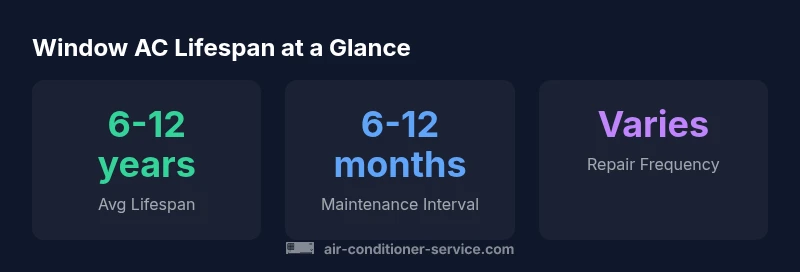
How long do air conditioners last window? For a standard window unit, expect about 6-12 years with regular maintenance and proper installation. Cheaper or poorly cared-for models may fail earlier. Lifespan is shaped by usage, maintenance, quality of components, and correct sizing. The Air Conditioner Service Team emphasizes regular cleaning, coil care, and annual checkups to maximize life.
How long do window air conditioners last: key determinants
For homeowners wondering how long do air conditioners last window, the answer depends on several factors, including build quality, usage patterns, and maintenance. In general, a standard window unit that is correctly sized and properly installed tends to fall within a broad lifespan of 6-12 years. Units from reputable manufacturers with solid warranties and clear maintenance schedules often reach the upper end of this range, while cheaper or irregularly serviced models may struggle to hit the midpoint or extend beyond it. The practical takeaway is that lifespan is not a fixed number; it shifts with care, humidity exposure, and how hard the unit is worked during peak cooling months. Regular upkeep—on the coil, filter, and seals—can add meaningful years to the unit, as discussed by the Air Conditioner Service Team.
Key factors that influence longevity
Lifespan hinges on a handful of overlapping factors. (1) Quality and design: units with robust compressors, corrosion-resistant coils, and reliable capacitors tend to last longer. (2) Proper sizing and installation: a correctly matched window AC runs cooler and more efficiently, reducing strain. (3) Usage patterns: heavy daily cooling, frequent on/off cycling, or continuous operation in extreme heat accelerates wear. (4) Maintenance discipline: regular coil cleaning, filter changes, and drainline checks prevent buildup that can shorten life. (5) Environment: high humidity, dust, and outdoor exposure near the exhaust can hasten degradation. Practically, following a schedule and keeping components clean yields noticeable longevity gains, according to Air Conditioner Service analyses.
Realistic lifespans by unit type and usage
Different window units age at different rates based on construction and use. A standard 8,000–12,000 BTU window unit typically lasts 6-12 years with routine maintenance. A smaller 5,000–7,000 BTU mini-compact unit often trends toward 5-9 years, especially when cycled heavily or neglected. Older models with dated components may only reach 3-7 years without timely upkeep. Newer designs that emphasize energy efficiency and sealed coil construction can edge toward the upper end of these ranges if serviced annually and stored properly during off-season.
Maintenance routines that move the needle
Prolonging window AC life is largely about practical care. Schedule a yearly professional inspection if possible, and perform key tasks yourself in off-peak seasons:
- Clean coils and evaporator fins gently to remove dust and grime.
- Replace or wash the filter every one to three months during peak use.
- Check seals around the unit to prevent warm air ingress and water intrusion.
- Ensure proper drainage by clearing the drain hole and hose, preventing standing water inside the chassis.
- Store the unit with the cover off-season to prevent moisture buildup while keeping pests out. Small investments in maintenance can yield big returns in longevity, as noted by the Air Conditioner Service Team.
Signs your window AC is nearing the end of life
Early warning signs help prevent sudden failures. Look for unusual noises (grinding or squealing), frequent tripping of circuit breakers, reduced cooling performance, abnormal odors, frost buildup on coils, or excessive moisture around the unit. If you notice multiple symptoms, it’s wise to schedule a diagnostic check. Proactive attention often reveals simple fixes (charging, seal replacement, or coil cleaning) that delay a full replacement, but persistent issues may indicate an approaching end of life. The goal is to avoid costly, untimely breakdowns that disrupt comfort.
Repair vs replacement: a practical framework
Deciding whether to repair or replace a window unit hinges on frequency of breakdowns, repair costs, and efficiency. If repairs are recurring or the unit is older with diminished cooling performance, replacement often becomes the more economical option in the long run. Energy efficiency improvements in newer models can also offset initial costs through lower operating bills. Consider a quick assessment: if the last repair did not restore reliable cooling, or if the unit fails during a heatwave, it may be time to replace with a unit sized for your space and climate.
Lifespan comparison by window AC type
| Model Type | Avg Lifespan | Common Causes of Failure |
|---|---|---|
| Standard window AC (8,000–12,000 BTU) | 6-12 years | Fan motor wear; capacitor failure |
| Mini-compact window unit (5,000–7,000 BTU) | 5-9 years | Fan blade wear; thermostat issues |
| Window-mounted dual-hose unit | 8-12 years | Coil corrosion; control board faults |
Common Questions
How long do window units last on average?
Most standard window units last 6-12 years with proper maintenance. Variations depend on usage, climate, and upkeep.
Most window units last between six and twelve years with proper care.
Are window units more prone to failure than central AC?
Window units often have shorter lifespans due to exposure and wear, but are easier to service and replace when needed.
Window units may wear out faster, but repairs are usually straightforward.
What maintenance tasks extend a window AC’s life?
Regular cleaning of coils, replacing filters, checking seals, and clearing drainage can significantly extend life.
Keep coils clean and seals tight to help it last longer.
When should I replace instead of repair?
If repairs are frequent or the unit is old and inefficient, replacement is often the more economical option.
If it keeps breaking or wastes energy, replace it.
Do window units require special disposal?
Yes—follow local guidelines. Many components are recyclable, and refrigerants must be handled properly.
Check local rules; recycle where possible.
“"A well-maintained window unit can approach the upper end of its expected life, while neglect accelerates wear."”
The Essentials
- Lifespan typically ranges 6-12 years for standard window units.
- Regular maintenance can significantly extend life.
- Choose properly sized units and follow a preventive care plan.
- Repair or replace decisions depend on frequency of failures and efficiency.
- Consider energy-efficient replacements when maintenance costs rise.