How Long Do Outdoor Air Conditioners Last? A Practical Guide
Explore outdoor air conditioner lifespan: typical ranges, wear factors, maintenance tips, and replacement guidance from Air Conditioner Service.


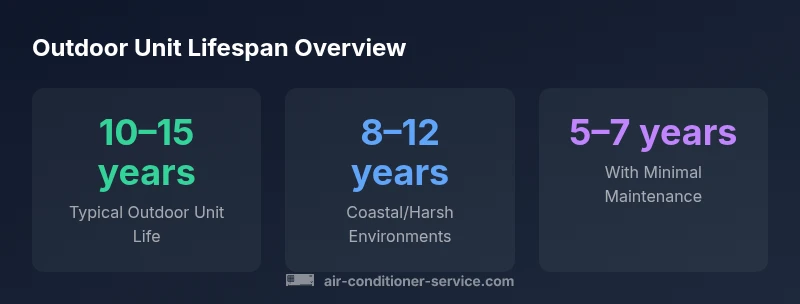
Outdoor air conditioners typically last 10 to 15 years, depending on climate, maintenance, and installation quality. See our detailed chart for factors, care steps, and lifecycle planning. Click through for the full guide.
What determines outdoor AC lifespan
For homeowners asking how long do air conditioners last outside, several interacting factors shape the lifespan of the outdoor unit. The most influential elements include environment, installation quality, airflow clearance, and ongoing maintenance. A well-protected condenser in temperate climates will typically reach the upper end of the expected range, while harsh coastal or industrial settings may accelerate wear. In general, the unit’s enclosure, weather exposure, and service history together decide how long the outdoor portion of your system will perform reliably.
Climate and exposure: how weather wears on outdoor units
The outdoor condenser sits in the open, so it bears the brunt of sun, wind, rain, snow, and salt in coastal regions. Ultraviolet exposure deteriorates plastic components and fins, while high humidity can corrode electrical connections. Dust, sand, and vegetation can clog the coil and reduce heat transfer. Severe weather events and power surges accelerate wear on capacitors and motors. In hot, dry climates, motors run longer and with higher amperage, which can shorten life if maintenance is neglected. Keeping the unit shaded if possible, and adding protections such as a roof overhang can modestly improve longevity.
Installation quality and airflow clearance
A proper installation with adequate clearance around the condenser is essential for heat dissipation and fan longevity. Obstructions—fences, plants, parked vehicles, or debris—raise operating temperatures and shorten life. Industry guidelines typically recommend at least 12 to 24 inches of clearance on all sides and 5 feet above the unit for safe airflow. The mounting surface should be level and solid to minimize vibration, which reduces bearing wear over time. If the unit sits on a cracked or uneven pad, moisture can infiltrate electrical components and hasten failure. A licensed installer should verify electrical connections, refrigerant charge, and starting components during commissioning and periodic service visits.
Routine maintenance that matters
Regular maintenance is the most effective way to maximize outdoor unit life. Key tasks include:
- Coil cleaning to prevent heat transfer loss and rust formation.
- Inspecting condenser fins and straightening bent fins with a fin comb.
- Checking and tightening electrical connections, capacitors, and contactors.
- Verifying refrigerant levels and ensuring there are no leaks.
- Clearing surrounding vegetation and debris that blocks airflow.
- Ensuring proper drainage around the base to prevent standing water. Seasonal checks before peak cooling season and a mid-year inspection by a technician help catch small problems before they become big failures. Documentation of service history can guide future interventions and replacement planning.
Signs that your outdoor unit may be nearing the end of life
Watch for unusual noises, reduced cooling efficiency, ice buildup on the coil, or frequent breaker trips. Visible corrosion on the cabinet or electrical components is another red flag. If you notice these indicators, consult a technician to diagnose whether a repair, part replacement (such as a capacitor or fan motor), or full replacement is most cost-effective. Early intervention can extend system life and prevent indoor comfort losses.
Replacement considerations and cost ranges
When replacement is warranted, homeowners weigh cost, efficiency, and reliability. Outdoor condenser replacements often occur as part of a full system refresh or when the existing unit can no longer justify repair costs. Replacement expenses vary widely, from a few hundred to several thousand dollars, depending on unit size, efficiency rating, and labor. Upgrading to a higher-efficiency model can reduce energy bills and improve comfort, potentially making replacement financially sensible in hot climates with long cooling seasons. A professional assessment helps determine whether a mid-life replacement is most economical or if a targeted component upgrade can extend life affordably.
A practical maintenance plan by climate and usage
Create a personalized plan that accounts for local weather, coastal exposure, and your household’s cooling needs. In mild inland areas, aim for annual coil cleaning and a mid-year technician visit. In coastal or industrial zones, increase inspections to twice yearly and protect the unit from salt spray and debris. For homes with heavy seasonality, schedule a pre-season check each spring to ensure optimal refrigerant charge and electrical integrity. Keeping records of service dates, parts replaced, and performance notes helps forecast when replacement becomes the best long-term option.
Outdoor unit lifespan by factor
| Factor | Typical Lifespan Impact | Notes |
|---|---|---|
| Climate exposure | 8-12 years | Coastal or industrial environments shorten life |
| Maintenance frequency | 12-15 years | Annual coil cleaning and service help longevity |
| Airflow clearance | 10-14 years | Adequate clearance improves heat transfer and reduces wear |
Common Questions
How long do outdoor air conditioners last?
Outdoor units typically last 10-15 years with proper maintenance. Lifespan varies by climate, installation quality, and service history.
Most outdoor units last about a decade and a half when well maintained.
What factors shorten outdoor AC life?
Harsh climates, exposure to salt spray or dust, poor installation, and neglectful maintenance accelerate wear and can shorten life.
Aggressive weather and skipped maintenance wear the unit down faster.
How can I extend outdoor unit life?
Keep the area clear, clean coils regularly, schedule annual service, and protect from debris and salt spray.
Keep it clean, clear, and serviced yearly.
When should I replace the outdoor unit versus the indoor?
If repairs exceed a substantial portion of the cost of a new system or efficiency gains justify upgrade, replacement is often best.
If repairs get costly or efficiency drops, replacement is wise.
Are there signs that require professional inspection?
Yes—unusual noises, refrigerant leaks, odd smells, or frequent outages warrant a professional check.
If you hear odd noises or see leaks, get a pro to inspect.
“Outdoor condensers last longer when they have ample surrounding space, are kept clean, and are shielded from harsh weather. Regular preventive maintenance can significantly reduce unexpected failures.”
The Essentials
- Schedule annual outdoor unit maintenance.
- Maintain at least 12 inches clearance around the condenser.
- Protect from debris and salt spray where possible.
- Watch for warning signs and plan replacements early.
- Consider higher-efficiency models to reduce wear in hot climates.