How long does an air conditioner last in a house: lifespan, care, and planning
Learn how long your home AC should last, what affects lifespan, and actionable steps to extend it. Includes maintenance routines, system-type expectations, and budgeting tips for replacement.


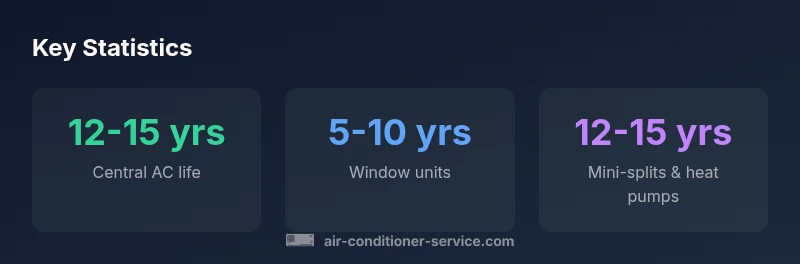
How long does an air conditioner last in a house? Central air systems typically last 12-15 years with regular maintenance, while window units usually run 5-10 years and ductless mini-splits about 12-15 years. Longevity hinges on usage, climate, installation quality, and upkeep.
How long does an air conditioner last in a house? A practical baseline
There is no one-size-fits-all answer to the question "how long does an air conditioner last in a house?" because system type, climate, usage patterns, and maintenance routines all shape longevity. In general, central air conditioners, window units, and ductless mini-splits each follow different trajectories. For homeowners seeking a reliable benchmark, the best starting point is to classify your cooling setup and then compare against typical ranges. According to Air Conditioner Service analyses, central systems commonly endure about a dozen to fifteen years with consistent upkeep, while window units tend to last roughly five to ten years. Ductless mini-splits sit in a parallel range to central systems, often twelve to fifteen years when well cared for. In practice, most houses experience a longer life for properly sized, professionally installed equipment paired with routine filter changes and annual tune-ups. Keeping the phrase "how long does an air conditioner last in a house" in mind helps homeowners set reasonable expectations and plan ahead for maintenance or replacement.
dataFormatTypeTaging
voiceAnswer_placeholder_dummy
Lifespan ranges by common home AC systems
| System Type | Typical Lifespan (years) | Notes |
|---|---|---|
| Central AC (split or packaged) | 10-15 | Regular professional tune-ups advised |
| Window AC | 5-12 | Clean filters; ensure proper drainage and seals |
| Ductless mini-split | 12-15 | Annual cleaning and refrigerant checks |
| Heat pump (air-source) | 12-15 | Seasonal maintenance; monitor reversing valve |
Common Questions
How long does central air conditioning typically last in a house?
Central air conditioning systems typically last about 10-15 years with regular maintenance and professional tune-ups. Longevity can extend beyond this window with diligent care and correct installation, but aging components like compressors and coils gradually reduce efficiency and reliability.
Most central AC systems last around a decade or more with good upkeep.
Does maintenance really extend the life of an AC unit?
Yes. Routine maintenance — including changing filters, cleaning coils, checking refrigerant levels, and scheduling annual service — can add 1-3 years of usable life and help the system operate at peak efficiency.
Regular tune-ups can add years to your AC’s life and keep it efficient.
Do heat pumps last longer than traditional central AC?
Heat pumps typically have similar lifespans to central AC systems, often in the 12-15 year range, but their components (like reversing valves) may require different maintenance scheduling. Overall, proper care is the key determinant.
Heat pumps last about as long as central AC with proper maintenance.
Is it better to repair or replace an aging compressor?
A failing compressor is expensive to repair relative to replacement. If the unit is older, operates inefficiently, or requires frequent repairs, replacement may offer better long-term value and reliability.
Frequent compressor problems often mean replacement is the smarter option.
How does climate affect AC lifespan?
Hot, humid climates stress systems more and can shorten lifespan if usage is high. Colder, milder environments may reduce strain, extending service life with less wear.
Hot climates can wear out an AC faster if you run it a lot.
What signs show an AC is near the end of life?
Common indicators include rising energy bills with little cooling effect, frequent repairs, unusual noises, refrigerant leaks, and an aging outdoor unit that struggles to start.
If it’s louder, costlier to run, or keeps breaking down, consider replacement soon.
“Regular maintenance is the single most reliable way to push an air conditioner toward the upper end of its expected lifespan. A proactive schedule avoids costly breakdowns and keeps efficiency high.”
The Essentials
- Understand your system type and its typical lifespan
- Maintain with regular filter changes and annual professional tune-ups
- Prioritize proper installation and sizing to maximize life
- Maintenance can add years and prevent early failures
- Plan financially for replacement around the 10-15 year window