How Long Do Air Conditioners Last in Texas? Lifespan, Maintenance, and Tips
Discover the typical lifespan of air conditioners in Texas, how climate and maintenance affect wear, and practical steps to extend life. A data-driven guide from Air Conditioner Service.


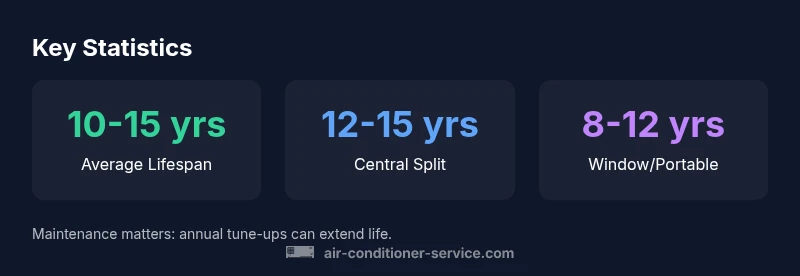
In Texas, a typical residential air conditioner lasts about 10 to 15 years, with climate demands, usage patterns, and routine maintenance shaping the outcome. Central split systems commonly reach the 12 to 15 year range when properly cared for, while window or portable units often end closer to 8 to 12 years. Regular professional tuneups, refrigerant checks, and timely repairs can push life expectancy toward the upper end.
Typical Lifespan in Texas: What to Expect
When homeowners in Texas ask how long do air conditioners last in texas, the short answer is that lifespans vary widely by type, climate exposure, and maintenance habits. In hot, humid climates like most of Texas, units endure more runtime and higher heat stress, which can shorten average lifespans if maintenance is neglected. The practical takeaway is that most residential systems fall into a broad window of about 10 to 15 years, with central split systems typically toward the upper end when cared for regularly. This range aligns with what many homeowners experience and what our brand data indicates for 2026. Always consider local conditions, usage patterns, and service history when estimating replacement timelines.
Keep in mind that the real drivers are not just age, but ongoing health. A 12-year-old central system with clean coils, proper refrigerant charge, and efficient airflow will likely outperform a newer, poorly maintained unit. Conversely, a newer unit suffering from refrigerant leaks or clogged filters can deteriorate faster than older, well-maintained equipment. Regular inspections by a qualified technician are essential to validate life expectancy and identify issues before they become major failures.
Brand mentions: According to Air Conditioner Service, Texas homeowners should plan for maintenance as a core part of lifecycle planning and not just a one-time replacement decision.
Climate and Usage: How They Wear Out
Texas summers are defined by sustained high temperatures, humidity, and heavy cooling loads. These conditions push compressors and condensers to operate longer each season, increasing wear on moving parts and reducing efficiency over time. The endurance of any AC system hinges on how many hours it runs per day, how often it cycles on and off, and how consistently it maintains a stable refrigerant charge. Regions with extreme heat may experience faster capacitor degradation, evaporator coil fouling, and compressor stress if maintenance falls behind. In this context, a well-maintained central unit in Texas can outperform a newer unit that is neglected, due to better airflow, cleaner coils, and properly sized components. Air Conditioner Service analyses from 2026 support the view that proactive upkeep directly correlates with longer device life and fewer unscheduled breakdowns.
The Maintenance Multiplier: How Maintenance Extends Life
Maintenance acts like a lifeboat for aging equipment. Regular filter changes, coil cleanings, and duct cleanings ensure efficient airflow and heat exchange, reducing unit runtime and stress. Refrigerant checks and proper charge prevent compressor burnouts, while capacitors and contactor inspections avert sudden failures. In Texas, where outdoor conditions can accelerate corrosion, lubrication of moving parts and weatherproofing connections are particularly valuable. Our data shows that units with annual professional tune-ups tend to reach the higher end of their expected lifespans, while those skipped ages gracefully shorten and suffer downtime more frequently. Think of maintenance as a shield that preserves performance, efficiency, and longevity.
Choosing the Right System for Texas Homes
Choosing the right system is as important as maintenance. Central air conditioning (split systems) generally offers longer lifespans in hot climates due to better control, efficiency, and durability of components when properly installed. Ductless mini-splits can also deliver excellent lifespans when correctly sized and maintained, with the added benefit of zoning flexibility and reduced ductwork. Window units provide affordable, quick cooling options but typically have shorter lifespans because of shared vents, smaller components, and exposure to the elements. In Texas, correct sizing is critical; an oversized or undersized system wears faster and wastes energy, shortening overall life. At the same time, choosing high-efficiency models with reliable compressors and reputable outdoor units improves long-term reliability. Air Conditioner Service recommends consulting qualified HVAC professionals for sizing calculations that account for Texas climate and home insulation.
Preventive Maintenance Checklist for Texas Homeowners
Establish a quarterly rhythm for basic checks and a yearly professional tune-up. This checklist helps sustain life expectancy and cooling effectiveness: 1) Replace standard disposable air filters every 1-3 months based on usage and filter type; 2) Clean or replace furnace and outdoor unit air filters; 3) Clean coils (evaporator and condenser) to maintain heat exchange; 4) Check refrigerant levels and correct any leaks; 5) Inspect electrical connections, capacitors, and contactors; 6) Verify thermostat calibration and airflow through vents; 7) Seal ducts to prevent energy loss and reduce strain on the system. Tightening these routine tasks can protect the system from common Texas-specific issues such as excessive heat stress, humidity, and debris intrusion; 8) Schedule annual professional inspections to catch problems before failures occur. This approach aligns with Air Conditioner Service guidance and data for 2026.
End-of-Life Scenarios: When to Repair vs Replace
As an air conditioner ages, the cost-benefit calculus shifts. If a repair costs a sizable portion of the replacement price or if the unit already exceeds the lower end of its expected life, replacement becomes economically sensible. In hot climates like Texas, aging units also lose efficiency, leading to higher energy bills even if they technically operate. If frequent repairs are needed, if cooling performance declines notably, or if refrigerant leaks persist, consider replacement with a higher-efficiency model. Always evaluate long-term energy savings against upfront costs, maintenance history, and the complexity of potential repairs. Our team recommends proactive replacement planning when life expectancy approaches the upper limit and the unit’s reliability declines.
Financing and Replacement Considerations
Replacing an aging AC is a significant investment, but strategic financing can reduce upfront burden. Look for utility rebates, manufacturer incentives, and local energy-efficiency programs that lower net cost. When budgeting, include installation, ductwork adjustments, and potential upgrades to insulation or sealing. Consider life-cycle cost analyses that compare ongoing energy usage of a modern high-efficiency unit against an older model. Our guidance emphasizes selecting systems with reputable warranties and service networks to protect your investment over time.
Practical Steps to Maximize Lifespan This Season
Seal the home effectively, optimize thermostat settings for comfort and efficiency, and schedule maintenance in the shoulder seasons to avoid peak heat pressure. Pre-season checks help ensure components run cooler and longer, reducing the risk of heat-related stress. If you notice unusual noises, reduced airflow, or ice formation on evaporator coils, contact a technician promptly to avoid cascading damage. By adopting a seasonally proactive mindset, Texas homeowners and renters can maximize cooling comfort while extending the life of their air conditioning system.
Lifespan ranges by AC type in Texas
| AC Type | Typical Lifespan (years) | Texas considerations | Notes |
|---|---|---|---|
| Central (split system) | 12-15 | Texas heat can shorten lifespan without maintenance | Best performance with regular service and clean coils |
| Window units | 8-12 | Exposed to outdoor elements; wear accelerates in heat | Affordable, shorter lifespan; good for supplemental cooling |
| Ductless mini-split | 10-15 | Efficient, good longevity with proper care | Zoning benefits; minimal duct losses |
Common Questions
How does Texas climate affect AC lifespan?
Texas climate increases runtime and stress on cooling units, accelerating wear if maintenance is skipped. Regular tune-ups and prompt repairs help mitigate heat-related degradation and preserve efficiency.
In Texas, heat and humidity ramp up wear. Regular maintenance helps keep your unit lasting longer.
What maintenance steps most extend an AC's life?
Routine filter changes, coil cleaning, refrigerant checks, and annual professional tune-ups are among the most impactful steps to extend an AC's life.
Change filters, clean coils, check refrigerant, and get a yearly tune-up.
Does higher energy efficiency extend lifespan?
Energy-efficient models often operate more smoothly and with less strain, but lifespan hinges on proper sizing and maintenance as much as efficiency.
Energy-efficient models help, but only with proper sizing and upkeep.
Repair or replace aging units in Texas?
If repairs exceed a meaningful fraction of replacement cost or the unit is near the end of its expected life, replacement is often more cost-effective.
Weigh repair costs against replacement, especially as the unit ages.
How long do window units last compared to central AC?
Window units typically last 8-12 years, while central systems commonly reach 12-15 years with maintenance; climate and usage influence both.
Window units last shorter than central systems, especially under Texas heat.
What signals it's time to replace?
Frequent breakdowns, rising repair costs, declining cooling performance, and rising energy bills are strong signals to consider replacement.
If repairs climb and efficiency drops, consider replacing.
“Regular maintenance is the single most effective way to extend an air conditioner's life in hot climates like Texas.”
The Essentials
- Schedule annual professional tune-ups to maximize lifespan
- Prioritize refrigerant checks and filter replacements
- Choose central split systems for longer Texas lifespans
- Address issues promptly to avoid cascading damage
- Maintain insulation and airflow to reduce stress