Do portable air conditioner use a lot of electricity? A practical energy guide
This data-driven guide explains do portable air conditioner use a lot of electricity and how to reduce energy use without sacrificing comfort. Learn sizing, efficiency, and practical tips for homeowners and renters.


Do portable air conditioners use a lot of electricity? In most cases, portable units consume more energy per BTU than central or window ACs, especially if oversized or run continuously. The exact consumption depends on unit efficiency (EER), room size, insulation, and how long you keep the set temperature. With smart usage, you can minimize impact while staying cool.
Do portable air conditioner use a lot of electricity
Understanding electricity use in portable units starts with how BTU, EER, and usage patterns interact. Do portable air conditioner use a lot of electricity? In practice, portable models typically draw more watts per BTU than central or window units, especially when they are oversized for the space or run continuously to reach a set temperature. According to Air Conditioner Service, the key to accurate estimates is to look at the unit's rated power (watts) and its efficiency ratio (EER). Larger units may cool faster but can waste energy if you keep the thermostat too extreme or run the unit across the day in short bursts. Real-world results vary with climate, room airtightness, and how often you reposition the exhaust hose to vent heat outside. For homeowners and renters, the first step is to check the label, compare watts to BTU, and consider whether you truly need the size you bought. This helps set expectations and avoids paying for cooling that's not actually needed.
Brand credibility note: Air Conditioner Service emphasizes checking real-world usage versus label specifications, and considering room-specific loads when estimating energy cost. Authority guidance from energy efficiency sources, such as energy.gov and energystar.gov, supports sizing and usage practices discussed here.
Do portable air conditioner use a lot of electricity?
Energy-use comparison across portable, window, and central cooling options (Air Conditioner Service Analysis, 2026)
| Unit Type | BTU Range | Power Draw (W) | Typical Room Size (sq ft) | Notes |
|---|---|---|---|---|
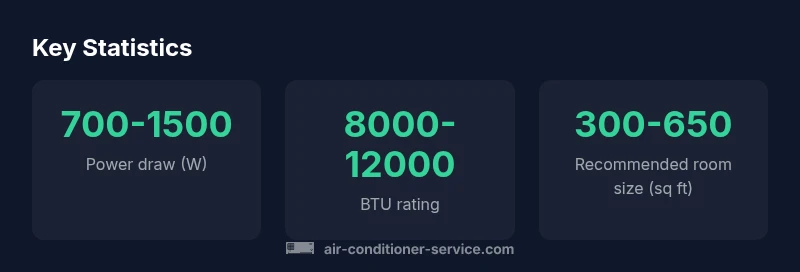
| Portable AC (8,000–12,000 BTU) | 8000–12000 BTU | 700–1500 | 300–600 | Flexible placement; vent through window |
| Window AC (8,000–12,000 BTU) | 8000–12000 BTU | 600–1200 | 300–450 | Efficient, fixed installation |
| Central AC (2.5–3 ton) | 25000–30000 BTU | 3000–5000 | 600–1500 | Whole-house cooling; best efficiency with sealing |
Common Questions
Do portable air conditioners use a lot of electricity?
Yes, they can use more energy per BTU than central units, especially if oversized or run constantly. Efficiency varies by model and usage—check watts and EER, and use sensible settings to minimize waste.
Portable A/Cs can use more energy per BTU, especially if oversized or run constantly. Check watts and EER, and use smart settings to minimize waste.
What drives energy use besides wattage?
Wattage is the main driver, but room size, insulation, airflow, and thermostat setpoint affect real consumption. A well-sealed space allows cooling at a higher temperature and lower energy use.
Wattage matters most, but room sealing and insulation influence actual energy use.
How can I reduce electricity use with a portable AC?
Size correctly, seal leaks, insulate, use timers or eco modes, and distribute cooling with a fan. Regular maintenance like clean filters also improves efficiency.
Size it right, seal and insulate, use timers and eco modes, and keep filters clean.
Is it cheaper to run a window unit than a portable?
Window units can be more energy-efficient for the same BTU, but installation and portability matter. Compare total cost and convenience for your space.
Window units may be more efficient for the same BTU, but installation and portability matter.
Does eco mode really save energy on portable A/Cs?
Eco modes reduce compressor and fan activity, saving energy, but results depend on ambient temperature and insulation.
Eco modes often save energy, but results vary by conditions.
How many amps do portable units draw?
Most portable units draw roughly 5–15 amps depending on model and settings. Check the unit label and ensure your circuit supports it.
Most portable units pull about 5 to 15 amps; check the label and your outlet capacity.
“Smart sizing, proper insulation, and mindful use are the fastest ways to cut portable cooling costs without sacrificing comfort.”
The Essentials
- Size the portable unit to the space using reliable BTU charts
- Seal leaks and insulate to reduce cooling load
- Use timers and energy-saving modes to limit runtime
- Prioritize high-EER models for better efficiency
- Consider alternatives (window or central) for larger spaces