Is Window Air Conditioner Better Than Portable? A Practical Guide
A data-driven comparison of window vs portable air conditioners. Learn which option fits your space, budget, and rental needs, with practical tips and a clear verdict.


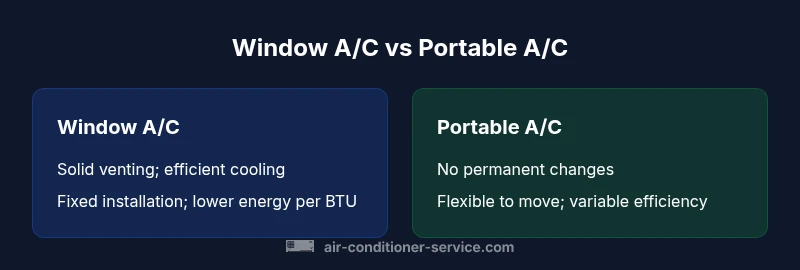
Window air conditioners typically deliver more cooling power per dollar and stay more energy-efficient in fixed spaces, making them usually the better option for long-term setups; portable models offer flexibility for renters or temporary needs but often cost more to operate per BTU. See our detailed comparison for scenarios where each shines.
Cooling fundamentals and the core question
When weighing is window air conditioner better than portable, the starting point is understanding how each type vents and dissipates heat. Window units position the condenser and compressor in the same enclosure that directs hot air outside through an exterior opening, which often reduces back-pressure and improves efficiency in fixed spaces. Portable units, by contrast, vent hot air through a hose to the outside, which can create back-pressure and reduce cooling efficiency if the exhaust path is not optimized. For homeowners and renters alike, the central question becomes: how do space, window availability, and usage pattern influence overall performance? In this guide, we explore practical factors that influence decisions about is window air conditioner better than portable in real-world terms.
Key takeaway: efficiency and cooling effectiveness rise when venting is direct and seals are tight, a condition window units more reliably meet in traditional installations.
Sizing and capacity: matching BTU to space
Cooling capacity is not a one-size-fits-all metric; it depends on room size, insulation quality, sun exposure, and occupant heat load. Window units often offer a broad range of BTU options within a single frame, making it easier to pick a model that aligns with a fixed space. Portable units typically come in smaller BTU options per unit, which means you’ll often need multiple units for larger spaces, increasing complexity and energy use. The practical implication is straightforward: for a typical living room or bedroom under moderate sunlight, a properly sized window unit can deliver steady comfort with fewer run cycles than a portable model. When is window air conditioner better than portable? When you prioritize consistent comfort in a defined space with a window you can dedicate for venting.
Pro tip: use a simple room calculator or consult a professional to estimate BTU needs before shopping.
Installation and relocation: flexibility vs. permanence
A central difference between window and portable units is installation. Window A/Cs require a window-mounted mount and a secure frame; this creates a more permanent setup that benefits from a snug seal and less ambient leakage. Portable units are designed for mobility and require no permanent structural changes, which makes them attractive for renters or seasonal use. However, mobility comes at a cost: periodic reconfiguration, venting adjustments, and sometimes higher energy consumption when moved between rooms. If you are asking is window air conditioner better than portable for long-term occupancy in a fixed space, installation quality and window seal integrity become deciding factors.
Practical guidance: ensure window sashes seal well and that the unit’s weight is supported to avoid damage to the window frame or sill.
Energy efficiency and operating costs: long-term economics
Efficiency varies by model, but window units often deliver higher cooling efficiency per BTU when properly installed and sized for the space. This means lower electricity use for the same cooling effect in a fixed space compared with a portable unit placed in the same room. Portable models, while flexible, tend to incur higher operating costs per BTU, especially if you run them at higher speeds for longer periods or in rooms with poor insulation. When considering is window air conditioner better than portable, think about the total cost of ownership: initial purchase, installation costs (if any), energy use, and potential cooling losses due to imperfect venting or window gaps. Air Conditioner Service analysis suggests that fixed venting and airtight seals contribute to better energy performance over time.
Budget tip: focus on models with dual- or triple-function features (dehumidification, fan modes) to maximize usability without increasing power draw.
Noise, comfort, and user experience: day-to-day living
Noise levels influence perceived comfort more than a lot of spec sheets reveal. Window A/Cs place the noisy compressor closer to the exterior, but when installed correctly with proper insulation and window sealing, the interior noise can be manageable. Portable units, though often marketed as quieter, still produce a noticeable hum due to their compact compressors and fans working closer to occupants. Beyond sound, user experience also hinges on ease of venting, maintenance access, and control layout. If you value a quiet bedroom, carefully compare decibel ratings and read user reviews that reflect real-world performance in similar room sizes. In is window air conditioner better than portable terms, the verdict often leans toward window units for bedrooms and living rooms where stable, continuous cooling matters more than ultimate portability.
Maintenance, durability, and serviceability
Window units have fewer movable parts in the airflow path and sit in a fixed frame, which can simplify cleaning and reduce the likelihood of venting obstructions. Portable models require regular hose checks, exhaust vent cleanouts, and more frequent filter changes if used near dusty environments. Since maintenance is a significant portion of long-term costs, choosing a model with easy-access panels and widely available filters is wise. The Air Conditioner Service approach emphasizes routine filter changes, annual inspection of seals, and checking for ice buildup as essential steps to prevent efficiency loss and to extend the unit’s life. If you frequently move the device between rooms, inspect caster wheels and the exhaust hose for wear to keep performance consistent.
Real-world scenarios: renters, homeowners, and seasonal use
Renters often prefer portable A/Cs due to non-permanent installation; however, a poorly vented portable unit in a small apartment can create moisture and humidity issues, making it less comfortable than a properly installed window unit. Homeowners with a defined space and a suitable window may find window A/Cs deliver better energy efficiency and reliability, especially in seasonal climates where quick, predictable cooling is needed. For seasonal cabins or second homes, a mobile approach could work, but expect higher energy costs if cooling cycles are frequent. The best practice is to evaluate room-by-room needs, window accessibility, and whether you anticipate moving the unit frequently. In short, is window air conditioner better than portable? It depends on how you frame comfort, energy, and lifestyle needs.
Cost considerations: upfront, running, and replacement
Upfront costs vary by BTU rating and brand, but in many situations, window units cost less to purchase per BTU than a comparable portable unit. Running costs hinge on efficiency and usage patterns; fixed installation can reduce air leakage, offering lower long-term energy usage. If you plan to switch spaces often, the sum of moving, venting, and potential extra energy use for portable options can offset the flexibility they provide. When evaluating is window air conditioner better than portable, create a simple budget that includes the expected lifespan of the unit, possible replacement needs, and the value of a snug, well-sealed setup.
Decision framework: quick criteria to choose
To decide is window air conditioner better than portable for your situation, apply a simple framework: (1) room size and insulation; (2) window availability and sealing; (3) rental status versus ownership; (4) tolerance for noise and maintenance; (5) long-term energy costs. If you answer yes to fixed space, solid sealing, and long-term occupancy, window A/C is likely the better choice. If you prioritize mobility, temporary cooling, and avoiding any window alteration, portable A/C has a strong case. This framework helps homeowners and renters align the option with practical constraints and comfort expectations.
Comparison
| Feature | Window A/C | Portable A/C |
|---|---|---|
| Cooling capacity (BTU) guidance | Model-dependent; window units cover a wide range within a frame | Model-dependent; typically smaller per unit; may need multiple units for larger spaces |
| Install ease | Requires secure window mount and seal; semi-permanent setup | No permanent changes; easy to relocate; venting setup each time |
| Energy efficiency | Often higher efficiency per BTU in fixed spaces with proper venting | Often lower efficiency per BTU; efficiency depends on vent path and room conditions |
| Cost (upfront long-term) | Typically lower upfront cost per BTU and lower long-term operating costs in many scenarios | Often higher total cost per BTU and more energy use over time |
| Mobility | Limited mobility due to installation | High mobility; designed to move between rooms or spaces |
| Noise and comfort | Result depends on installation; can be quiet with proper mounting | Can be louder due to compact design and exhaust path, depending on model |
Strengths
- Strong cooling performance for fixed spaces
- Efficient energy use per BTU when properly sized
- No ducts required and simple repair paths
- Space-efficient for rooms with available window
- Easier to replace or upgrade without modifying walls
The Bad
- Window installation can affect security and weather sealing
- Permanent window opening may limit views and ventilation choices
- Noise reflects room setup and unit quality; not ideal for ultra-silent spaces
- Relocation is limited once installed in a window
Window A/C is generally the better long-term option for fixed spaces; portable is best for renters or temporary needs
For defined spaces with a suitable window and long-term occupancy, a window unit typically delivers better efficiency and lower operating costs. Portable units shine in rental situations or when you must move cooling between rooms, despite generally higher energy use per BTU.
Common Questions
Is a window air conditioner more energy-efficient than a portable model?
In many cases, window units offer better energy efficiency per BTU due to fixed venting and tighter seals, but actual results depend on model quality and proper installation.
Window units often deliver better energy efficiency per BTU, especially when installed properly. Model choice matters, so compare efficiency ratings.
Can I install a window AC myself, or should I hire a pro?
Most window units are designed for DIY installation with basic tools. Follow the manufacturer’s instructions, ensure the window is secure, and use any included mounting kit.
Most people install these themselves using the manual; secure the window and seal properly.
Are portable A/Cs easier for renters?
Yes, portable A/Cs require no permanent changes, making them attractive for renters. However, ensure the venting path is efficient and insulation is adequate to avoid energy waste.
Renters often choose portable units for flexibility, but watch energy use and venting setup.
How loud are window vs portable air conditioners?
Noise varies by model, but window units can be louder indoors if not well insulated; modern models with good seals and mounting often minimize interior sound. Portable units can be quieter but still audible.
Noise depends on model; check decibel ratings and installation quality.
Do window or portable A/C units handle humidity better?
Both types dehumidify as a byproduct of cooling, but efficiency and airflow path influence how effectively humidity is removed. A properly sized unit in a well-sealed room will generally feel drier.
Both remove humidity with cooling, but room sealing and size matter for effectiveness.
What is the best use case for each option?
Window A/C is ideal for fixed spaces with a suitable window and long-term occupancy, delivering better efficiency. Portable A/C is better for renters or temporary cooling needs across multiple rooms or spaces.
If you need a stable setup, window units win; if you need mobility, go portable.
Can I replace a portable unit with a window unit later on?
Yes. If you anticipate staying in a space long-term, upgrading to a window unit can improve efficiency and cooling consistency. Consider window access, frame integrity, and local regulations before installation.
You can upgrade when you’re ready to commit to a fixed setup.
Are there safety concerns I should be aware of?
Follow manufacturer safety guidelines for both types. Ensure proper electrical load, avoid blocking exits, and secure any hoses or cords to prevent tripping hazards.
Safety basics apply to both, especially electrical and venting considerations.
The Essentials
- Choose window A/C for fixed spaces with reliable venting.
- Opt for portable A/C when mobility and non-permanent installation matter.
- Prioritize proper sizing and sealing to maximize efficiency.
- Balance upfront cost with long-term energy use for total value.
- Consider noise preferences and maintenance needs in your decision.