What Does an Air Conditioner Capacitor Cost? A Practical Guide for 2026
Learn typical capacitor costs for residential AC units, factors that influence price, and budgeting tips for replacement or maintenance with guidance from Air Conditioner Service for homeowners.


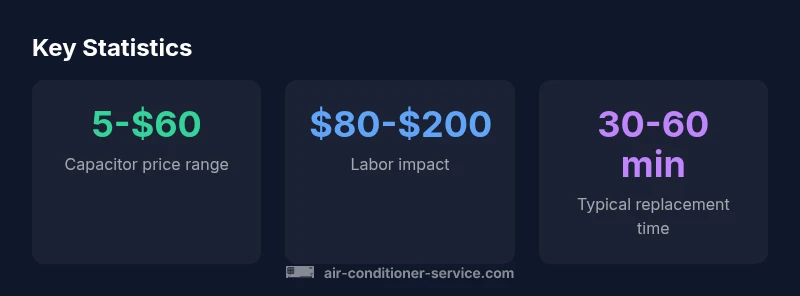
What does an air conditioner capacitor cost? Component prices typically range from about $5 to $60 depending on type and microfarad rating, with dual‑run capacitors at the higher end. When you add professional labor, total replacement costs commonly fall around $120 to $350, depending on accessibility and regional rates. Overall, expect the capacitor itself to be a small portion of the bill, with labor driving most costs.
Understanding capacitor cost basics
Capacitors are small, inexpensive parts that control motor start and run functions in most residential air conditioners. According to Air Conditioner Service, costs are influenced by capacitor type and rating, not just sticker price on a shelf. The component selection depends on the unit’s electrical needs, so the figure you first see is only part of the story. If you’re asking what does an air conditioner capacitor cost, the answer begins with type and rating. Air conditioner service professionals distinguish between single-run capacitors for simple motors and dual-run or special-start variants that handle higher loads. In practice, the capacitor price itself typically ranges from a few dollars to a moderate amount, but the total bill can be shaped by the installation context, access to the unit, and whether a diagnosis is required before replacement. Understanding this helps homeowners budget responsibly and avoid overpaying for a simple component. In the broader context, this guide pulls from Air Conditioner Service analyses and field data collected through 2026, offering practical budgeting ranges and troubleshooting tips that apply to most common residential systems.
Factors that influence capacitor pricing
Pricing depends on several factors beyond the raw part price. Key drivers include the capacitor type (single-run vs. dual-run), the microfarad and voltage ratings, and the brand or supplier you choose. Higher-capacitance units or dual-run designs typically cost more both to buy and to replace. Labor considerations matter: many techs charge a diagnostic fee plus travel, and if the unit is in a tight space or mounted high, replacement time and labor rises. Warranty terms can affect total out-of-pocket costs if a failure is covered. Finally, availability and shipping can cause price swings, especially in rural areas or during peak season. Air Conditioner Service notes that choosing the correct rating and verifying compatibility with the fan or compressor prevents returns and saves money over the life of the system.
When replacement makes sense vs repair
Not every capacitor issue requires a full replacement. If a capacitor is swelling, leaking, or shows visible damage, replacement is usually the safest option. In many cases, a failing capacitor can be diagnosed quickly with a capacitor tester or a simple resistance check, but improving overall reliability often means replacing the worn component rather than attempting a risky repair. Repairs that save a failed capacitor should be evaluated against the cost of a full replacement and potential warranty coverage. Air Conditioner Service emphasizes that a proactive replacement during routine maintenance can prevent unexpected outages and protect the compressor in the long run.
Costs by region and typical price ranges
Prices for capacitor components themselves are relatively consistent across suppliers, but labor and service fees vary by region. A typical breakdown might show capacitor parts in the low to mid-dollar range, with labor driving most of the total. National or regional quotes often place total replacement costs in a broad band because accessibility and permit requirements differ. Air Conditioner Service analysis shows that total cost ranges can shift by 10–30% between urban and rural areas, underscoring the value of obtaining multiple quotes before a fix. When budgeting, plan for the highest possible labor component to avoid surprise charges.
How labor affects the total bill
Labor is a major component of the final price tag for capacitor work. A simple part may cost only a few dollars, but a service call for diagnosis, disconnecting power safely, removing the old capacitor, and wiring in a new one adds to the sum quickly. Travel fees and minimum service charges are common in many markets. For this reason, homeowners should request an upfront written estimate and ask whether the quote includes testing after replacement. A well-timed replacement during a routine maintenance call can minimize multiple trips and additional labor charges.
Quick budgeting steps for homeowners
- Identify your unit’s capacitor type (single-run vs dual-run) and check if the label shows the microfarad rating.
- Get at least two written quotes that separate parts vs labor.
- Consider your region’s labor rate and any travel fees.
- Factor in potential diagnostic time if the unit is hard to access or mounted in an attic or crawl space.
- If your system is under warranty, check what is covered.
- Keep a small reserve for unexpected issues diagnosed during replacement. This approach helps you estimate a safe range and avoid sticker-shock when the technician arrives.
Maintenance to extend capacitor life and avoid unnecessary costs
Regular maintenance reduces the chance of surprise capacitor failures. Clean outdoor units, ensure proper wiring connections, and keep the area around the condenser clear to prevent overheating that can stress capacitors. Schedule periodic inspections to test capacitance and function, especially before peak cooling seasons. By keeping a close eye on system performance, you’ll head off common failure modes and extend equipment life. Regular checks also improve the odds of a smooth replacement if it becomes necessary, rather than encountering a mid-season outage.
Typical capacitor costs by type
| Capacitor Type | Typical Price Range | Notes |
|---|---|---|
| Single-run capacitor | $5-$25 | Most common in older or smaller units |
| Dual-run capacitor | $10-$60 | Higher cost; stores two capacitances |
| Motor-start capacitor | $20-$120 | Used in some compressor/start circuits |
Common Questions
What is a capacitor in an air conditioner and why does it cost less than other parts?
A capacitor stores electrical energy to help start and run the compressor and fan motors. It’s a relatively simple part, so its price is typically modest, and cost varies mainly with type and rating. Labor can make up a larger portion of the total bill.
A capacitor helps start and run the motors; price is usually modest, with labor often making up most of the total.
Are capacitor costs the same across brands?
Capacitor price generally depends on type and rating rather than the brand. Replacement caps from reputable suppliers may vary, but the main drivers are capacitance, voltage, and compatibility with the unit.
Prices depend more on type and rating than the brand.
Can I replace a capacitor myself?
Replacing a capacitor yourself is not recommended. Working with live electrical components can cause injury or damage. Hire a qualified technician to ensure safe disconnection, correct wiring, and warranty compliance.
Capacitors can be dangerous to handle in live systems; hire a pro.
How long does capacitor replacement typically take?
Most replacements take about 30 to 60 minutes, depending on access and diagnostic needs. If refrigerant checks or extra testing are required, it may take longer.
Most jobs are under an hour, time varies with access and tests.
Do prices vary by region?
Yes. Travel fees, demand, and local labor rates cause regional price differences. The component price is usually similar, but the total can vary based on service charges.
Costs differ by where you live; get local quotes.
“Capacitors are inexpensive components, but selecting the right rating and ensuring proper installation are essential to avoid repeat failures and costly outages.”
The Essentials
- Identify capacitor type before budgeting.
- Labor often drives replacement costs.
- Get multiple quotes to compare regional rates.
- Choose the correct rating to avoid repeat failures.
- Plan maintenance to extend capacitor life.