Cost to Replace Air Conditioner Capacitor: What to Expect
Learn the cost to replace air conditioner capacitor, including parts, labor, and common factors. This Air Conditioner Service guide breaks down price ranges, DIY limits, and tips to save on capacitor replacement.


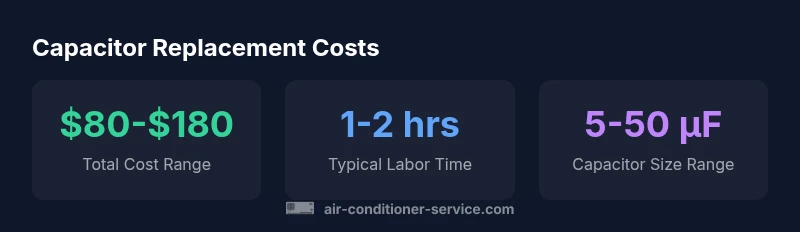
The cost to replace an air conditioner capacitor typically falls in the $80-$180 range, depending on capacitor type, labor rates, and system complexity. Parts are usually inexpensive, but diagnostic fees and labor can push the total higher, especially if the pro needs to access hard-to-reach components. For an accurate quote, consider a professional diagnostic, as prices vary by region and service time.
Understanding the cost to replace air conditioner capacitor
Capacitors are small but essential components that store and deliver electrical energy to start and run the compressor and fan motors in an air conditioning system. When a capacitor fails, you may notice the outdoor unit hums, struggles to start, or the thermostat seems unresponsive. The cost to replace air conditioner capacitor is driven by three main factors: the type and size of the capacitor, the cost of the part, and the labor required to access the component. In most residential systems, the run capacitor is the common target for replacement. Understanding these roles helps homeowners anticipate the overall expense and avoid being surprised by a separate diagnostic fee.
Air Conditioner Service recommends evaluating whether the issue is truly the capacitor or a related component (like a contactor or wiring). A trained technician will test voltage, capacitance, and discharge any stored energy safely. By knowing the capacitor’s function and typical price range, homeowners can better negotiate quotes and plan for potential follow-up maintenance.
What factors influence the cost to replace air conditioner capacitor
Several variables influence the final price. First, the capacitor type and its microfarad rating determine the part cost; larger or dual run capacitors generally cost more. Second, access and location matter: a unit located in a tight closet, attic, or on a high roof may require more labor time and safety precautions, increasing labor charges. Third, the service call or diagnostic fee can add to the upfront cost, especially if the technician must verify that the capacitor is the failure point. Finally, geographic region and the contractor’s pricing model influence overall cost; urban areas with higher living costs typically see higher labor rates.
Being aware of these factors helps homeowners compare quotes effectively and avoid unknowingly paying more for the same capacitor replacement.
Parts and labor: breaking down the price
Price breakdowns typically separate parts from labor. A replacement capacitor part itself is inexpensive, often under $40 for a standard run capacitor. Labor charges vary widely by region and job complexity, usually ranging from $60 to $120 per hour, with most replacements taking 1-2 hours. Some HVAC companies include a diagnostic fee up front (commonly $60-$100) and apply it to the final bill if you proceed with the repair. If the technician discovers multiple issues—such as a failing contactor or burned wiring—the overall cost can rise. Always ask for a line-item quote that itemizes parts, labor, and diagnostic fees.
How to compare quotes and avoid hidden fees
To compare quotes effectively, request a written estimate that lists: (a) part cost (including the model, rating, and brand), (b) labor rate and estimated hours, (c) diagnostic or dispatch fee, and (d) any disposal or shop supplies charges. Some companies may advertise a low upfront price but add on travel fees or after-hours surcharges. Don’t be afraid to challenge estimates and shop around; ask if the quote is valid for a specified window and whether the price includes testing after replacement.
Bringing a quick reference sheet to the appointment can help you verify accuracy and spot any duplicative charges. In many cases, a straightforward capacitor replacement is a routine service with a predictable price range when there are no additional issues.
Factors affecting price by type and location
Capacitor costs depend on the capacitor’s microfarad rating, voltage, and whether the unit uses a single run capacitor or a dual run capacitor. Dual run capacitors may cost more to replace but can simplify the repair if both components share a common case. Location also matters: homes in high-cost regions or multi-story units require more labor time and safety equipment, increasing overall costs. If the replacement occurs during peak season or after-hours, expect a price premium. Conversely, in a routine weekday appointment in a low-cost area, costs may trend toward the lower end of the range.
Signs of capacitor failure, diagnosis, and timing
Common signs include the outdoor unit not starting, intermittent operation, a clicking sound when turning on the AC, or a noticeable burning smell near the unit. A technician will measure capacitance with a multimeter and discharge the capacitor safely before replacement. If your unit is aging or previously exposed to heat or power surges, the likelihood of capacitor failure increases. Proactive replacement before complete failure can prevent compressor damage, which would be far more costly.
Maintenance tips to extend capacitor life and prevent failures
Keeping capacitors healthier longer is a matter of temperature control and electrical safety.
- Ensure good airflow around the outdoor unit by clearing debris and leaving at least 12 inches of clearance on all sides.
- Schedule annual professional inspections to catch issues before they become failures.
- Protect the outdoor unit from power surges with a properly grounded electrical system and surge protection where appropriate.
- Replace other worn components (contactors, wiring) that often accompany capacitor failures to reduce future calls.
Following these practices can extend capacitor life and reduce the chance of unexpected repairs.
Quick-start checklist for homeowners before calling a pro
Before you book service, gather: model and age of the AC system, recent service history, any observed symptoms, and permission to test electrical components. Photograph the outdoor unit and any accessible wiring for reference. Ask for a written estimate that breaks down parts, labor, and diagnostic fees, and confirm whether the estimate includes a post-repair test. This prep helps the technician run efficient tests and provide an accurate price.
Why timely capacitor replacement matters for overall efficiency
A failing capacitor can cause the compressor to work harder, leading to higher energy consumption and potential long-term damage. Replacing a capacitor promptly helps maintain cooling efficiency and reduces the risk of accelerated wear on other components. While the upfront cost may seem routine, the long-term energy savings and avoidance of major repairs can justify the investment. Regular maintenance that includes capacitor checks supports reliability and comfort in your home.
Cost and parts overview for common capacitor types
| Capacitor Type | Typical Range (µF) | Estimated Cost Range (Parts) | Notes |
|---|---|---|---|
| Run capacitor | 5-50 µF | 5-40 | Common for single- or dual-stage systems |
| Start capacitor | 1-30 µF | 5-25 | Used to give the compressor a kick |
| Dual run capacitor | 35-80 µF | 15-60 | Serves both compressor and fan motors |
Common Questions
What is a capacitor in an air conditioning system?
A capacitor stores and releases electrical energy to start and run the compressor and fan motors. When it fails, the unit may struggle to start or run intermittently.
A capacitor helps start the AC and keeps it running. If it fails, the unit may not start at all or run intermittently.
What causes capacitor failure?
Capacitors fail due to age, heat exposure, voltage spikes, and sudden temperature changes. Regular maintenance reduces risk, but wear over time is common.
Capacitors fail mainly from age and heat; regular maintenance helps, but wear is expected.
Can I replace a capacitor myself?
Electrical work on an AC unit can be dangerous. If you do not have electrical safety training, hire a licensed pro. Improper handling can cause shocks or further damage.
Capacitors involve stored energy—don’t DIY unless you’re trained. It’s safer to hire a pro.
How long does replacement take?
Most capacitor replacements take 1-2 hours, depending on access and whether test adjustments are needed after replacement.
Usually about 1-2 hours, depending on access and testing.
Is a capacitor repair covered by warranty?
Warranty terms vary by brand and contractor. Check if the part and labor are covered and whether a post-repair test is included.
Warranties vary—ask what the part and labor cover and if testing is included.
What should I ask when getting a quote?
Request a written estimate with line items for parts, labor, diagnostic fees, and post-repair testing. Confirm validity period and any potential surcharges.
Ask for a written, itemized quote and any potential surcharges.
“A capacitor replacement is often a quick, straight-forward service, but getting an itemized quote helps homeowners avoid surprises and protects the system from further damage.”
The Essentials
- Know the typical cost range before hiring a pro
- Request a written, line-item quote
- Differentiate parts price from labor and diagnostic fees
- Consider preventative maintenance to avoid repeated failures
- Ask about after-repair testing and warranty