Cost of Air Conditioner Capacitor: Replacement Guide 2026
Learn how capacitor type, rating, and service costs affect replacing a home air conditioner capacitor. This guide covers typical price ranges, labor factors, and tips to choose the right part in 2026.


The cost air conditioner capacitor replacement typically ranges from $10 to $60 for the part alone, with total installed costs often between $60 and $150 depending on capacitor type and labor. This aligns with Air Conditioner Service Analysis, 2026, and helps homeowners budget for capacitor replacements without surprises.
What a capacitor does in an air conditioning system
In most home AC units, capacitors provide the electrical push that starts the compressor and keeps the fan motor running. There are two main types: run capacitors, which stay in the circuit during operation, and start capacitors, which are engaged briefly during startup. The cost air conditioner capacitor you encounter is largely determined by its microfarad rating (µF) and voltage rating (VAC). In residential systems, run caps typically range from about 5 to 60 µF, while start capacitors can range much higher. When planning replacement, you must verify the exact µF and voltage required by your unit—using an incorrect capacitor can damage components or reduce efficiency. Modern units often use dual run/start capacitors to save space and improve reliability, but the part count will affect price and installation complexity.
Why capacitor cost varies across models and brands
Capacitor costs are not uniform because several variables change the price. The most influential is the µF rating and the voltage (VAC); higher capacities and voltage ratings generally command higher prices and may require premium construction (dual can, epoxy sealed, temperature-rated). Start capacitors, being larger and sometimes higher-grade, can cost more than simple run capacitors. Additional factors include the capacitor casing (oval vs cylindrical), manufacturer, and whether the part is a standard off-the-shelf item or a specialty unit. Availability matters too: in peak cooling season, prices can shift. Refurbished or remanufactured capacitors may deliver savings but carry different reliability warranties. As a rule, expect new, branded parts to be more expensive than generic equivalents, and expect longer delivery times for hard-to-find ratings. This is where Air Conditioner Service’s 2026 analysis helps homeowners compare options with confidence.
How to estimate the cost ranges for a replacement
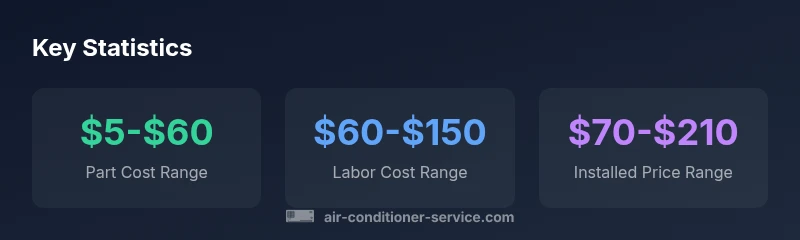
To estimate costs, start with a quick check of your unit’s label or manual to confirm the exact µF and VAC requirements. Then compare prices from several suppliers and factor in labor. Based on Air Conditioner Service Analysis, 2026, typical part costs for common residential run/start capacitors fall in the $5-$60 range, with dual capacitors often at the higher end. Labor for in-home replacement commonly runs between $60 and $150, depending on your location and the technician’s pricing. On the whole, a complete installed replacement generally falls in the $70-$210 range, but outliers exist in high-cost markets or for specialized units. Always verify warranty coverage and check whether the service provider charges a diagnostic fee in addition to the replacement.
Labor vs parts: what's usually included
Most service calls separate the cost into two buckets: the part cost (the capacitor itself) and labor (the technician’s time, travel, and any overhead). Some providers quote a flat diagnostic fee in addition to the replacement, while others roll diagnostic work into the labor rate. If a dual capacitor or a non-standard rating is required, both the part and labor costs tend to rise. Request a written quote that itemizes parts, labor, and any diagnostic fees. For homeowners, this transparency helps prevent surprise charges and makes it easier to compare competing bids.
Safety, warranty, and replacement timing
Capacitor replacement involves handling live electrical components inside the air handler and outdoor condenser cabinet. Even though capacitors can fail gradually, sudden symptoms (the unit not starting, buzzing, or tripping breakers) require prompt attention. Replacements typically carry a manufacturer’s warranty for the part (often 1–5 years) and a workmanship warranty from the installer (if offered). If you’re in a high-heat climate or your system is older, timely replacement can prevent compressor damage and reduce energy waste. Always hire a licensed technician to ensure safe handling and proper resealing of the electrical compartment.
Practical steps to choose the right capacitor and avoid common pitfalls
- Verify the exact µF and voltage rating printed on your existing capacitor or the unit label. - Choose a capacitor with a compatible case style and mounting method. - Prefer new, branded parts with a warranty over refurbished units. - Compare quotes that separate parts, labor, and diagnostic fees. - If you’re unsure about wiring, uniforms, or safety, rely on a professional rather than attempting DIY replacement.
How to extend capacitor life and avoid premature failures
Regular maintenance reduces capacitor stress: keep air intakes clear, ensure proper airflow across coils, and fix electrical faults (like loose connections) that place extra load on the system. Regular inspection by a technician helps catch wear before it causes failure. Consider scheduling seasonal checkups, especially before peak cooling periods, to identify weak capacitors early and prevent unexpected breakdowns.
Capacitor types and cost ranges for common residential AC systems
| Capacitor Type | Typical Range (µF) | Typical Cost Range | Lifespan (years) |
|---|---|---|---|
| Run (motor start) | 5-60 | "$5-$60" | 5-15 |
| Start (compressor start) | 70-450 | "$20-$80" | 4-12 |
| Dual run/start capacitor | 5-60/70 | "$15-$60" | 5-12 |
Common Questions
What is the typical cost to replace an air conditioner capacitor?
Replacement costs typically consist of a part price plus labor. Part costs generally range from $5 to $60, while labor can range from $60 to $150, depending on location and system type. Always verify the exact µF and VAC for your unit.
Typical costs include part and labor; part price usually $5 to $60, labor $60 to $150 depending on your system and location.
Are all capacitors interchangeable across different AC units?
Capacitors must match the unit’s µF rating and voltage. Using an incorrect capacitor can damage the compressor or reduce efficiency, so always confirm specifications with the manufacturer or a licensed technician.
Capacitors must match the unit's rating; using the wrong one can cause damage and inefficiency.
Can I replace a capacitor myself?
Due to the potential for electrical shock and the risk of damaging the HVAC system, professional replacement is strongly recommended. A licensed technician can verify compatibility and ensure safe disposal of the old part.
We don’t recommend DIY capacitor replacement; hire a licensed pro for safety and proper disposal.
What are common signs of capacitor failure?
Common signs include the outdoor unit not starting, a humming noise, intermittent cooling, or a breaker tripping. If you notice these, shut the system off and call a pro to test the capacitor with proper equipment.
If it won’t start, hums, or trips the breaker, get a professional test.
How long do capacitors typically last?
Capacitors typically last about 5–12 years, depending on usage, climate, and system quality. Extreme heat or electrical surges can shorten life, so proactive checks are wise.
Most capacitors last 5–12 years, with heat and surges shortening life.
“Capacitors are a key but often overlooked cost driver in AC maintenance. Matching the correct µF and voltage is essential for reliable starts and efficient running.”
The Essentials
- Understand capacitor type (run vs start) to estimate cost.
- Part costs vary by µF rating and voltage; expect higher prices for dual capacitors.
- Labor significantly affects total installed price; compare bids.
- Always verify compatibility before buying a capacitor.
- Hire a licensed professional for safety and warranty protection.