How to know if your air conditioner needs to be replaced
Learn how to tell when your air conditioner needs replacement. This practical guide covers age, efficiency, repair costs, and ROI to help homeowners decide confidently.


By following a simple checklist and cost comparison, you’ll know if your air conditioner should be replaced. Key signals include age (roughly 10-15 years), frequent repairs, rising energy bills, poor cooling, unusual noises, and refrigerant leaks. If several signs appear, replacement is often more reliable and cost-effective in the long run.
How to know if your air conditioner needs to be replaced
Determining whether your air conditioner should be replaced is one of the most common questions homeowners face. The decision hinges on a mix of objective data—age, repair history, energy efficiency, and operating costs—and subjective factors like comfort and noise. According to Air Conditioner Service, most households start seriously considering replacement when the unit reaches the end of its typical lifespan and begins requiring frequent repairs. This guide helps you weigh those signals, compare future repair costs with the price and benefits of a newer model, and plan a smooth transition if replacement is the prudent path. By framing the decision with clear criteria and a structured checklist, you’ll avoid the trap of chasing quick fixes that never address the root problem and you’ll protect your home’s comfort.
Age and overall health of the system
The age of your air conditioner is a strong predictor of future performance. Most central air units and many large split systems are designed to operate well for about 10 to 15 years with regular maintenance. If your unit is approaching or surpassing this range, it’s reasonable to start evaluating replacement options, even if it seems to be running normally. Look for a pattern of rising repair costs year after year or a growing list of service calls. If your maintenance records show multiple failures in the last couple of years, it’s a signal that components are nearing the end of their life and probability of a total breakdown increases. Air Conditioner Service emphasizes that age alone isn’t the only factor, but it’s a reliable trend indicator that merits careful consideration.
Energy efficiency and operating costs
Energy efficiency is a major component of the replacement decision. Older units consume more energy and struggle to meet modern comfort standards even when they are functioning. If you’ve noticed noticeably higher energy bills without a clear change in usage patterns, and your current unit has a lower SEER rating than newer models, replacement can lead to meaningful ongoing savings. While this guide avoids promising exact numbers, Air Conditioner Service Analysis, 2026 suggests that newer, higher-efficiency models often provide better value over time due to reduced energy use and improved climate control. Consider also the added comfort of consistent temperatures and fewer hot or cold spots around the house as a non-monetary benefit.
Repair history and cost trajectory
Repair history is a practical lens for decision-making. If you have a long string of repairs—compressor replacements, capacitor failures, fan motor issues, or refrigerant leaks—your odds of additional breakdowns increase. When repair costs begin to accumulate beyond the price of a replacement, the math shifts toward replacement. In many cases, the cumulative cost of ongoing maintenance and emergency repairs will outpace the upfront cost of a new system over a few years. This is a core insight behind the replacement decision: weigh not just the price of one repair, but the long-term cost trajectory of keeping an aging unit running.
Comfort, reliability, and home health
Beyond dollars and cents, comfort and reliability matter. An aging AC often struggles to effectively cool or humidify spaces, resulting in hotter rooms, uneven temperatures, and reduced air quality. If you’re constantly adjusting thermostats, running fans, or dealing with humidity issues that make the living space uncomfortable, replacement can restore consistent comfort. Reliability is another key factor; a system that frequently fails tends to disrupt daily life and raise the likelihood of inconvenient service calls. The qualitative aspects—quiet operation, steady airflow, and predictable performance—are important indicators that a replacement may offer tangible improvements in daily living.
The ROI conversation: timing and financing
ROI is a practical lens for decision-making. While exact ROI varies by model, climate, usage, and energy costs, many homeowners find that a newer, properly sized air conditioner reduces ongoing energy and repair expenses enough to justify the upfront cost within several years. Financing options and rebates from manufacturers, utilities, and local programs can further improve the economics. When you’re comparing a replacement versus continuing to repair, map out a simple forecast: annual energy costs with your current system vs. energy costs with a newer model, plus projected repair costs over the same period. This gives you a defensible basis for your decision.
What to do next: planning for replacement
If you conclude that replacement is the best path, start planning now. Gather your maintenance records, note the age and known issues, and prepare a list of goals for the new system (energy efficiency, quieter operation, better zoning, or improved humidity control). Contact a few licensed HVAC contractors for an on-site assessment and a written quote that includes equipment sizing, installation details, and any required permits. Ensure they perform a load calculation to determine the correct system size and assess ductwork for compatibility. A well-planned replacement minimizes downtime and ensures a smooth transition to improved comfort and efficiency.
The role of a professional assessment and how to use it
A professional assessment is essential to verify that replacement is the right move and to ensure you’re selecting the right unit for your home. A technician will inspect refrigerant levels for leaks, test electrical components, evaluate airflow, and confirm proper system sizing. They’ll also check ductwork, insulation, and sealing to prevent performance losses. When you receive a recommendation to replace, request a detailed breakdown of costs, energy efficiency improvements, and an estimated timeline for installation. Rely on the technician’s expertise to interpret results and to identify any additional improvements, such as duct sealing or refrigerant line insulation, that can optimize performance after replacement. Air Conditioner Service recommends scheduling this evaluation before making a final decision so you can compare the full picture.
How to approach installation and post-installation care
Once you decide to replace, plan for a coordinated installation window to minimize disruption. Ask about the recommended SEER rating, refrigerant type, and the system’s compatibility with existing ductwork. Look for warranties on both the equipment and labor, and inquire about maintenance plans that include annual inspections and filter changes. After installation, establish a routine: keep up with filter changes, schedule seasonal inspections, and consider smart thermostats for better control and energy monitoring. Regular maintenance helps maximize the life of your new unit and sustain energy efficiency.
Summary and next steps
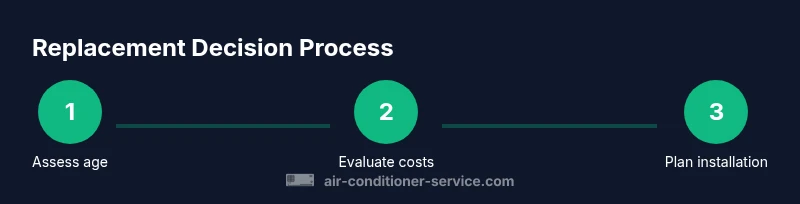
Replacing an aging air conditioner is a strategic decision that blends objective data with comfort goals. If your unit is approaching the end of its life, shows a pattern of frequent repairs, and demonstrates declining efficiency, replacement is often the smarter long-term choice. Use a structured evaluation, consult a licensed technician for sizing and compatibility, and plan for a replacement that aligns with your budget and climate goals. The Air Conditioner Service team recommends approaching this decision with method: assess, compare, and plan before committing to a course of action. A thoughtful replacement can bring lasting comfort and lower energy costs over time.
Tools & Materials
- Digital thermometer(to compare indoor/outdoor temperatures and detect cooling performance gaps)
- Notebook or digital device(record findings, dates, and costs for repairs)
- Energy bill records(last 12-24 months to analyze cost trends)
- Screwdriver set(if you need to inspect panels safely (avoid opening energized units))
- Safety gear (gloves, eye protection)(protect hands and eyes during outdoor unit inspection)
Steps
Estimated time: 60-120 minutes
- 1
Assess the unit’s age and service history
Begin by confirming the year your air conditioner was installed and review maintenance records. If the unit is in the 10-15 year range or has repeated service calls for the same issue, note this trend for your evaluation. This step helps you understand whether the next few years of operation will likely involve more repairs or better results with a replacement.
Tip: Tip: Gather receipts and service reports before talking to a contractor. - 2
Check cooling performance and energy use
Observe indoor temperature consistency, detect cold and hot spots, and compare your energy bills year over year. If cooling is inconsistent or bills trend upward despite similar usage, this suggests decreased efficiency that can justify replacement.
Tip: Tip: Use a digital thermometer at several rooms to map temperature variance. - 3
Inspect visible components for wear or leaks
Look at the outdoor condenser for debris buildup, bent fins, and oil stains. Check indoor units for excessive frost, moisture, or unusual smells. Leaks or obvious damage can indicate refrigerant or seal problems that repair alone may not fix.
Tip: Tip: Only touch electrical components if the system is powered down and you’re comfortable with basic safety. - 4
Evaluate repair history and costs
List recent repairs and their costs. If you’ve paid several substantial repairs in a short time frame, compare those costs with the price of a new unit and the potential energy savings, which can tilt the balance toward replacement.
Tip: Tip: Create a simple cost forecast for repairs over the next 3-5 years. - 5
Obtain a professional sizing and assessment
Schedule a licensed HVAC technician to perform a load calculation, confirm duct integrity, and assess refrigerant status. A pro will size the system properly to the home and climate, which is critical for comfort and efficiency.
Tip: Tip: Ask for a written proposal that includes equipment options and a timeline. - 6
Evaluate replacement options and ROI
Review proposed units, considering SEER ratings, compatibility with your ductwork, and potential rebates. Calculate ROI by balancing upfront costs, energy savings, and anticipated maintenance savings over 5-10 years.
Tip: Tip: Don’t skip rebates—utility programs and manufacturers often provide substantial incentives. - 7
Plan installation and post-install care
If replacement is chosen, schedule installation with minimal disruption, confirm warranty terms, and set up a maintenance plan. After installation, implement a routine of annual inspections and routine filter changes to maximize lifespan.
Tip: Tip: Keep a maintenance log and schedule the next service before the current one expires. - 8
Make the final decision and begin implementation
With data in hand and professional input, decide on replacement or a strategic repair plan. Move forward with clear expectations for performance, warranty coverage, and post-install monitoring.
Tip: Tip: Document the decision and share it with household members who’ll be affected by the installation.
Common Questions
What are the most common signs that an air conditioner needs replacement?
Common signs include persistent poor cooling, frequent breakdowns, rising energy bills, unusual noises, and refrigerant leaks. If several signs appear together, replacement is worth considering.
Look for several indicators like persistent poor cooling and rising bills, and consider a professional assessment.
How long do most air conditioners last?
Most air conditioners last about 10-15 years with regular maintenance. If yours is older or has frequent repairs, replacement may be the smarter option.
Most units last 10 to 15 years with regular maintenance.
Should I repair or replace my old AC?
Consider the repair history, repair costs, and the efficiency gains of a new model. If repairs are frequent or costs rise, replacement is often the better choice.
Repair or replace depends on costs and efficiency.
Can I determine replacement needs without a pro?
You can assess signs like performance and energy use, but sizing, refrigerant handling, and electrical work require a licensed technician for safety and proper operation.
Don’t DIY the installation; get a pro.
What warranties or rebates should I expect with replacement?
New systems may come with manufacturer warranties and local rebates or incentives. Check with installers and utility programs for current terms.
Warranties and rebates vary by model and region.
Watch Video
The Essentials
- Assess age, repairs, and efficiency before deciding.
- Evaluate long-term costs of repairs vs replacement.
- Get a professional sizing assessment for any replacement.
- Plan for installation and post-install maintenance to maximize ROI.