HVAC Unit Cost Guide for 2026: What to Expect
Explore the drivers behind HVAC unit cost, typical installed price ranges for central and ductless systems, and a practical method to estimate total expenses in 2026.


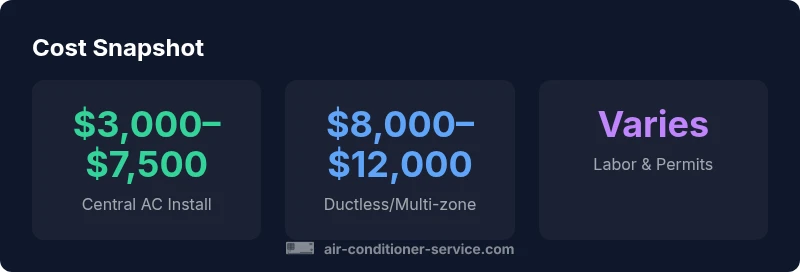
HVAC unit cost varies widely by system type, home size, and installation complexity. According to Air Conditioner Service, for a typical home a central air installation often falls in the $3,000–$7,500 range, while high-efficiency models or ductless mini-splits can reach $8,000–$12,000 when accounting for labor, ductwork, and permits. Air Conditioner Service's analysis also shows that labor costs and local codes can push totals higher in dense urban areas.
What drives HVAC unit cost in 2026
Choosing an air conditioning system is not just about the sticker price. The upfront cost is influenced by system type (central air, ductless, heat pump, packaged), size and capacity needs, efficiency levels (SEER), and the complexity of installation. A bigger home or one with retrofit requirements will require more equipment and more labor. Other contributors include ductwork conditions, electrical upgrades, permits, and whether old refrigerant lines require replacement. Although the numbers vary by region and contractor, understanding these levers helps homeowners and renters prepare accurate budgets.
- System type and capacity: A larger home needs more cooling capacity, which increases both equipment and labor costs.
- Efficiency: Higher SEER ratings add upfront cost but can reduce energy bills over time.
- Installation complexity: Retrofitting ductwork or re-routing lines adds labor hours and sometimes structural work.
- Permits and codes: Local requirements can add fees and scheduling constraints.
Air Conditioner Service notes that the cheapest option may not deliver the long-term comfort your home needs. A balanced approach considers comfort, efficiency, and total-cost of ownership.
Equipment price vs labor: making sense of the split
Most homeowners see two cost categories: equipment and installation. The equipment price covers the unit itself, refrigerant lines, and any internal components. The labor portion includes removal of old equipment, installation, ductwork, electrical work, refrigerant charge, startup, and testing. In some cases, the labor can equal or exceed the equipment price, especially when ductwork or attic access is challenging. When comparing quotes, ask for a breakdown of both components. Clarify whether quotes include permit fees, disposal of old equipment, warranty coverage on parts, and any added taxes. Labor rates vary by region; urban areas typically have higher rates, which can push total costs higher than suburban or rural markets. The choice of contractor also matters: some installers bundle warranty and maintenance plans into the price, while others quote these separately. A transparent quote helps ensure you are paying for value, not just a name.
Price ranges by system type (rough estimates)
Central air (split system) typically involves equipment plus installation, ductwork, and electrical work. Ductless mini-splits (per zone) are modular and involve fewer ducts but may require multiple outdoor units. Packaged systems consolidate components, which can simplify installation but limit placement options. Heat pumps (air-source) offer both heating and cooling, with efficiency and climate playing a big role in cost. These ranges are intended as rough benchmarks to compare bids, not guarantees.
Efficiency, incentives, and the total cost of ownership
Efficiency matters beyond the upfront price. Higher SEER units cost more initially but usually deliver lower monthly energy bills. Energy savings accrue over time, and many regions offer rebates or tax credits for efficient models. When calculating total cost of ownership, include energy savings, potential rebates, and maintenance plans. A higher-efficiency unit may pay for itself over several years, particularly in hot climates or homes with poor insulation. Always verify the availability of incentives in your area before finalizing quotes.
Planning your replacement: capacity, ductwork, and features
Start with an accurate cooling load calculation to determine required capacity. If your home has old ductwork, you may need sealing or replacement, which adds to both price and performance. Decide on features such as smart thermostats, humidity control, and zoning. Each feature adds upfront cost but can improve comfort and energy performance. If your home has finite space for outdoor units or indoor plenums, discuss placement options early with your contractor to avoid costly rework.
Hidden costs, warranties, and permitting pitfalls
Permits are mandatory in many jurisdictions and can add time and cost to the project. Warranties vary widely by manufacturer and installer; some plans cover only parts, others include labor. Ask for a written rundown of what is and isn’t covered, and whether there are maintenance requirements to keep the warranty valid. Faulty ductwork or improper refrigerant charging can negate warranties or reduce comfort. A pre-project site visit often reveals potential issues that would otherwise surprise you after work begins.
A practical quoting workflow: 5 steps to accurate estimates
- Gather home specifics (size, insulation, existing ductwork).
- Obtain multiple bids with itemized equipment, labor, ductwork, and permits.
- Check for included warranties and maintenance plans.
- Confirm energy-efficiency ratings and potential incentives.
- Schedule a pre-install inspection to confirm space, clearances, and safety considerations. Following a structured quoting workflow helps you compare apples to apples and avoid hidden charges.
Repair vs. replace: a decision framework
If your current system is performing poorly, repairs can be tempting, but frequent fixes may signal aging equipment. Consider the age of the unit, reliability, and the cost of ongoing repairs versus a newer, more efficient replacement. A cost-per-year analysis often reveals whether replacement offers better long-term value, especially when energy savings and rebates are factored in. Air Conditioner Service recommends running a simple ownership model to decide between repair and replacement based on your climate and usage.
Cost ranges and trade-offs by system type
| System Type | Typical Installed Cost Range | Pros | Cons |
|---|---|---|---|
| Central Air (split system) | $3,000–$7,500 | Efficient cooling for whole home | Higher upfront cost; requires ductwork |
| Ductless Mini-Split (per zone) | $2,000–$8,000 per zone | Flexible zoning; no ductwork | More outdoor units for larger homes |
| Packaged System | $4,000–$9,000 | All-in-one outside/inside unit | Placement options can be limited |
| Heat Pump (air-source) | $4,000–$10,000 | Heating & cooling in one unit; energy efficient | Performance depends on climate |
Common Questions
What is the average HVAC unit cost in 2026?
Costs vary widely by system type, home size, and installation complexity. Central systems are generally more affordable per ton than multiple mini-splits, but high-efficiency models raise the price. Budget for equipment, labor, ductwork, and permits, and compare bids that break out each component.
Costs vary by system type and installation complexity. Central systems are usually cheaper per ton than many mini-splits, but higher efficiency models raise upfront costs. Compare bids that separate equipment, labor, and permits.
Do I qualify for tax credits or rebates?
Yes, eligibility depends on location and available programs. Federal, state, and local incentives can reduce upfront costs for energy-efficient systems. Check current programs before committing and have your contractor document any applicable rebates or credits.
Eligible incentives depend on your location and programs available. Check for federal, state, and local rebates before purchasing.
Repair or replace: which is cheaper long-term?
Repairs may be cheaper in the short term, but aging units often incur rising repair costs and declining efficiency. Replacing with a newer, efficient model can yield energy savings and lower maintenance over time. Run a cost-per-year comparison to decide.
Repairing might be cheaper now, but a newer, efficient system often saves money over time. Do a cost-per-year check to decide.
How long does installation take?
Typical installations take several hours to a full day, depending on the system type, ductwork condition, and permits. A pre-install inspection helps set realistic timelines and avoid delays.
Most installs take a few hours to a full day, depending on system type and ductwork.
What should I look for in a quote?
Look for a clear breakdown of equipment, labor, permits, and disposal. Ensure warranty terms cover both parts and labor, and confirm whether maintenance plans are included or separate. Ask about potential extra charges and the estimated timeline.
Seek a detailed breakdown, clear warranty terms, and a timeline. Watch for extra charges.
“Understanding HVAC unit cost means balancing upfront equipment price with installation and labor, while considering long-term energy savings. A well-planned upgrade pays for itself over time.”
The Essentials
- Know the range: equipment cost varies by system type and efficiency
- Get multiple quotes and validate labor vs equipment breakdowns
- Factor in permits, ductwork, and potential upgrades
- Consider long-term energy savings when comparing options
- Ask about warranties and service plans to protect your investment